
Short answer: yes — for the right kind of blemish, used the right way. Here's the honest version, including what patches can't do.
What a pimple patch actually is
A pimple patch is a small dot of hydrocolloid — the same gentle dressing material hospitals have used on wounds for decades. It isn't a chemical treatment. It works physically: the patch absorbs fluid from a blemish that has come to a head, holds that fluid in the patch, and seals the spot away from fingers, friction, and outside bacteria.
What patches do well
- Absorb fluid. On a whitehead or a spot that's surfaced, hydrocolloid draws out fluid overnight — that's the white gunk you see on the patch in the morning.
- Stop the picking. This is the quiet superpower. Most of the lasting damage from a breakout — redness that lingers, dark marks, scarring — comes from squeezing and picking. A patch is a physical barrier between your fingers and your face.
- Protect the spot. Makeup, pillowcases, phone screens, gym equipment — a covered blemish is shielded from all of it.
- Keep skin comfortable. A good patch maintains a moist healing environment instead of drying the area into a flaky mess.
What patches don't do
Honesty matters more to us than a sale, so: hydrocolloid patches are not a fix for deep, cystic, or hormonal acne that never comes to a head — there's no fluid at the surface for the patch to absorb. They don't prevent future breakouts, and nothing sold without a prescription reliably does. If your acne is painful, widespread, or persistent, a dermatologist is the right move — patches can still help you keep hands off individual spots along the way.
How to get the best results
- Start with clean, completely dry skin — patches stick poorly to damp or oily skin.
- Apply the patch directly over the blemish and press for a few seconds.
- Leave it on 6+ hours or overnight. Resist peeking.
- When the patch turns white and cloudy, it's done its job. Peel gently and reapply a fresh one if needed.
The bottom line
For surfaced blemishes, patches are one of the most sensible tools in skincare: gentle, and they break the picking habit that causes most of the visible damage. Want the deeper science? Read how hydrocolloid works, or see what's inside our patches.
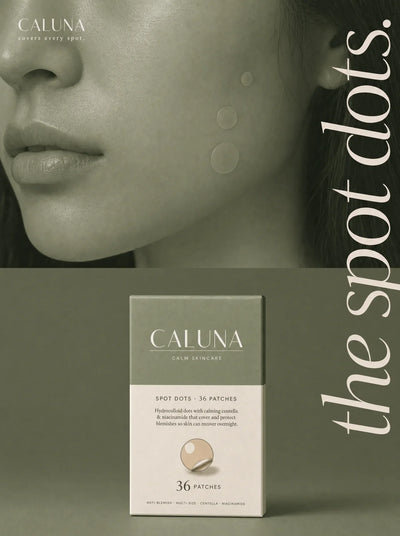
Try Caluna invisible spot dots → Every box is covered by our 30-day money-back promise.
This article is for general information and isn't medical advice. For persistent or severe acne, talk to a dermatologist.