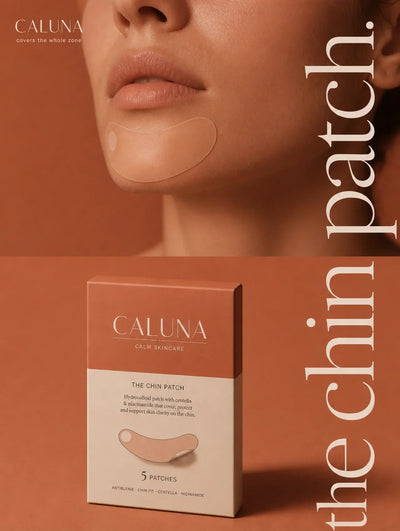

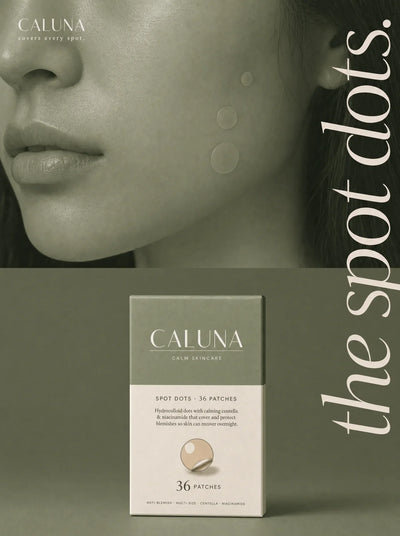

Pimple patches are everywhere right now — but what actually makes them work, and how do you use them properly? Here's a simple, honest guide.
What is a hydrocolloid patch?
Hydrocolloid is a soft, absorbent material that's been used in wound care for decades. When you place a patch over a blemish, it absorbs excess fluid and creates a clean, protected environment — the kind of setting skin likes for recovery.
What a patch actually does
- Covers and protects the spot from dirt, bacteria, and your fingers.
- Absorbs fluid from a whitehead-type blemish.
- Stops the picking. A physical barrier makes it much harder to touch the spot, which gives skin space to calm.
How to use one
- Start with clean, fully dry skin.
- Press a patch over the blemish, choosing a size that covers it.
- Leave it on 6+ hours or overnight.
- Peel it off when it turns white, and reapply if needed.
Why does it turn white?
That cloudy patch is the hydrocolloid doing its job — absorbing fluid. When you see it, it's time for a fresh patch.
Day or night?
Thin, invisible patches like Caluna's can be worn during the day (even under makeup) or overnight. A common routine: patch a fresh spot before bed and wear it into the morning.
A note: patches are best for surface blemishes. They're a gentle, cosmetic spot-care step — not a treatment for severe or painful cystic acne, which is worth discussing with a dermatologist.