

The short answer is no — once a hydrocolloid pimple patch has done its job, it's one-and-done. A used patch has already absorbed the fluid it was going to absorb, loosened its stick, and picked up oil and dead skin, so putting it back on does little and can press that debris right back onto your face. Below is how to tell when a patch is spent, how long one actually lasts, and how to get real value from a box without stretching a single dot past its usefulness.
How do you know when a pimple patch is used up?
A hydrocolloid patch is used up when it turns white, cloudy, or puffy — that milky dome is the sign it has absorbed the fluid it was going to pull from the spot. Once you see it, peel the patch off and apply a fresh one only if the spot still has something to cover.
Hydrocolloid is a gel-forming material that's known for drawing out and holding onto fluid from a raised, open blemish. As it absorbs, the clear dot goes opaque and slightly swollen, and the edges often start to lift. A patch that's still completely clear after a few hours usually means there was little fluid to absorb — it was quietly protecting the spot and keeping your fingers off it, which is a job well done on its own.
Can you reuse a pimple patch after you've worn it?
No — a patch that has already been worn has lost most of its adhesion and is holding whatever it absorbed, so re-sticking it won't seal and can transfer that gunk back to your skin. A fresh patch costs cents; a reused one mostly just falls off.
The adhesive on a spot patch is designed for one clean application. The first time you peel it, it collects oil, makeup, and loose skin cells, and the hydrocolloid itself is already saturated. Reapplying it means no proper barrier over the spot, no meaningful absorbing left to do, and a patch that slides off within the hour. There's no upside.

What about a patch that never turned white — can you re-stick that one?
If a patch stayed totally clear and simply popped off early, you can technically press it back down, but a fresh one is the better bet. Once the adhesive has touched a pillowcase, your hair, or your fingers, its grip is compromised and it won't lie flat.
A patch that falls off early is usually telling you the surface wasn't clean and dry, or the spot sits in a high-movement zone like the edge of the nose. Rather than fight a tired sticker, start over on clean, dry skin and press a new dot for thirty seconds.
How long does one pimple patch last on your skin?
Most people get about six to eight hours out of a single patch, which is why so many wear one overnight or through a full work shift. Swap it when it turns white and saturated or when the edges lift — not on a timer, and not because longer seems better.
Sweat, showers, and heavy daytime oil all shorten that window, so an active day may mean two patches where a quiet night needs one. The goal isn't to squeeze maximum hours out of each dot; it's to keep the spot covered and protected until it looks and feels calmer.
Does reusing patches save money, or is it a false economy?
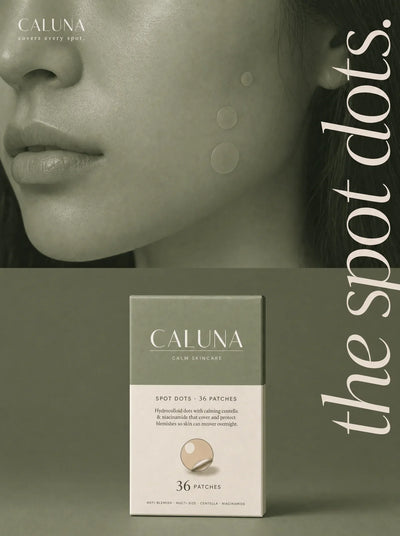
It's a false economy — a reused patch does almost nothing, so you spend time and risk re-depositing debris to save a few cents. A fresh dot is cheaper than the hassle. A Caluna box holds 36 invisible patches at $11.99, which works out to about 33 cents a dot.
Caluna's patches are also the rare ones built with seven skin-loving actives — hydrocolloid, tea tree oil, salicylic acid, centella asiatica, calendula, niacinamide, and hyaluronic acid — where most patches on the shelf have zero. Salicylic acid is known for helping pores feel clear, so a single fresh dot is doing more than a plain sticker could. Reusing a spent one throws all of that away.
How do you make a box of patches last longer the honest way?
The real way to stretch a box is to use the right-size patch and only cover spots that actually have something to absorb or protect. That saves far more dots than trying to recycle a used one ever could.
- Match the patch size to the spot — a tiny whitehead doesn't need your biggest dot.
- Patch raised or open blemishes where there's fluid to absorb; on clear-skin days, skip it.
- Cover a spot early, before you're tempted to pick — a patch is a great physical barrier for stopping picking.
- Press for thirty seconds on clean, dry skin so it seals and lasts its full wear.
- Keep the sheet somewhere cool and dry so the adhesive stays fresh in the box.
The bottom line on reusing pimple patches
Think of every patch as single-use: wear it until it turns white or loosens, then peel it and reach for a fresh one if the spot still needs covering. It's cheaper, cleaner, and simply works better than trying to get a second life out of a saturated dot. If you're dealing with severe, painful, or persistent breakouts, a patch is a helpful cover but not a substitute for a dermatologist's advice.
— Jake, founder of Caluna.