

Yes — you can shower with a pimple patch on, and a good hydrocolloid patch is water-resistant enough to usually stay put through a quick rinse. But the shower isn't the ideal moment for one to do its quiet work, because steam, hot water, and the friction of washing all pull against the seal that keeps a patch stuck. Here's the honest rundown on water, patches, and timing, so you can stop guessing at the bathroom mirror.
Does water ruin a pimple patch?
A short splash won't ruin a hydrocolloid patch, but a long, hot, steamy shower can loosen it and shorten how long it stays useful. Hydrocolloid is the same gel-forming material used in wound dressings, and it's designed to hold a seal against a bit of moisture.
The catch is that a pimple patch is doing a specific job: it forms a seal over a spot and quietly absorbs the fluid and gunk sitting in it, turning white as it fills up. Prolonged heat and water soften the adhesive edges, so instead of a tidy seal you get a curling, sliding patch that stops making good contact. It's not dangerous — it's just no longer doing much.

Should you shower before or after applying a pimple patch?
Apply the patch after your shower, not before. A patch sticks best — and stays on longest — on skin that is clean, completely dry, and free of oil or leftover moisturizer.
The routine that works: cleanse, gently pat the area fully dry, wait a minute so no dampness is trapped, then press a patch on and hold it for a few seconds so the edges bond. Skin that's still humid from the bathroom is the number one reason a patch won't take. If you apply before you shower, you're basically sending a fresh patch straight into the one environment most likely to peel it off.
Why do pimple patches fall off in the shower?
Patches fall off in the shower because of three things at once: heat softening the adhesive, water working under the edges, and your hands or washcloth rubbing directly over them. Any one of those alone is survivable; all three together is a lot to ask of a small dot of hydrocolloid.
There's also the sneaky factor of oil. Hot water opens things up and skin tends to feel oilier afterward, and hydrocolloid does not grip oily skin well. So even a patch that survives the water can slide once your skin warms up and produces more oil than usual.
How do you keep a pimple patch on around water?
The simplest fix is timing — save the patch for after your shower and let it ride overnight on clean, dry skin. If you genuinely need one to survive water, a few things help:
- Keep the shower shorter and cooler when a patch is on; long steamy ones are the worst case.
- Turn your face away from the direct spray so water isn't hammering the patch.
- Don't scrub or rub over the patch with a washcloth or your fingers.
- Pat — never wipe — the area dry afterward, and press the patch edges back down if they've lifted.
- If it's curling, peeled, or has already turned white and full, just replace it. A used patch has done its job.
Most people get the best results treating a patch as an overnight thing: on after the evening shower, off in the morning. Eight or so undisturbed hours on dry skin beats a patch fighting the water the whole time.
What kind of patch handles real life best?
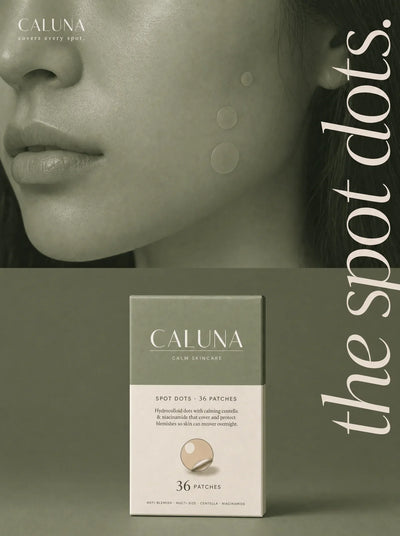
Look for a genuinely water-resistant hydrocolloid that's thin enough to press flat with no gaps, since a flush seal is what shrugs off a little moisture. This is exactly what we built Caluna's hydrocolloid pimple patches around — 36 nearly invisible dots per box, with seven skin-loving actives worked in (hydrocolloid, tea tree oil, salicylic acid, centella asiatica, calendula, niacinamide, and hyaluronic acid) where most patches have zero. Salicylic acid is known for helping pores feel clear, and niacinamide and centella are known for helping skin feel calmer while a patch covers the spot and stops you picking at it.
The bottom line
You can shower with a pimple patch on, and a solid one will often hang in there — but it's working uphill the whole time. Give it clean, dry skin after your shower and a quiet stretch of hours instead, and you'll get far more out of every dot. And if you're dealing with severe or persistent breakouts that patches never seem to touch, it's worth seeing a dermatologist rather than white-knuckling it alone.
— Jake, founder of Caluna.