 Liquid error (snippets/caluna-cart-extras line 104): invalid url input
Yes, you can wear a pimple patch under makeup — and if you're covering a spot on a day you also want foundation on, a thin hydrocolloid patch is one of the cleaner ways to do it. The rule is simple: the patch goes on first, on bare clean skin, and your makeup goes on top of it.
I get this question a lot, usually the morning of something — a meeting, a photo, a first date. So here's how to make a patch and a full face actually work together, in the order that keeps both looking their best.
Can you wear a pimple patch under makeup?
Yes. A pimple patch is designed to sit flat against clean skin, and a thin, translucent one all but disappears once foundation goes over it. The one thing to get right is sequence — the patch belongs on skin first, before any product, not pressed onto a layer of makeup.
Hydrocolloid needs direct contact with skin to do its thing, which is covering the spot, absorbing fluid, and giving you a physical barrier so you stop touching and picking at it. Put a patch over foundation and it won't stick; put it under, and it grips clean skin and stays put for hours.
Should the patch go under or over your makeup?
Under — always. Cleanse, let your skin dry fully, press the patch onto the spot, then do the rest of your routine and your makeup around and over it.
An order that works: cleanser, a beat to let skin dry, the patch, then moisturizer and sunscreen around it (not soaked into the patch itself), then foundation over the top. If you moisturize heavily right where the patch goes, it'll slide — so keep that exact spot dry when you press it down.

How do you put makeup over a pimple patch?
Dab, don't drag. Use a damp sponge or a fingertip to press foundation and concealer gently over the patch, building thin layers instead of swiping across it.
Swiping with a brush can catch the edge and roll the patch up. Pressing sets product on top while the patch stays flat. And because a good hydrocolloid patch is already smooth and skin-toned once it's on, you usually need less concealer than you'd expect — the patch blurs the bump before you've added anything.
Will people see the patch under foundation?
With a thin, invisible patch, almost never. The whole reason to reach for a translucent hydrocolloid dot on a makeup day is this: it lies flat and hides under color instead of adding a raised bump.
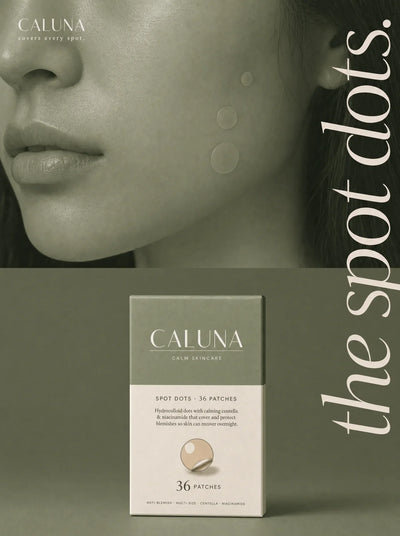
Thick, opaque patches are the ones that show as a little circle under a matte foundation, so the patch you pick matters. Caluna's patches are thin, nearly invisible hydrocolloid — 36 to a box, in sizes small enough to tuck under makeup — and they carry seven skin-loving actives (hydrocolloid, tea tree oil, salicylic acid, centella asiatica, calendula, niacinamide, hyaluronic acid) where most patches have none. You can see them here. Salicylic acid is known for keeping pores feeling clear, and niacinamide and centella are known for helping skin feel calmer under everything you layer on top.
How long should you leave a patch on under makeup?
Six to eight hours is a normal wear — through a workday, a shift, or an event. When the patch turns cloudy or white, that's it absorbing fluid, and it's your cue to swap it.
You can't reapply the same patch once you take it off with your makeup at night, so treat it as a one-day dot: patch and full face in the morning, remove both when you cleanse in the evening, and a fresh patch overnight if the spot still needs covering. If a spot stays angry or painful for weeks, or breakouts are widespread and stubborn, that's worth a dermatologist's eyes rather than more coverage.
The quick version
Patch on clean, dry skin first. Moisturizer and makeup around and over it. Press, don't drag. Pick a thin, invisible patch so it hides instead of showing. Give it six to eight hours, then swap. That's a covered spot and a full face that hold up together all day.
— Jake, founder of Caluna.