

You wake up with a spot, you have somewhere to be, and now you are staring at a pimple patch wondering: can this actually live under my foundation, or is it going to peel up and announce itself by 10am? Good news — patches and makeup can absolutely coexist. It just takes a little strategy.
The short answer: yes, with a bit of planning
A hydrocolloid patch is a thin, flat sticker that sits on top of your skin and gently absorbs the fluid from a raised, "juicy" spot. Because it flattens the area and creates a smooth surface, it can actually make a blemish easier to cover once you get your layers right. The trick is choosing the moment, prepping the skin, and being gentle with what goes on top.

Know your patch: not all of them play nice with foundation
There are two broad styles, and they behave very differently under makeup.
- Standard hydrocolloid patches are thicker and turn opaque-white as they absorb fluid. These are brilliant overnight, but under makeup that raised white dome can be hard to hide.
- Thin, invisible patches are made to disappear. They have a tapered, barely-there edge that foundation can glide over, which is what you want for daytime and events.
If your goal is an invisible finish, reach for the thinnest patch you own on makeup days.
How to layer patches under makeup, step by step
The order matters more than the products. Here is a sequence that tends to work:
- Apply the patch to clean, dry skin first. Do this before any serums or moisturizer touch the area — oils and lotions stop the adhesive from gripping.
- Do your skincare and primer around it. Pat gently near the edges rather than rubbing over the top, so you do not lift the corners.
- Press, don't swipe. Use a fingertip or a small sponge to press foundation and concealer over the patch. Swiping is what drags an edge loose.
- Set it lightly. A dusting of powder over the top helps everything stay put through the day.
One honest note: even an invisible patch adds a tiny bit of height. Feathering your concealer outward, past the edges, blurs that transition far better than piling product directly on top.
A few limits worth being honest about
Patches are happiest on raised, surface-level spots with a visible head — that flat, closed shape is what covers well. Flat, under-the-skin bumps and large cystic areas do not have much for a patch to sit on, so makeup alone may look smoother there. Patches are also not a substitute for medical care: if your breakouts are severe, painful, or persistent, a dermatologist is the right call.
And the obvious one — a patch is not forever. Most are designed to be worn for a stretch of hours and then swapped, so plan to change it rather than reapply makeup over a patch that has already done its job.
What to look for in a daytime patch
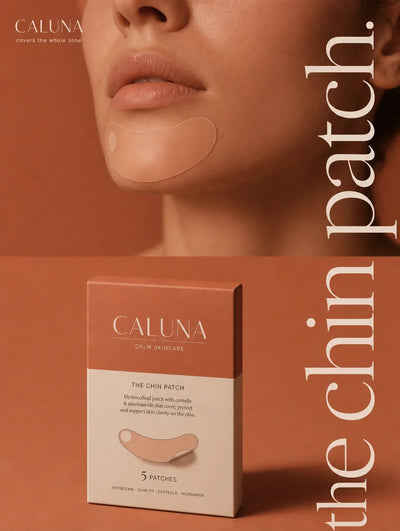
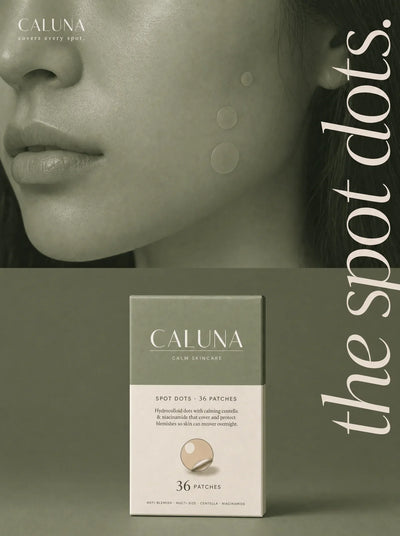
If you want a patch you can genuinely wear under makeup, look for three things: a truly thin, tapered edge; an invisible matte finish rather than a shiny one; and ingredients that keep the skin underneath feeling calm rather than tight. This is the thinking behind Caluna's invisible hydrocolloid patches — they are built around seven skin-loving actives, including centella asiatica and niacinamide, which are known for helping skin feel soothed and comfortable while the patch does the covering. Most patches have zero. That is the difference you feel by the end of a long day with foundation on top.
Get the moment and the layering right, and no one at your event needs to know there is a patch under there at all.
— Jake, founder of Caluna.