 Liquid error (snippets/caluna-cart-extras line 104): invalid url input
Do bangs cause forehead acne? Not on their own — but a fringe resting on your forehead all day traps oil, sweat and hair product against the skin, and that mix is known for feeding breakouts right along the brow and hairline. If your forehead flares and your hair sits on it, your bangs are worth a hard look.
It's Tuesday, September 8th, about eight weeks out from the November 1st zone launch here at Caluna, and the nose list is still out front. This is a question I've gotten from a few people with fringes lately, so let's dig into it honestly.
Do bangs actually cause forehead acne?
Not directly, but they're a real contributor. Your hair carries its own oil plus whatever product you put in it, and when a fringe sits against your forehead for hours, it presses all of that into one of the oiliest strips of skin on your face.
Your forehead sits in the T-zone, the oiliest band you've got, so it's already primed to clog. Add hair that's dragging sebum, dry shampoo, or styling wax across it every time you move your head, and you've stacked oil on oil. It's rarely the whole story behind a breakout, but for a lot of people with bangs it's a piece they never think to check.
Why does hair touching your forehead break you out?
Two reasons: what's on the hair, and the friction of the hair itself. Product and oil transfer onto the skin, and the constant light rubbing irritates pores that are already prone to clogging.

Dermatologists have a name for the product-transfer version: acne cosmetica, breakouts driven by something you're putting on the skin rather than by what you ate. Pomades, gels and heavy conditioners are common culprits, which is why the hairline is such a classic spot for it. The rubbing adds a second layer — that's acne mechanica, pressure-and-friction breakouts — and bangs deliver both at once, all day.
Is it the oil or the friction that matters more?
Usually the oil and product, with friction making it worse. Greasy, product-heavy bangs against the forehead are a bigger problem than clean hair that just brushes the skin now and then.
You can test this on yourself. If your breakouts sit exactly where your fringe falls and calm down on the days you pin it back, that pattern is telling you something. Skin that never touches the hair — up under a headband, say — usually stays clearer, which is the tell that the fringe is involved.
How do you keep bangs from breaking out your forehead?
Keep the hair clean, keep product off the roots near your face, and give your forehead breaks from the fringe. None of it is fancy, but it's what actually moves the needle.
- Pin or clip your bangs back at home and at night, so your forehead gets several hours a day with no hair on it.
- Wash your hair often enough that your fringe isn't visibly greasy by evening — oily bangs are oily skin waiting to happen.
- Keep styling product on the lengths, not the roots at your hairline. A dab too high migrates straight down onto your forehead.
- Blot sweat from under your bangs after a workout instead of letting it dry there, and swap your pillowcase every couple of nights.
Do you have to give up bangs if you're breakout-prone?
No. Plenty of people wear a fringe and keep clear skin — it's about managing the oil and friction, not cutting your hair. The habits above take most of the load off.
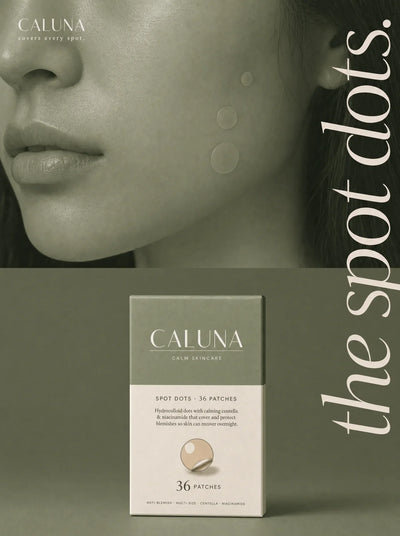
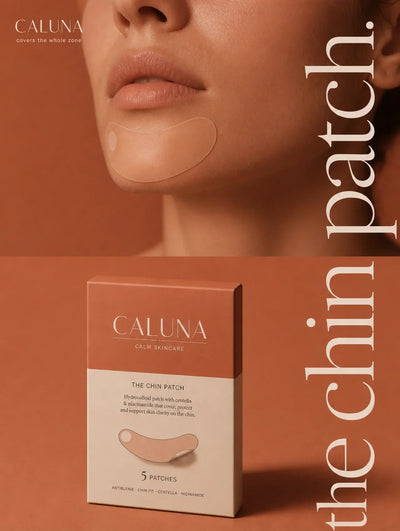
When a spot does surface, cover it and keep your hands (and your hair) off it. A hydrocolloid patch is known for absorbing the fluid from a spot that's come to a head and sitting as a physical barrier between the skin and your fingers, so it's left alone to feel calmer overnight. Our Spot Dots do that for a single spot right now — 36 near-invisible dots for $11.99, about 33 cents a dot. For a forehead that breaks out in a band across the middle rather than one tidy spot, dotting several little circles gets old, which is exactly why I'm building a single wide patch for the zone. That's The Forehead Patch, coming in November — join the forehead list. It's a simplified hydrocolloid formula, with the final ingredient list published at launch.
When should you see a dermatologist instead?
If your forehead bumps are painful, spreading, or show up as lots of tiny, uniform, itchy dots along the hairline after you sweat, see a dermatologist before you keep patching. Small look-alike bumps there can be folliculitis — sometimes the yeast-driven kind people call “fungal acne” — and that's a different thing that needs different care.
A patch and a few sensible hair habits are for the ordinary whitehead. They're not the answer for a rash or an infection, and there's no shame in having a professional take a proper look at something that won't settle.
Race update: nose 3 · chin 1 · forehead 1 · kids 1.
The zone with the most names launches first on November 1st — pick yours.
— Jake, founder of Caluna.