

Yes — hydrocolloid pimple patches tend to work best on whiteheads. A whitehead is a surface spot with fluid at the top, and that's exactly what a hydrocolloid patch is made to absorb and cover. They're far less useful on deep, closed bumps under the skin, where there's nothing at the surface for the patch to pull out.
Do pimple patches work on whiteheads?
For most people, a whitehead is the single best use case for a hydrocolloid patch. The patch sticks over the spot, absorbs the fluid as it comes to the surface, and shields the area so you're not tempted to squeeze it.
You'll usually know it's working because the clear dot turns cloudy or white as it draws moisture in. That's the hydrocolloid doing its job — not the pimple being "sucked out" like magic, just the surface fluid being absorbed into the patch.

Why do whiteheads respond well to hydrocolloid?
Hydrocolloid is a moisture-absorbing material that's been used on wounds and blisters for years, and it's known for keeping a spot covered, protected, and free of your fingers. On a whitehead, all three of those things line up.
Because the spot already has fluid near the surface, the patch has something to absorb right away. It also keeps the area a little more humid and undisturbed, and — maybe most importantly — it physically stops you from picking, which is what usually turns a small whitehead into a bigger, redder mark.
How long does it take a pimple patch to work on a whitehead?
Most patches do their best work over 6 to 8 hours, which is why so many people wear them overnight. You put a clean patch on a clean, dry spot before bed and take it off in the morning.
If the patch has turned fully white and looks saturated before then, swap it for a fresh one — it's absorbed what it can. One whitehead might settle after a single overnight wear; a stubborn one might take two or three patches across a couple of days. Always start with clean, dry skin so the patch actually sticks.
When should you not rely on a pimple patch?
Patches struggle with deep, painful bumps that never come to a head. A cystic spot sits under the skin with nothing at the surface, so there's little for a hydrocolloid patch to absorb — it can still protect the area and stop picking, but it won't do much for the bump itself.
If you're getting frequent deep or painful breakouts, or spots that won't settle no matter what you try, that's worth a conversation with a dermatologist who can look at your skin in person. A patch is a helpful tool for surface spots, not a treatment plan for persistent acne.
What makes a good whitehead patch?
Two things matter: it should stick well enough to stay put overnight, and it should be discreet enough that you'll actually wear it during the day. Beyond that, some patches add skin-loving ingredients so the spot gets a little more than just a cover.
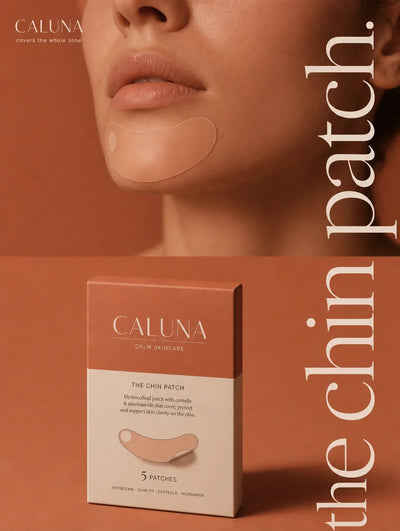
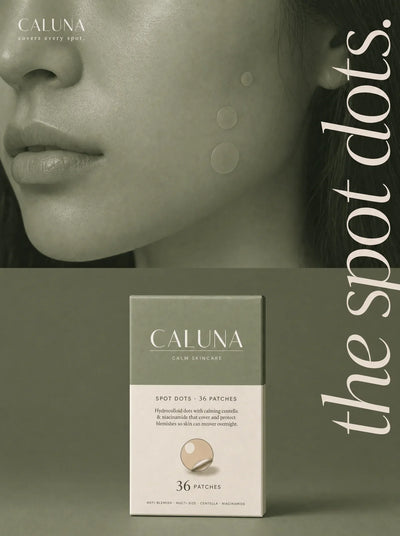
That's where Caluna Hydrocolloid Pimple Patches come in. Each box has 36 nearly invisible dots (about 33 cents a patch), and every dot pairs hydrocolloid with six other skin-loving actives — tea tree oil, salicylic acid, centella asiatica, calendula, niacinamide, and hyaluronic acid. So while the patch absorbs and protects a whitehead, those ingredients stay in contact with the skin. Seven actives. Most patches have zero.
The honest takeaway
If you've got a classic whitehead — a small spot with fluid at the surface — a hydrocolloid patch is one of the simplest, lowest-risk things you can reach for. Pop it on clean, dry skin, leave it 6 to 8 hours or overnight, and let it absorb and protect while you keep your hands off.
For deep, painful, or persistent breakouts, skip the guesswork and see a dermatologist. Patches are great for what they're good at, and honest about what they're not.
— Jake, founder of Caluna.