

It's late September as I write this — about five weeks out from Caluna's November 1st launch, and the nose is still leading our zone race. So here's a nose question I get constantly: do pore strips actually work? Short answer — yes, but only in a small, temporary way. A pore strip pulls the plug of oil, dead skin and tiny hairs out of the top of your pores, so your nose looks and feels smoother for a day or two; it doesn't shrink your pores or stop them refilling, and it can irritate the skin if you lean on it too hard.
Do pore strips actually work on your nose?
They work in the literal sense: the strip's glue grabs whatever is sitting at the surface of your pores and lifts it out when you peel. That's the satisfying part everyone posts about.
But "work" is doing a lot of lifting there. A strip only clears the very top of the pore, the skin refills over the next few days, and it does nothing for a spot that's actually inflamed. Think of it as a surface tidy-up before a big day, not a treatment.
What are those dark dots a pore strip pulls out?
Mostly they're sebaceous filaments — a normal, natural lining of oil in the pore — not true blackheads. This is educational, not a diagnosis: most of the little grey-brown dots on a nose are filaments that everyone has, and they come back because they're supposed to be there.
A true blackhead is a pore that's clogged and oxidized dark at the surface; a sebaceous filament is just the pore doing its normal oily job. Neither one is dirt, and no strip clears either for good — both refill. Knowing which you're looking at saves you a lot of scrubbing at something that was never really a problem.
Do pore strips shrink your pores?
No. Pores don't have muscles, so nothing you stick on and peel off can make them permanently smaller.
What actually happens is that an empty pore looks smaller than a full one, so your nose can look tighter right after a strip — then the pore fills again and the size looks the same as before. Genetics and oil largely set how big the pores on your nose look, and no drugstore strip rewrites that.

Why does your nose fill back up so fast?
Because your nose is the oiliest patch of skin on your whole face. It sits in the middle of the T-zone with one of the densest clusters of oil glands anywhere on your body.
More oil glands means the pores refill quickly, which is exactly why a strip's results fade within a few days on the nose specifically. It isn't that the strip failed — it's that the nose is built to produce a lot of oil.
Can pore strips irritate or damage the skin on your nose?
They can, especially if you use them too often. The strip sticks hard and comes off with a yank, and that repeated tug-and-tear can leave the thin skin around your nose red, dry, or sensitized.
If you like them, once a week is plenty — on clean, dry skin, and never on skin that's broken out, peeling, or already irritated. If a strip leaves your nose stinging or flaky afterward, that's your skin telling you to ease off.
What's a gentler way to keep an oily nose clear?
Manage the oil instead of ripping at the pores. Consistent, low-drama habits beat an aggressive strip every time.
- Wash your face morning and night with a gentle cleanser — over-scrubbing an oily nose usually just makes it oilier.
- Blot the shine midday with a tissue or blotting paper instead of stripping or piling on powder.
- A salicylic acid (BHA) product a couple of nights a week is known for helping oily pores feel clearer, since it works down inside the pore.
- Use a light, non-comedogenic moisturizer — a dried-out nose often overproduces oil to compensate.
None of that shrinks a pore either, but it keeps the nose calmer and less congested than a weekly tear-off does.
Do pimple patches do the same thing as pore strips?
No — they're built for different jobs, and it's worth not mixing them up. A pore strip yanks surface plugs off the top of the pore; a hydrocolloid patch is made for a whitehead that has already come to a head, where it's known for covering the spot, absorbing the fluid, and keeping your fingers off it so the skin can feel calmer.
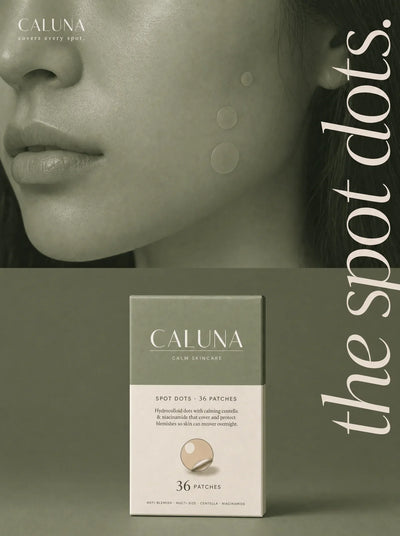
So a patch isn't a blackhead or filament tool — it won't do anything for the little dots a strip targets. It's for the raised, surfaced spot. Our Spot Dots are the nearly invisible round dots we make for exactly that, available now.
When should you see a dermatologist?
When your nose stays broken out for weeks, or the bumps turn painful, deep, or tender no matter what you do at home.
Pore strips and a gentle routine are fine first moves for everyday congestion, but they won't fix everything — and I make cosmetic patches, not medicine. Persistent or painful breakouts are worth a professional's eyes.
What's coming for the nose?
A flat little dot slides right off the curve of the nose, so I've been building one shaped for it: a single T-shaped patch that covers the bridge and hugs down both sides. The Nose Patch is coming in November — join the nose list. It runs a simplified hydrocolloid formula, with the final ingredient list published at launch.
Race update: nose 3 · chin 1 · forehead 1 · kids 1.
The zone with the most names launches first on November 1st — pick yours.
— Jake, founder of Caluna.