
We're about eleven days out from Launch 2.0 on November 1st, and the nose list is still out front — so a nose question felt right for today's entry.
Do pore strips actually work on your nose? Short version: a strip can lift some of the oil and debris sitting right at the top of your pores, so your nose can look cleaner for a day or two. What it can't do is shrink your pores, stop the oil from coming back, or reach anything deeper than the surface — and on thin nose skin, used too often, it can leave things red and irritated.
Do pore strips actually clear out your nose?
They remove what's sitting right at the opening of the pore — surface oil, dead skin, a bit of debris — and nothing underneath it.
That stuff you see stuck to the strip afterward looks dramatic, but it's mostly the very top of the plug. The strip grabs it because the adhesive is stronger than the grip of that loose surface gunk. Anything deeper in the pore stays exactly where it was.
Why does your nose look clean for a day and then fill back in?
Because the strip only took the top layer, and your nose keeps making oil the whole time.
Your nose sits right in the middle of the T-zone, which has one of the highest concentrations of oil glands anywhere on your face. That's just how the nose is built — it's the oiliest real estate you've got. So within a day or two of a strip, the pores fill right back up. You didn't do anything wrong; you were fighting biology with a sticker.
Are those dark dots even blackheads?
Often, no. A lot of what people strip off their nose are sebaceous filaments — a normal, built-in part of how the nose moves oil to the surface.
Here's the honest distinction, and it's educational, not a promise about any product: a blackhead is a pore that's genuinely clogged and oxidized dark at the top. A sebaceous filament is the thin, grayish thread of oil that lives in a healthy pore and comes back no matter what you do — because it's supposed to. Every nose has them. They are not dirt and they are not a flaw. No strip, and no patch, "removes" them for good.

Can pore strips damage the skin on your nose?
They can, especially with frequent use. The adhesive is strong, and the skin on your nose is thin.
Peeling a strong strip off that skin over and over can leave the nose tender, red, or more reactive than before. If your skin is already sensitive, or there's any broken or inflamed spot on the nose, a strip is the last thing it needs. Gentler and less often almost always wins here.
What actually helps an oily nose then?
Consistency over force. You can't scrub or strip your way out of an oily nose, but you can keep it calm and comfortable.
- Wash with a gentle cleanser twice a day — more than that, or anything scratchy, usually makes a nose oilier and angrier, not cleaner.
- Blot through the day instead of stripping. A plain tissue or blotting paper takes the shine down without wrecking anything.
- Leave it alone. Squeezing and picking at the nose is how a quiet pore turns into a red one.
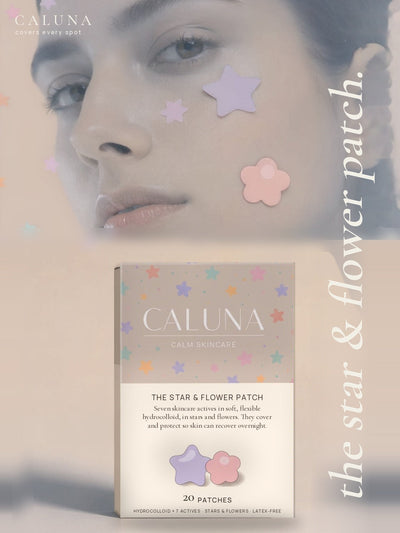
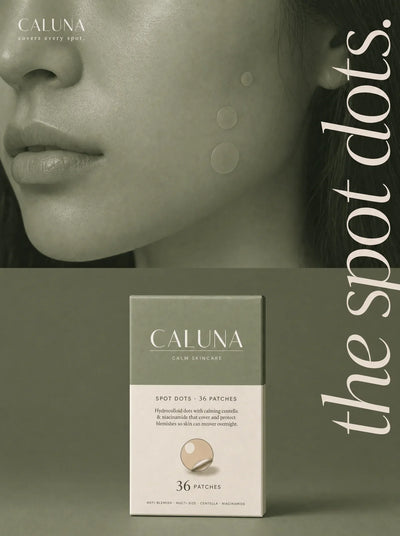
- When there's an actual raised, fluid-filled spot, cover it. Our hydrocolloid Spot Dots (available now, 36 to a box) are known for drawing out that fluid and keeping your fingers off while the skin settles — which is a very different job than a pore strip.
What about a spot that lives right on the curve of your nose?
That's the tricky one — a round dot often won't stay put on the slope and sides of the nose.
It's exactly why we built a T-shaped patch shaped for the nose and the sides of it — coming in November, and you can join the nose list to hear first. It's a simplified hydrocolloid formula, and the final ingredient list gets published at launch. And if a spot on your nose is painful, keeps coming back in the same place, or just won't settle, that's a good moment to see a dermatologist rather than a strip or a patch.
Race update: nose 3 · chin 1 · forehead 2 · kids 1.
The zone with the most names launches first on November 1st — pick yours.
— Jake, founder of Caluna.