
We're about two weeks out from the November 1 launch, and the zone race is still a live thing — nose out front, chin a few names back. Today's question comes up every time someone with facial hair asks me where the Chin Patch is going to sit: does a beard actually cause breakouts along the chin and jawline?
Short answer: a beard doesn't directly cause acne, but it can create exactly the warm, oily, hard-to-clean conditions where chin and jawline breakouts thrive. Facial hair traps oil, sweat, dead skin, and whatever product you put in it right against the skin — and that's the setup a clogged pore likes.
Can facial hair really cause chin and jawline breakouts?
Not on its own, but it changes the conditions of the skin underneath, and those conditions are what matter. A beard holds sebum and sweat close to the pores instead of letting them clear, which gives clogs more chances to form.
Think of the skin under a beard as a patch that rarely gets fully cleaned or dried. Oil that would normally wipe away on bare skin sits in the hair, sweat lingers after a workout, and crumbs and dead skin get caught in there too. None of that is dangerous, but together it's a busier environment for the chin and jaw than clean, bare skin.
Are those bumps acne or ingrown hairs?
They can be either, and it's worth telling them apart. Acne starts in a clogged pore; an ingrown hair is a hair curling back into the skin, usually after shaving or trimming, and it often shows up as a red bump right where a hair exits.
If a bump has a hair trapped in the center or sits exactly along your trim line, it's more likely ingrown than a classic breakout. The two can look almost identical in the mirror, so if you're not sure — or the bumps are painful or spreading — a dermatologist can tell you what you're actually dealing with instead of guessing.

Does beard oil or balm clog pores?
It can, depending on the product and how much you use. Anything heavy sitting on the skin all day gives a pore more to deal with, and the chin and jawline are already oil-heavy zones.
I'm not telling anyone to ditch their beard routine — but if your breakouts track with a new oil or balm, that's worth noticing. Use less than you think you need, work it into the hair rather than massaging it into the skin, and give it a week to see if the chin settles.
How do you keep the skin under a beard clear?
Wash it properly and keep your hands out of it. The skin under a beard needs the same clean-and-dry basics as the rest of your face, plus a little extra effort to actually reach it.
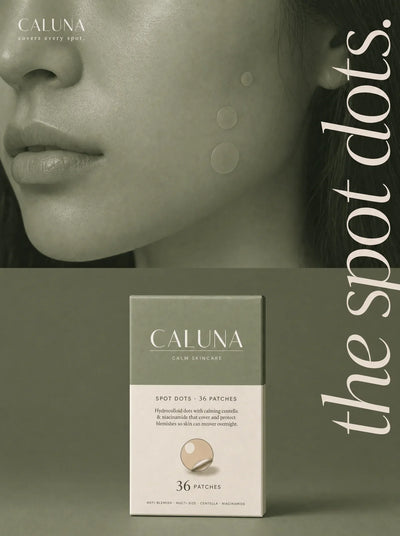
Cleanse down to the skin, not just the surface of the hair, morning and after a sweaty day. Pat it dry instead of leaving it damp. And notice how often you stroke or rest your hand in your beard during the day — that's a steady delivery of whatever's on your fingers straight to your jawline. When a spot does surface at the edge of the beard where skin is bare, a hydrocolloid patch is known for covering it, absorbing the fluid, and keeping your fingers off it while it settles. Our Spot Dots are made for exactly that.
What about the spots right along the jawline?
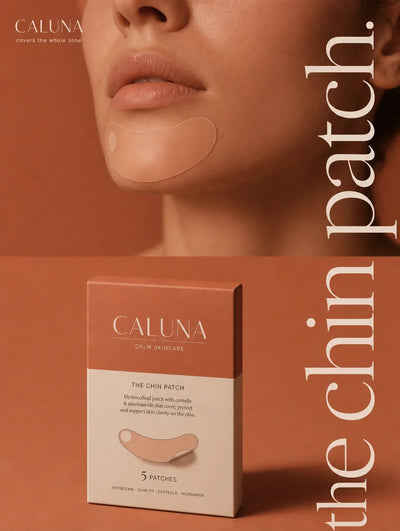
The jawline is the hardest strip to keep clear with a beard, because it's where hair, sweat, and the edge of every collar meet. It's also the exact zone we built the Chin Patch for.
Instead of chasing three or four spots along the jaw with single dots, one shaped cover follows the whole chin and jawline — fewer edges to catch on a beard, less fussing. The Chin Patch, built on a simplified hydrocolloid formula with the final ingredient list published at launch, is coming in November. If a whole-zone cover sounds useful under or around a beard, join the chin list.
Race update: nose 3 · forehead 2 · chin 1 · kids 1.
The zone with the most names launches first on November 1st — pick yours.
— Jake, founder of Caluna.