 Liquid error (snippets/caluna-cart-extras line 104): invalid url input
Drying out a pimple is one of the oldest pieces of skincare advice around, and it mostly doesn't do what people hope. Aggressively drying a spot tends to leave the skin around it red, tight, and flaky without making the spot itself settle down any sooner — and a raw, peeling patch of skin is often more noticeable than the pimple you started with. Here's what's actually happening when you reach for the rubbing alcohol, and the calmer approach that tends to work better.
Does drying out a pimple make it go away faster?
Usually not. A spot generally runs its own course over a few days whether you dry it out or not, and harsh drying can actually work against you by damaging the healthy skin around it.
The tools people reach for — rubbing alcohol, high-strength "spot zappers," toothpaste, hand sanitizer — are designed to strip moisture and oil hard and fast. When you use them on a single pimple, they don't just hit the spot; they hit the ring of normal skin around it too. That skin gets tight and starts to flake, and stripped skin often responds by pumping out more oil to compensate. So you can end up with a dry, irritated patch sitting right where you were trying to clean things up.
Why does the "dry it out" trick seem to work?
Because a drying agent shrinks the surface shine within an hour or two, so the spot looks flatter and less angry almost immediately. That change is cosmetic, not the spot resolving.
What you're seeing is the very top layer dehydrating and going matte, which reads as "progress." Underneath, the bump is still doing its thing. Meanwhile the surface is now compromised, which is why a spot you've dried out repeatedly can peel, sting when you put anything on it, and take longer to look normal again. The quick flattening is real, but it's borrowed against the skin's comfort later.

What actually helps a spot settle down?
Leaving it alone in a clean, protected environment. The single most helpful thing you can do is not pick or squeeze it — picking is one of the biggest causes of dark marks and a longer recovery.
Beyond keeping your fingers off it, gentle is the whole game: wash the area with a mild cleanser, skip the urge to scrub, and don't stack five strong products on one spot. If you can physically cover the pimple, even better — a cover keeps it from getting knocked, touched, or picked at through the day, and it stops you absent-mindedly going back to it while you work.
How do hydrocolloid pimple patches fit in?
They take the opposite approach to drying out. A hydrocolloid patch sits over the spot, absorbs the fluid that weeps from it, and keeps the area covered in a calm, slightly cushioned environment instead of a parched one.
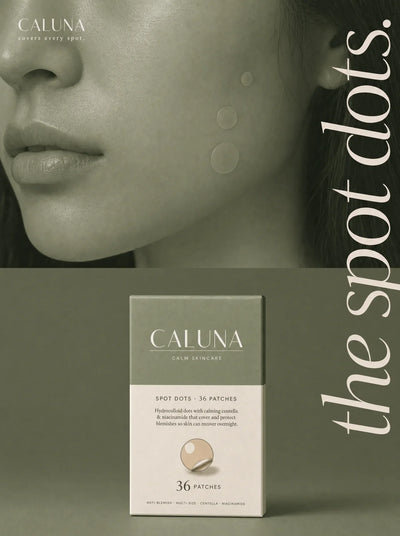
That covering does two useful things at once: it soaks up gunk from a spot that's already come to a head, and it acts as a physical barrier so you can't pick. It's why patches are a favorite for people who know they're pickers. Caluna's Spot Dots go a step further than plain hydrocolloid — each invisible dot carries seven skin-loving actives (hydrocolloid, tea tree oil, salicylic acid, centella asiatica, calendula, niacinamide, and hyaluronic acid) where most patches have zero. Salicylic acid is known for keeping pores feeling clear, and hyaluronic acid is known for helping skin feel hydrated rather than stripped — the opposite of the dry-it-out approach. You get 36 dots a box (about 33¢ a dot), and you can leave one on for six to eight hours or overnight while you sleep.
When should you skip the DIY drying tricks and see a dermatologist?
If your breakouts are severe, painful, deep and cystic, or simply won't let up no matter what you try, it's worth seeing a dermatologist rather than experimenting at home. Persistent acne usually responds best to a proper plan from a professional, and a dermatologist can point you to options that a patch or a bottle of astringent can't match. Drying tricks and patches are fine for the occasional surface spot; anything ongoing deserves real advice.
The short version: drying a pimple out mostly punishes the skin around it. Keep the spot clean, keep your hands off it, cover it if you can, and let it run its course — your face will look calmer for it.
— Jake, founder of Caluna.