
Trying to dry out a pimple usually backfires. Blasting a spot with alcohol, toothpaste or a harsh scrub can leave the skin around it red, tight and flaky — often looking worse than the pimple you started with. Here's what "drying it out" actually does, and what tends to leave skin looking calmer instead.
Does drying out a pimple make it go away faster?
No — in most cases it slows things down. Stripping a spot with high-strength alcohol or astringents damages the healthy skin around it, and that damage shows up as flaking and redness that can linger for days.
A pimple isn't just surface oil. It's a clogged, inflamed pore, and a drying agent painted on top doesn't reach the actual clog — it just dehydrates the skin sitting over it. You end up with the original bump plus a patch of raw, peeling skin around it, which is usually more noticeable, not less. Skin generally settles more comfortably when the area is protected and lightly hydrated rather than parched.
Why does drying skin out feel like it's working?
Because tightness and peeling feel like "something is happening." That sensation is irritation, not progress.
Oil and breakouts feel linked, so drying the surface out feels logical — if oil is the problem, strip the oil, right? But when you over-dry, skin can actually ramp up oil production to compensate, and the barrier you just stripped is now more reactive. The squeaky-tight feeling people chase is often the exact thing making the area look angrier.

What about toothpaste, rubbing alcohol and lemon juice?
Skip all three. None was made for your face, and each tends to irritate more than it helps.
Toothpaste contains ingredients like menthol, baking soda and fragrance meant for enamel, not skin — they can burn and cause a rash right where you put them. Rubbing alcohol strips the barrier and leaves skin stinging and flaky. Lemon juice is highly acidic and can leave the skin more sensitive to sunlight, which is a real problem on a spot you're already fussing with. Old-internet hacks are cheap, but the trade-off is usually a bigger, redder mark.
Is a moist, protected environment actually better for a spot?
Usually, yes. Keeping a spot covered and slightly moist tends to calm the surface and, just as importantly, stops you from touching and picking it.
This is the idea behind a hydrocolloid pimple patch. The patch sits over the spot, absorbs fluid as a whiteheady bump drains, and holds a clean, slightly moist, protected pocket underneath — the opposite of drying it to a crisp. It also puts a physical barrier between your fingers and the pimple, and picking is the single biggest cause of scarring and the extra redness that turns a two-day spot into a two-week one. A patch worn 6 to 8 hours, or overnight, gives the area time to settle without interference.
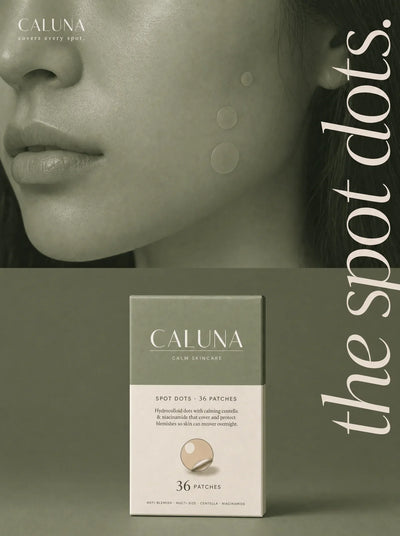
Caluna's hydrocolloid patches lean into the "protect, don't punish" idea: 36 invisible dots a box, built with 7 skin-loving actives — hydrocolloid, tea tree oil, salicylic acid, centella asiatica, calendula, niacinamide and hyaluronic acid — where a lot of patches have none. Salicylic acid is known for helping pores feel clearer, and hyaluronic acid and centella are known for keeping skin feeling comfortable rather than stripped. You can see the full 7-actives patches here.
What actually helps a pimple settle down?
Protect it and leave it alone. The less you do to a spot, the faster it tends to look like ordinary skin again.
- Cover it instead of stripping it — a hydrocolloid patch protects the spot and takes picking off the table.
- Keep the rest of your routine gentle: a mild cleanser and a light moisturizer, not a pile of strong actives all at once.
- Resist the squeeze. Popping pushes bacteria deeper and is what leaves marks behind.
- Give it time. Most single spots calm down over several days on their own when you stop irritating them.
- If breakouts are severe, painful or persistent, a dermatologist can help you find a plan that fits your skin.
The short version: drying a pimple out is the harsh road that usually leaves more redness behind. Covering it, keeping it comfortable and keeping your hands off it is the boring, effective one.
— Jake, founder of Caluna.