
We're ten days out from Launch 2.0 on November 1st, and the nose list is still out front — so today's for everyone who attacks a shiny nose with the roughest scrub in the cabinet. Does scrubbing your nose make breakouts worse? Often, yes: the nose is already the oily zone most prone to irritation, and scrubbing it hard strips and inflames the skin, which tends to leave it redder and rougher — and no clearer than before.
Why do we scrub the nose harder than anywhere else?
Because it's the oiliest, most textured-looking part of the face, so it feels like it needs the most work. The nose sits at the center of the T-zone, where oil glands are packed most densely, so it looks shiny and bumpy even on a good skin day.
That shine is normal, not a sign you failed to clean it. The urge to sand the nose down comes from treating oil like dirt, but oil is the skin doing its job — and the nose simply makes more of it than your cheeks ever will.

What actually happens when you over-scrub?
You wear down the skin's protective barrier, and irritated skin looks worse, not better. Grainy scrubs and stiff brushes used every day can leave the nose tight, flaky, and pink — sometimes even greasier-feeling, because stripped skin can overcompensate.
Scrubbing also keeps an existing spot angry. Dragging a washcloth hard over a bump night after night is just a slower version of picking at it: the skin stays inflamed and takes longer to settle. The goal with any breakout zone is less friction, not more.
Can scrubbing get rid of the dark dots on your nose?
No. Those tiny dark dots are usually sebaceous filaments — a normal part of the pore — and no amount of scrubbing removes them for good.
They refill on their own within days, because they're simply how an oily nose moves oil to the surface. Scrubbing to erase them mostly irritates the skin around them. If a spot is genuinely painful or hangs around for weeks, that's a conversation for a dermatologist, not a rougher scrub.
How often should you exfoliate your nose?
Gently, and no more than a couple of times a week. For most oily noses, a mild exfoliant used a few times a week does more than a daily physical scrub ever will, with far less irritation.
Let the skin tell you. If your nose feels tight, stings, or looks pink afterward, that's a sign to back off and let the barrier settle. Calm skin handles its own oil better than raw skin does.
What should you do with an oily nose instead?
Cleanse gently, blot through the day, and leave the squeezing alone. A short, boring routine beats an aggressive one here:
- Wash once or twice a day with a gentle cleanser and warm — not hot — water.
- Keep blotting papers around; they lift surface oil without stripping the skin.
- Resist picking or pressing a bump — fingers add oil and bacteria and keep it inflamed.
- When a whitehead does surface, cover it instead of attacking it.
Where does a patch fit in?
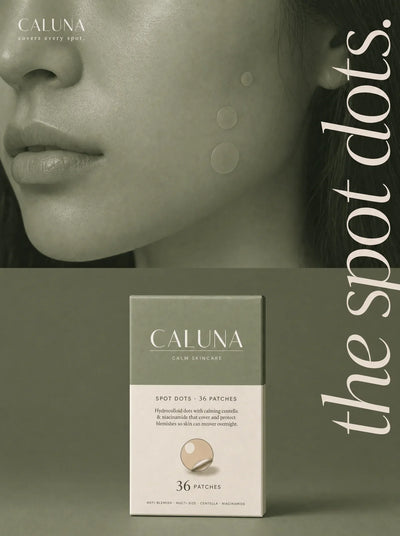
A patch's main job here is to cover a spot so you stop touching it. Our Spot Dots are hydrocolloid dots known for absorbing the fluid from a surfaced whitehead and keeping your fingers off it overnight — which matters most on a nose you'd otherwise be scrubbing or squeezing. (Spot Dots are available now.)
Flat dots do struggle to hold on the curved sides of the nose, which is exactly why a nose-shaped patch is coming in November — join the nose list.
The short version: your nose doesn't need to be scrubbed into submission. It needs a gentler hand than the rest of your face, not a rougher one — and most of the time, the skin settles once you stop fighting it.
Race update: nose 3 · chin 1 · forehead 2 · kids 1. The zone with the most names launches first on November 1st — pick yours.
— Jake, founder of Caluna