
Short answer: yes, stress really can play a role in breakouts. It doesn't create acne out of thin air, but a stressful stretch — deadlines, bad sleep, a hard week — can make spots more likely to show up and slower to settle down. Here's what's actually going on, and a few calm ways to handle a stress breakout without making it angrier.
Can stress actually cause breakouts?
Stress can make breakouts more likely, but it's rarely the whole story. It works alongside the usual suspects — hormones, oil, clogged pores, and bacteria — and tips the odds toward a flare-up rather than starting acne from scratch.
Think of it as an amplifier, not a switch. If your skin is already breakout-prone, a stressful week can turn the volume up. That's why so many people notice a spot appearing right before a big presentation or during exam season, even when nothing else in their routine changed.
Why do you break out when you're stressed?
When you're stressed, your body makes more of a hormone called cortisol, which is known for nudging your oil glands to produce extra oil. More oil plus dead skin cells can mean more clogged pores, and clogged pores are where breakouts tend to begin.
There's usually a behavior loop hiding in there too. Stress often comes with less sleep, more late-night snacking, skipped cleansing, and — the big one — more face-touching and picking. Each of those small things can nudge already-irritated skin in the wrong direction, so the breakout feels worse than the stress alone would explain.

Where do stress breakouts usually show up?
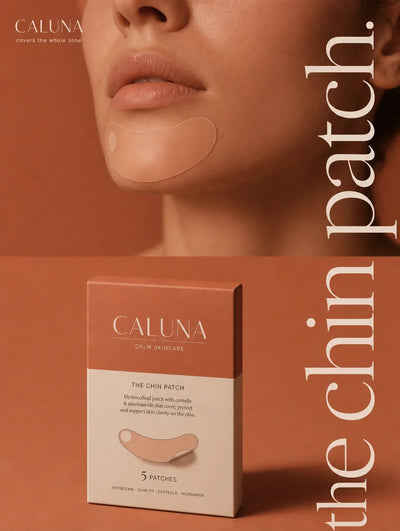
Stress-related breakouts often land around the chin, jawline, and lower cheeks — the zones most sensitive to hormone shifts. Many people also notice them in spots they habitually touch or rest their hand against during a tense day.
Everyone's skin is a little different, so this isn't a rule. But if you keep getting spots in the same lower-face areas during your busiest weeks, stress and hormones are a reasonable thing to suspect.
How do you calm a stress breakout without making it worse?
Keep your routine simple and resist the urge to attack the spot. The fastest way to make a stress breakout worse is to pick at it, over-scrub, or pile on five new products at once when your skin is already irritated.
A few things that genuinely help:
- Cleanse gently morning and night, and don't scrub — irritated skin doesn't need friction.
- Hands off. Picking and squeezing can push things deeper and drag out healing, so cover the spot instead of touching it.
- Cover a surfaced whitehead with a hydrocolloid patch. The patch absorbs fluid, protects the area, and — maybe most usefully during a stressful week — physically stops you from picking at it.
- Protect your sleep where you can. Rest is one of the few free things that helps your whole system, skin included.
- Don't overhaul everything at once. Introduce changes slowly so you can tell what's actually helping.
Do pimple patches help with stress breakouts?
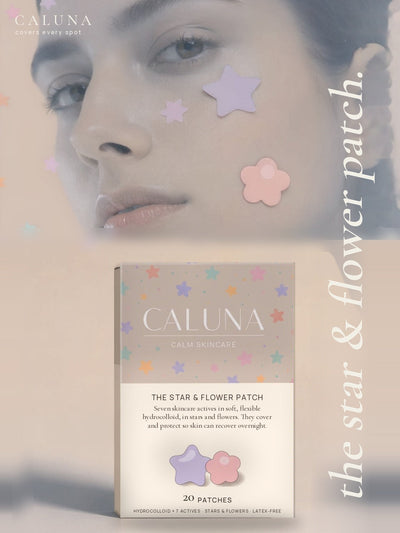
They can help with the individual spots — specifically the raised, surfaced whiteheads that stress weeks love to produce. A patch covers the spot, absorbs the gunk, and creates a barrier between your fingers and your face, which is exactly what a picking-prone stressed brain needs.
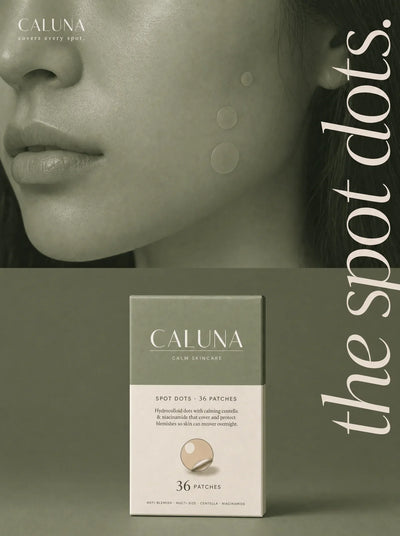
This is where Caluna's hydrocolloid patches fit in: 36 nearly invisible patches per box, each carrying seven skin-loving actives — hydrocolloid, tea tree oil, salicylic acid, centella asiatica, calendula, niacinamide, and hyaluronic acid — where most patches on the shelf have zero. Salicylic acid is known for helping pores feel clear, and centella and calendula are known for helping skin feel calmer, while the hydrocolloid does the quiet work of absorbing fluid and keeping your hands off. A patch won't lower your stress, but it can make the spot easier to leave alone until it settles.
When should you see a dermatologist?
See a dermatologist if your breakouts are severe, painful, deep, or just won't quit — patches and a gentle routine are for the everyday surface stuff, not a substitute for real care. Persistent or cystic acne deserves a professional who can look at your skin and your health as a whole.
That's especially worth doing if stress has become a constant rather than a rough week here and there. Skin is often the first place ongoing stress shows up, and it's a fair reason to get both your skin and your stress some proper support.
— Jake, founder of Caluna