
Sunscreen doesn't directly cause acne, but on a nose that's already the oiliest patch on your face, a heavy or greasy formula can clog pores and leave you breaking out right down the middle. The sunscreen itself usually isn't the villain — it's the wrong formula, or one you sweat through and reapply over a day's worth of oil and grime, that tips an oily nose over the edge.
It's late September as I write this, about five weeks out from Caluna's November 1st launch, and the nose list is still out front on the zone race. I'm a plumber in Florida sun most days, so a sunscreen-slicked, shiny nose is a problem I live with — here's the honest version.
Can sunscreen really break out your nose?
Yes, it can — some sunscreens clog pores, and the nose is the easiest place on your face for that to show up. Dermatologists have a loose name for product-driven breakouts like this: acne cosmetica.
It's not an allergy and it's not dirt. A rich, occlusive sunscreen sits on skin that already runs oily, and on the nose that combination can trap oil and dead skin in the pores instead of letting them clear. Skip sunscreen, though, and you trade a few bumps for real sun damage — so the answer is a better formula, not no formula.

Why does the nose break out from sunscreen more than the cheeks?
Because the nose is the oiliest zone on your whole face. It sits in the middle of your T-zone and carries one of the densest clusters of oil glands anywhere on your skin.
More oil glands means more oil for a heavy product to sit on top of. Add the fact that your nose catches the most direct sun — so it's where you slather the most sunscreen — and it's no surprise the center of your face is where a greasy formula announces itself first.
Which sunscreens are most likely to break out your nose?
The thick, greasy ones. Rich creams, very water-resistant sport formulas, and anything that leaves a heavy film are the usual suspects on oily skin.
Look for the words "non-comedogenic," "oil-free," or "gel" on the label — those are formulated to sit lighter on the skin. Mineral and chemical filters can both work; what matters more for breakouts is how heavy the base feels. If a sunscreen leaves your nose slick and shiny ten minutes after it goes on, that's the one your pores are most likely to complain about.
Does sweat make sunscreen break you out faster?
It can. Sweat mixes with sunscreen, oil, and whatever's on your hands, and when you rub or reapply over that on a hot day, you press the whole mix deeper into the pores on your nose.
If you work or train outside like I do, the fix isn't to quit reapplying — it's to blot the sweat and oil off your nose with a clean tissue first, then put fresh sunscreen on a cleaner surface. Reapplying over a slick nose is how a calm day turns into a bumpy one.
How do you wear sunscreen without breaking out your nose?
Keep it light, keep the nose clean, and don't let the day's buildup marinate. A few habits that help:
- Choose a lightweight, non-comedogenic or oil-free sunscreen for your face.
- Blot your nose with a clean tissue before reapplying, instead of layering over sweat.
- Wash sunscreen off at the end of the day so it isn't sitting on the skin for hours.
- Go easy — don't scrub the nose raw to "get it clean," which just leaves it oilier and redder.
None of that treats a breakout; it just takes away the fuel that keeps feeding one.
Where does a patch fit — and what's coming?
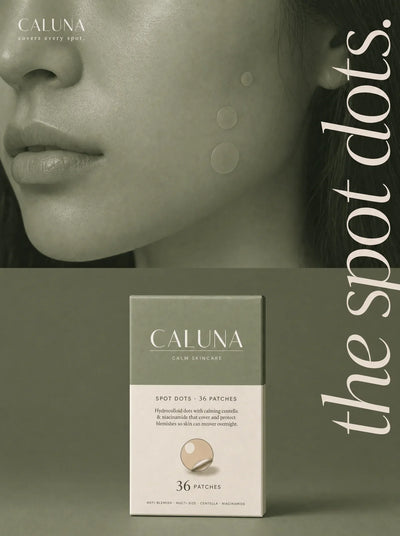
A patch is for after a spot has surfaced, not for the sunscreen itself. Once a whitehead comes to a head on your nose, a hydrocolloid patch is known for covering it, absorbing the fluid, and keeping your fingers off so the skin underneath can feel calmer. For a single spot today, our Spot Dots are the nearly invisible round dots we make for exactly that — 36 to a box, free US shipping.
The trouble with the nose is that a flat little dot slides right off its curve and creases, especially when you're sweaty. That's why I've been building one shaped for it: a single T-shaped patch that covers the bridge and hugs down both sides. The Nose Patch is coming in November — join the nose list to help decide when it launches. It runs a simplified hydrocolloid formula, with the final ingredient list published at launch.
One honest note: if your nose stays broken out no matter what sunscreen you switch to, or the spots turn painful, that's worth a dermatologist's eyes rather than another product swap.
Race update: nose 3 · chin 1 · forehead 1 · kids 1.
The zone with the most names launches first on November 1st — pick yours.
— Jake, founder of Caluna.