 Liquid error (snippets/caluna-cart-extras line 104): invalid url input
No — toothpaste was built for your teeth, not your skin, and the same ingredients that scrub enamel can dry out and irritate a pimple until it looks angrier than when it started. It's one of the oldest bathroom-cabinet hacks around, and it's earned a spot on the list of myths worth retiring.
Below is why the trick ever caught on, what toothpaste actually does to a breakout, and what to reach for instead when a spot shows up the night before you need your skin to behave.
Does toothpaste get rid of pimples?
No. Toothpaste isn't designed for skin, and nothing in it is meant to help a breakout — any "drying" you notice is irritation, not progress.
The whole idea rests on toothpaste drying a pimple out overnight. It can dry the area, sure, but it dries the healthy skin around the spot right along with it, and the sting, flaking, and redness that tend to follow can turn one small pimple into a larger patch of unhappy skin for days. Dermatologists have been waving people off this one for a long time.

Why do people think toothpaste works on pimples?
Because older toothpaste formulas contained ingredients like baking soda and menthol that genuinely dry and tingle, so a spot could look a little flatter by morning — flatter from irritation, not from anything actually clearing it up.
The hack spread in the pre-patch era, back when your options at 11 p.m. were slim and a tube of toothpaste was right there on the sink. Modern toothpaste has mostly swapped those drying agents for fluoride, whitening agents, and gels that were never meant to sit on skin — so even the "it kind of worked in the 90s" version doesn't really hold up anymore.
What does toothpaste actually do to your skin?
It can strip and inflame it. Common toothpaste ingredients — SLS, baking soda, hydrogen peroxide, menthol, and flavor oils — are known skin irritants when left sitting on your face.
Those ingredients can disrupt your skin barrier, the thin outer layer that keeps moisture in and everyday bacteria out. A roughed-up barrier is more prone to redness, peeling, and, frustratingly, more breakouts. On deeper and medium skin tones, that irritation can also leave a dark mark long after the original spot has faded. That's a lot of effort for a downgrade.
What should you put on a pimple instead?
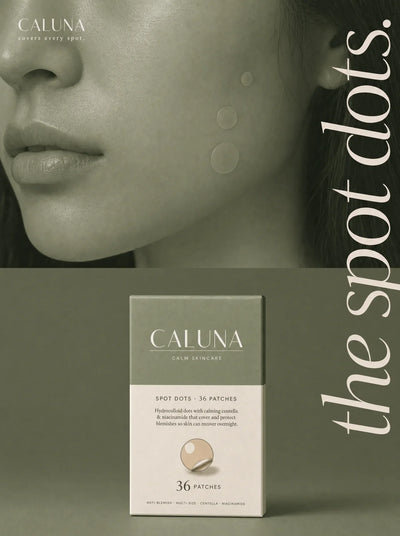
For a spot that's come to a head, a hydrocolloid pimple patch is the low-drama swap: it covers the spot, absorbs fluid, and keeps your fingers off it while you sleep.
Hydrocolloid is the same gel material used in wound dressings, and it's known for drawing fluid out of a surfaced spot while creating a calm, protected little environment instead of an irritated one. It also physically stops picking, which is usually what turns a one-day pimple into a two-week mark. Caluna's patches go a step further with seven skin-loving actives — hydrocolloid, tea tree oil, salicylic acid (known for keeping pores feeling clear), centella asiatica, calendula, niacinamide, and hyaluronic acid — where most patches have zero. A box is 36 invisible patches for $11.99, roughly 33 cents a dot, which means grabbing one instead of the toothpaste tube costs about the price of a gumball.
How long should you leave a pimple patch on?
About six to eight hours, or simply overnight. Give it time to do its quiet work, then peel it off — often cloudy white where it's absorbed fluid — in the morning.
Use one patch per spot and toss it afterward; they're single-use, so a fresh one goes on the next night if the spot needs more time. Clean, dry skin helps a patch grip, so apply it after you wash your face and before any heavy creams.
When should you see a dermatologist?
If your breakouts are severe, painful, or just won't let up, a dermatologist is the right call — no patch or home remedy replaces real medical advice.
Patches and gentle routines are great for the occasional surfaced spot. But cystic, widespread, or stubbornly persistent acne is worth a professional's eyes, and there are genuinely effective options a derm can offer that no bathroom cabinet can.
The short version: keep the toothpaste for your teeth. Your skin — and the spot — will thank you.
— Jake, founder of Caluna.