
Short answer: not really — and it can leave your skin feeling worse than when you started. Putting toothpaste on a pimple was the classic 2 a.m. bathroom-cabinet move for years, back before gentler options existed, but toothpaste was never made for skin. The same ingredients that make it foam and tingle are the ones known for drying out and irritating a spot. Here's what's actually going on, and what's worth reaching for instead.
Does toothpaste actually work on a pimple?
No. Toothpaste isn't formulated for skin, and the tingle most people read as "it's working" is usually just irritation.
The myth makes a kind of sense: toothpaste dries down hard overnight, and in the morning the spot might look a little flatter. But that flattening is mostly your skin reacting to being dried and stung, not a spot genuinely calming down. You're trading one visible bump for a patch of red, tight, flaky skin around it — and often the original spot is still right there underneath.
Why do people put toothpaste on pimples?
Because it's always in the bathroom and it feels like it's doing something. The menthol tingle and the way it hardens overnight get mistaken for "drying out the spot."
This one got passed down for a generation before pimple patches and gentle spot options were on every shelf. We're a build-in-public, founder-run brand, so we'll be honest: we get why the hack stuck around. It's free, it's right there, and feeling a cold tingle is weirdly convincing at midnight. But feeling something happen isn't the same as something helpful happening.

What does toothpaste actually do to your skin?
It can strip and irritate. Ingredients common in toothpaste — baking soda, menthol, hydrogen peroxide, and detergents like sodium lauryl sulfate — are known for being harsh on facial skin.
Your mouth and the skin on your face are very different environments. A paste built to scrub plaque and leave a minty burn can leave facial skin red, stinging, or peeling, especially if you have a reaction to the fragrance or flavor oils. Modern gel and whitening toothpastes often add even more of the ingredients that don't belong anywhere near an irritated spot. Over-drying can also make the surrounding skin feel tight and look more irritated than the single pimple you were trying to hide — which is the opposite of what you wanted before a big day.
What should you use on a pimple instead of toothpaste?
Cover it and leave it alone. A clean hydrocolloid patch sits over the spot, absorbs the fluid from a white head, protects the area, and — maybe most usefully — physically stops you from picking at it.
If you're shopping for a spot option that actually suits skin, look for a few things:
- Hydrocolloid — the gel material known for drawing fluid up and out of a surface spot while keeping it covered.
- Skin-friendly actives instead of mouth ingredients — things like salicylic acid (known for keeping pores feeling clear), tea tree oil, centella asiatica, and niacinamide.
- A thin, near-invisible finish so you can wear it through the day, not just overnight.
- No tingle or sting. A good patch should feel like nothing, not like a chemical peel.
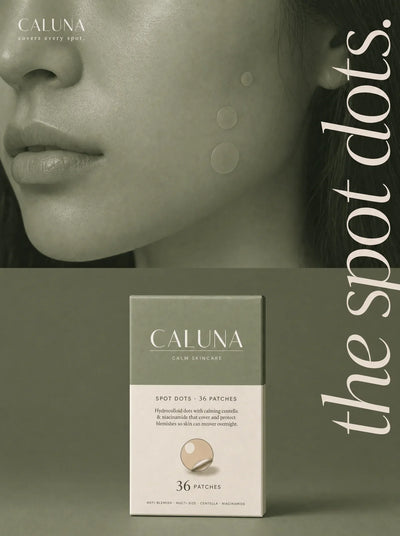
This is exactly the gap we built Caluna's hydrocolloid pimple patches to fill — 36 invisible dots per box with seven skin-loving actives (hydrocolloid, tea tree oil, salicylic acid, centella asiatica, calendula, niacinamide, and hyaluronic acid). Most patches have zero actives; toothpaste has none that belong on your face.
Does covering a pimple beat drying it out?
For a surface spot with a visible white head, usually yes. Covering keeps the area clean and protected and lets the patch quietly absorb fluid, instead of cracking the skin dry and leaving a flaky, red mark.
A patch also buys you something toothpaste never could: a barrier between your fingers and the spot. Picking is what turns a two-day pimple into a two-week mark, so a dot you leave on for six to eight hours often does more good by simply being in the way.
When should you see a dermatologist?
If your breakouts are painful, deep, cystic, or just won't let up, it's worth seeing a dermatologist. Covering a spot and skipping the toothpaste is for the occasional surface pimple — persistent or widespread acne deserves a professional's eyes and a real plan.
So the next time you're tempted by the tube: skip it. Keep the toothpaste for your teeth, put a clean patch over the spot, and let your skin feel calmer on its own time.
— Jake, founder of Caluna.