
Does toothpaste actually work on pimples? Not really. It can make a spot look a little drier for a few hours, but toothpaste is built for enamel, not skin — and the same ingredients that leave your mouth minty can leave a pimple red, stripped, and more irritated than it started. It's the classic 3 a.m. bathroom-cabinet move, and it's one worth retiring.
I'm Jake, and I run a tiny pimple-patch brand out of Florida, so I've heard the toothpaste trick more times than I can count — usually from someone who tried it once, panicked, and made it worse. Here's what's actually going on, minus the folklore.
Does toothpaste dry out a pimple?
Sort of, and that's exactly the problem. Toothpaste can pull moisture from the surface of a spot, which is why it can look flatter for a few hours — but drying out the skin around a pimple usually leads to redness and flaking, not a faster exit.
A pimple isn't a stain to scrub away. It's inflamed skin, and hitting it with something harsh tends to add a second problem — irritation — on top of the first one you were trying to fix.
Why do people think toothpaste works on pimples?
Because for the first night, it seems to. Toothpaste contains drying, cooling agents like baking soda, alcohol, and menthol that tighten and numb the skin, so a spot can look smaller by morning — but that's surface dehydration, not the pimple itself settling down.
The trick spread decades ago when toothpaste was simpler and chalkier. Most modern formulas pile on whiteners, flavors, and detergents that are even rougher on skin than the versions your grandparents used, so an old hack that was never great has aged badly.

What does toothpaste actually do to your skin?
It can irritate it. Toothpaste is formulated for teeth and gums, and on facial skin those same ingredients can trigger stinging, redness, dry patches, and — in some people — a bumpy irritation reaction right where it was dabbed on.
That's the frustrating part: you can trade one small spot for a dry, angry patch that's more noticeable than what you started with. On sensitive or already-broken skin, that reaction can easily outlast the original pimple by several days.
Which toothpaste ingredients bother skin most?
A few specific ones do most of the damage. Each is perfectly fine for a two-minute brush and a rinse — but left sitting on a spot for hours, they strip and sting far more than they soothe:
- Sodium lauryl sulfate, a foaming detergent
- Menthol and mint oils
- Baking soda
- Hydrogen peroxide and other whiteners
- Alcohol
What should you put on a pimple instead?
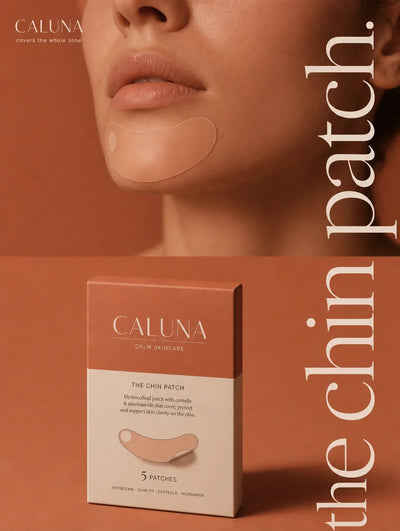
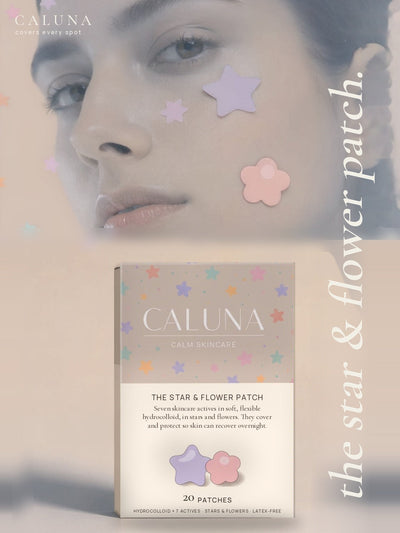
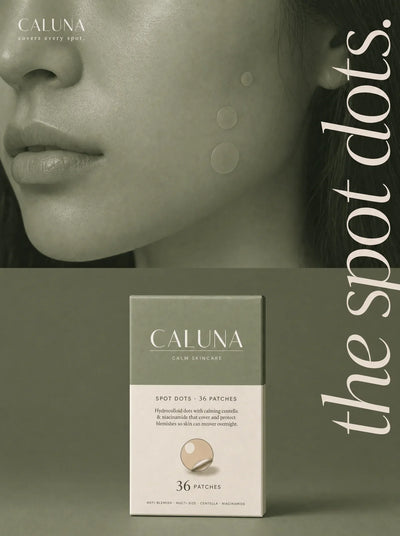
Reach for something actually designed for skin — and for a raised, fluid-filled spot, a hydrocolloid pimple patch is one of the simplest options. Hydrocolloid is a gentle dressing material known for absorbing fluid and covering the spot, which also means you physically can't pick at it while it's on.
That last part matters more than people expect. A lot of what looks like pimple damage is really picking damage, and a patch you leave on for 6 to 8 hours overnight quietly takes your fingers out of the equation while the skin underneath is left alone to calm down. Our Caluna patches pair that hydrocolloid with tea tree, salicylic acid, centella, calendula, niacinamide, and hyaluronic acid — seven skin-loving actives in one nearly invisible dot, where most patches have zero. But the idea is simpler than any single ingredient: cover the spot, stop touching it, and let the skin feel calmer on its own.
When should you see a dermatologist?
If breakouts are painful, widespread, or just won't quit, that's a job for a professional rather than a bathroom-cabinet experiment. A dermatologist can look at what's actually driving your skin and point you toward options a spot treatment can't reach.
Toothpaste, for its part, has exactly one job — and it's a good one: keeping your teeth clean. Let it stick to that, and give your skin something built for it instead.
— Jake, founder of Caluna