
We're about five weeks out from November now, and the chin list is still in the race — one name so far, but every single signup counts as a vote for which zone launches first. Today's question is one I get from guys on the job as much as from anyone: if you wear a mask for hours — a cloth or surgical one, or a dust mask or respirator on a job site — and your chin and jawline keep breaking out underneath it, the mask is very likely part of the story. It's less that the fabric is "dirty" and more that a mask traps heat, sweat, and friction against exactly the zone where breakouts already like to gather.
Why does a mask break out your chin and jawline?
Because a mask holds warmth, moisture, and light rubbing against the lower third of your face for hours at a time, and that combination is known for making skin in that zone react.
Think about what's happening under there. Your breath and sweat keep the air humid, the skin stays warmer than usual, and the edges of the mask drag a little every time you talk or turn your head. Skin doctors even have a nickname for it — "maskne" — because the pattern is so common. It tends to land on the chin, the jaw, and the folds beside your mouth, which is the same real estate that flares for plenty of people to begin with. If you're strapping on a respirator every shift, the seal is tighter and the hours are longer, so the effect is stronger.
Is it the mask itself or the sweat underneath?
Usually both, working together — the sweat and oil give the trouble something to feed on, and the mask seals it all against your skin.
On its own, a clean mask isn't the enemy. The problem is the little sealed environment it creates: warm, damp, and rubbing. Sweat and oil that would normally evaporate just sit there instead, and the friction keeps the skin irritated. That's why the same mask can feel fine on a cool, easy day and wreck your jawline on a hot one where you're sweating through it.

How do you keep a mask from breaking out your chin?
Cut down three things: the heat, the friction, and how long grime sits on your skin. None of it is complicated.
- Start with a fresh or clean mask, and swap a disposable one out through a long day instead of wearing the same damp one for twelve hours.
- Take it off for a few minutes when you safely can, so the skin gets to cool and dry out.
- When you're done, rinse your chin and jaw with a gentle cleanser and pat — don't scrub — it dry.
- Go light on heavy creams or thick sunscreen right under the mask, since occlusion presses them into the skin.
- Keep your hands off the spots that show up. Picking at a jawline bump almost always drags it out longer.
If your chin stays broken out no matter what you change, or the spots are deep and painful, that's worth a dermatologist's eyes rather than a guessing game — some breakouts need more than a routine tweak.
Does covering the whole zone help more than dotting single spots?
When breakouts are scattered across the chin and jaw instead of sitting in one neat spot, covering the zone is simply less fiddly than chasing each one.
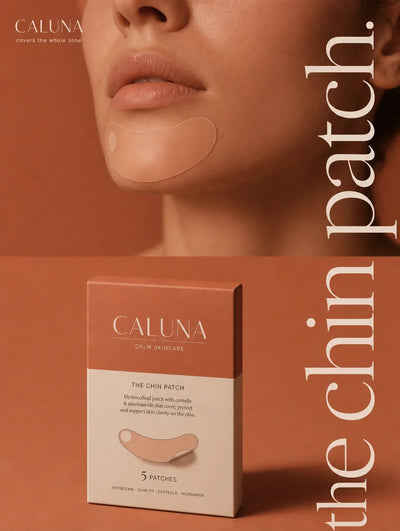
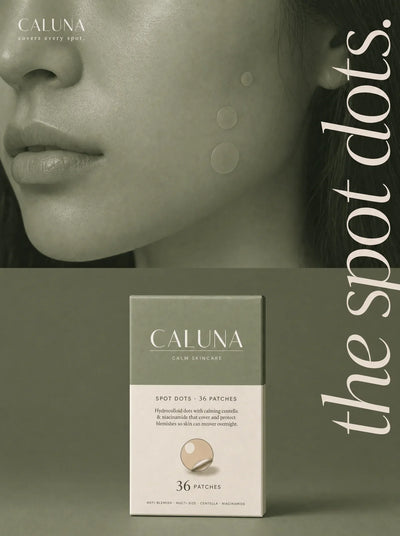
A hydrocolloid patch is known for covering a spot, absorbing the fluid that weeps out of it, and — maybe the underrated part — physically keeping your fingers off it while it settles. For a single stubborn spot, our Spot Dots do that job right now. But a whole mask-irritated jawline is a different shape of problem, which is the whole reason I'm building The Chin Patch: one crescent-shaped patch, a simplified hydrocolloid formula with the final ingredient list published at launch, made to sit along the chin and jaw. It's coming in November — join the chin list if that's your zone.
Race update: nose 3 · chin 1 · forehead 1 · kids 1. The zone with the most names launches first on November 1st — pick yours.
— Jake, founder of Caluna.