
Short version: working out doesn't magically cause acne, but the sweat, friction and trapped heat around your hairline give forehead breakouts a real head start. If you lift or run and your forehead is where things flare, the fix is less about the gym itself and more about the ten minutes right after it.
It's the first week of September here in Port St. Lucie, which puts us about eight weeks out from Launch 2.0 in November — and the zone race is live. More on that at the bottom. For now, let's talk sweat, because I'm a gym guy and a Sunday runner and my forehead is the first place I feel a bad week.
Does working out actually cause forehead breakouts?
Not directly. Exercise itself is good for your skin — what causes the trouble is sweat sitting on your forehead, mixing with oil, sunscreen and whatever's in your hair, then getting pressed in by a band or a hat for an hour.
Your forehead is part of the T-zone, the oiliest strip of your face, so it's usually the first casualty. Sweat on its own isn't dirty. It's sweat drying on the skin under friction, over and over, that tends to clog things up. That's why the same 5K that leaves your arms totally fine can light up your hairline.

Is it the sweat or the sweatband?
Usually the band. A damp sweatband or headband held tight against your forehead for a whole workout is friction plus trapped moisture — the exact combination known for aggravating breakouts right along the hairline.
There's even a name for it: acne mechanica, breakouts driven by pressure and rubbing rather than by what you ate. The practical fixes are boring but they work. Rotate your bands instead of grabbing the same crusty one every day — I keep three and wash them with my gym clothes. Loosen a hat that leaves a red line on your forehead. And if a headband is soaked halfway through, that's your cue it's doing more harm than good.
Should you wash your face right after a workout?
Yes — ideally within about 15 to 20 minutes, with a gentle cleanser and lukewarm water. If you can't get to a sink, a plain fragrance-free wipe, or even splashing water on your forehead, beats letting sweat dry on your skin for the drive home.
One thing not to do: scrub. An already-irritated forehead does not need a grainy exfoliant grinding into it — that usually makes the redness worse. Rinse, pat dry with a clean towel (not the one that's been balled up in your bag since Tuesday), and leave it alone.
What do you do about a spot that's already there?
Cover it and keep your hands off it. A hydrocolloid patch sits over the spot, absorbs fluid, and puts a physical barrier between the skin and your fingers — and your sweaty headband — so it's left alone to feel calmer.
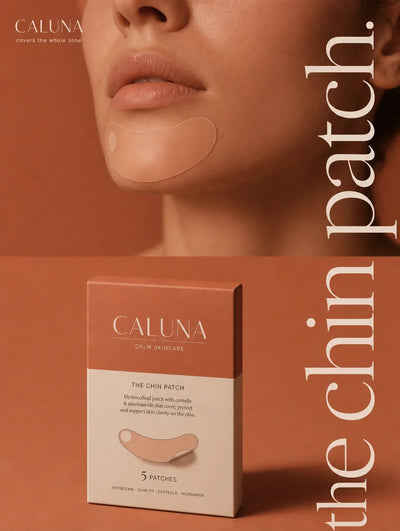
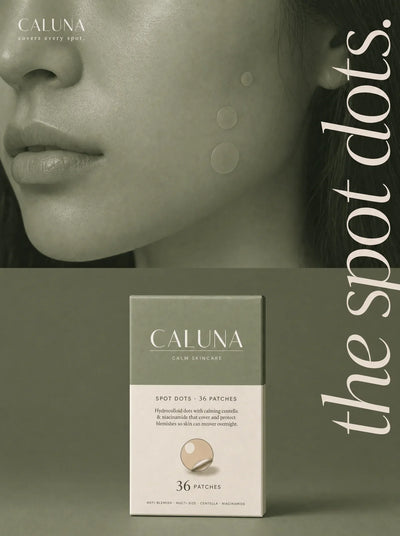
Right now the thing you can actually buy from us is our Spot Dots — 36 nearly invisible hydrocolloid dots, about 33 cents a dot, that you can wear day or night. For a forehead that breaks out in a band across the middle rather than in one tidy spot, dotting six little circles gets old fast — which is exactly why we're building a single wide patch for it. That's The Forehead Patch, coming in November — join the forehead list. It's a simplified hydrocolloid formula, with the final ingredient list published at launch.
When should you see a dermatologist instead of patching?
If your forehead bumps are painful, spreading, or show up as lots of tiny uniform dots that itch after sweaty workouts, see a dermatologist before you keep patching. Small, itchy, look-alike bumps along a sweaty hairline can be folliculitis — sometimes a yeast-driven kind people call "fungal acne" — and that's a different thing that needs different care.
Patches and a good post-gym rinse are great for the ordinary whitehead. They're not the fix for a rash or an infection, and there's no shame in getting a professional to look at something that won't settle down. That's not the patch's job.
Race update: nose 3 · chin 1 · forehead 1 · kids 1. The zone with the most names launches first on November 1st — pick yours.
— Jake, founder of Caluna.