 Liquid error (snippets/caluna-cart-extras line 104): invalid url input
A hydrocolloid pimple patch works by covering a spot with a gel-forming dressing that absorbs fluid and seals the area off from air, dirt, and your fingers. As it draws that fluid up, the patch usually turns cloudy or white — which is the easiest sign that it's doing its job.
I get asked about this constantly, usually some version of "wait, it's just a sticker, how is that supposed to do anything?" Fair question. So here's the honest, non-hype version of what's actually happening under that little dot.
What is hydrocolloid, exactly?
Hydrocolloid is a gel-forming material that's been used in wound dressings for decades. On skin, it absorbs moisture and forms a soft, cushiony seal over whatever it's covering.
The patch itself is a thin, flexible film with hydrocolloid particles built into the adhesive side. When those particles meet fluid, they swell into a gel and hold onto it. That's the same reason hospitals have used hydrocolloid on blisters and minor scrapes for years — it keeps an area covered and protected while the skin underneath is left alone.
How does a hydrocolloid patch actually work on a pimple?
It does three things at once: it absorbs the fluid a whitehead pushes to the surface, it keeps the spot in a clean, covered environment, and it physically stops you from touching or picking at it.
That last part is underrated. A huge amount of the damage a pimple leaves behind comes from picking — and you can't pick what you can't reach. The patch sits flush over the spot, soaks up the oily, cloudy stuff as it comes up, and traps it in the gel instead of letting it spread across your skin or dry into a scab. Your skin gets to stay covered and calm while it does its own thing.

Why does the patch turn white?
The white, puffy look is simply the fluid the patch has pulled up and trapped in its gel — oil and the cloudy contents of a whitehead. It's absorbed gunk, not the pimple being "sucked out" whole.
A lot of people think the whiteness is proof the patch destroyed the pimple. It's gentler than that: the hydrocolloid just gave that surface fluid somewhere to go. If your patch never turns white, it usually means the spot didn't have much fluid at the surface to begin with — which brings us to the big limitation.
Do hydrocolloid patches work on every kind of pimple?
No. They're at their best on surface whiteheads with a visible head, and they do very little for deep, "blind," or cystic pimples sitting far under the skin.
If there's nothing at the surface for the gel to absorb, a plain patch mostly just covers the area and keeps your hands off it — still useful, but don't expect the dramatic white dome. For spots that are painful, deep, or a breakout that keeps coming back in the same place, a patch is a comfort measure, not a fix, and that's genuinely a good moment to see a dermatologist rather than layering on more products.
How long should you leave a hydrocolloid patch on?
Give it at least 6 to 8 hours, which is why overnight is the classic move. Leave it on until it turns white or up to about 12 hours, then peel it off and swap in a fresh one if the spot's still working.
Hydrocolloid needs time to draw fluid up gradually, so a five-minute patch won't do much. Press it on clean, dry skin — no moisturizer or oil underneath, or it won't stick — and let it sit. One dot, one spot, one long stretch.
What about patches with added ingredients?
Plain hydrocolloid only covers and absorbs. Some patches build skincare actives into the dot so the material is quietly doing more while it sits on your face.
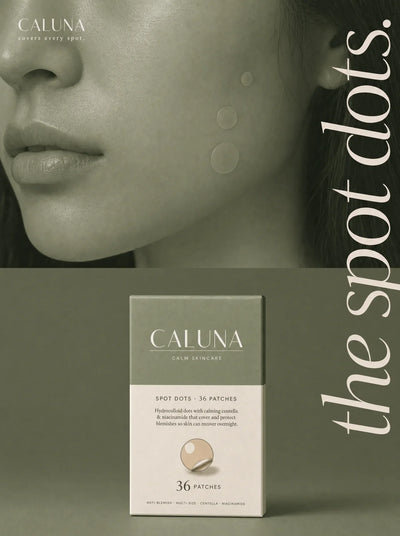
That's the whole idea behind our Caluna hydrocolloid pimple patches: seven skin-loving actives worked into an invisible dot — hydrocolloid to cover and absorb, plus salicylic acid (known for helping keep pores feeling clear), tea tree oil, centella asiatica, calendula, niacinamide, and hyaluronic acid to help skin feel calmer and comfortable under the patch. Most patches on the shelf have zero. You get 36 dots in a box for $11.99 — about 33 cents a dot — with free US shipping, and a first box is $6.99 with the code FIRSTBOX if you want to try them before committing.
The short version
A hydrocolloid patch covers a spot, absorbs the fluid at the surface, and keeps your fingers off it while your skin stays calm and protected. It's simple, it's not magic, and it works best on the whiteheads you'd otherwise be tempted to pick. Put one on before bed, let it turn white overnight, and let your skin have the morning off.
— Jake, founder of Caluna.