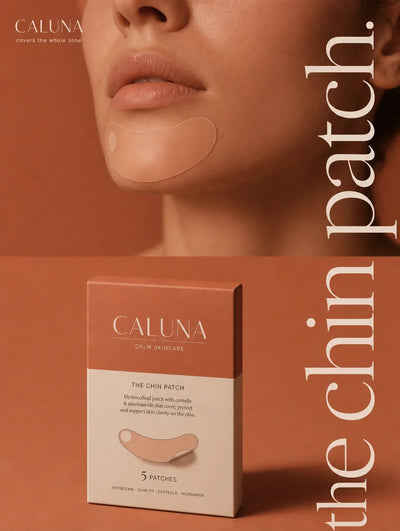
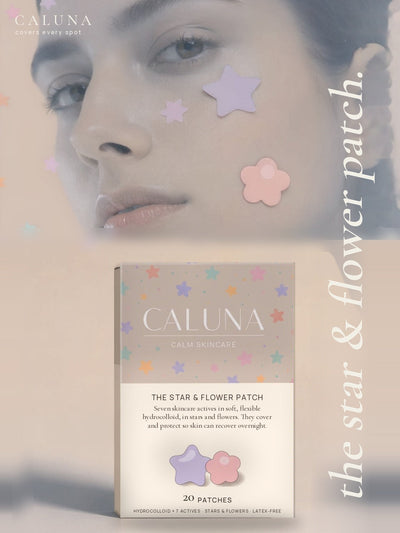
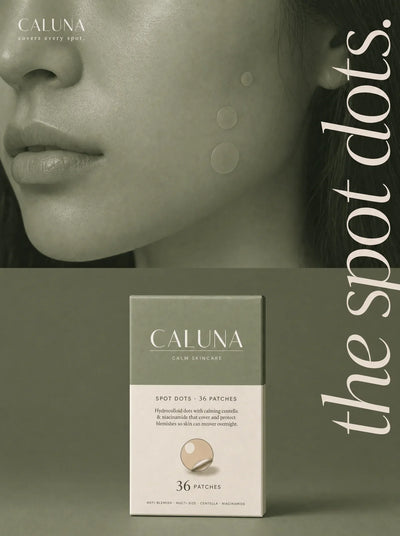

A hydrocolloid pimple patch works by sealing over a spot like a tiny bandage and quietly absorbing the fluid that collects under it. The gel material draws moisture out of the blemish, turns from clear to cloudy white as it fills up, and shields the skin underneath from air, outside grime, and — maybe most importantly — your own fingers. No stinging, no drying agents, no mirror-gazing at 11pm. Just a little dot doing its job while you sleep.
If you've ever wondered why a translucent sticker became the most-shared step in half the skincare routines online, here's the plain version of what's actually happening under there.
What is hydrocolloid, actually?
Hydrocolloid is a gel-forming dressing material borrowed from wound care, made of tiny particles that swell and lock onto liquid. It's the same stuff that's been used on blisters and minor scrapes for decades.
The key property is that it creates a sealed, slightly moist pocket against the skin instead of leaving the area open to dry out and crust over. That moist-but-protected environment is what the material is known for in wound care, and it's exactly why someone eventually thought to shrink it down and stick it on a whitehead.

How does a hydrocolloid patch work on a pimple?
It seals over the spot and pulls the fluid from a whitehead up into the gel, which is why the patch turns opaque white where a clear one used to be. That white circle is the visible proof it's doing something — it's absorbed fluid, not magic.
While it's absorbing, the patch is also acting as a flat physical barrier. It keeps the surface covered so the area stays protected while your skin does its own thing underneath, and it flattens the little dome so the spot looks less angry by morning. The cloudier and puffier the patch, the more it has drawn up.
How long should you wear a hydrocolloid patch?
Six to eight hours at a minimum, and overnight is ideal. Swap it out once it's turned white and puffy, or after about 8 hours — whichever comes first.
Patches work best on a spot that has come to a head, meaning there's a visible whitehead with fluid to pull. On deep, under-the-skin bumps there's nothing at the surface to absorb yet, so a patch mostly helps by covering the area and keeping you from poking at it until it's ready. Clean, dry skin matters too: press the patch onto a freshly washed, fully dry spot — no serums or oils underneath — so it can grip for the full stretch.
Does a hydrocolloid patch dry out your skin?
No. Unlike dab-on spot treatments that work by drying a pimple out, hydrocolloid keeps the area in a moist, sealed environment instead.
That's a big part of the appeal for people who've been burned by harsh spot gels that leave a flaky, red patch behind that's somehow more obvious than the original spot. A plain hydrocolloid dot carries no active ingredients and no sting — it's just the gel, covering and absorbing. The flip side is that a bare patch only absorbs; it isn't doing anything else for your skin while it sits there.
What makes some hydrocolloid patches better than others?
The difference is what's in the gel. A basic patch only absorbs fluid, while a loaded patch can also carry skin-loving ingredients that support the spot while it's covered.
This is the thinking behind our Caluna Hydrocolloid Pimple Patches — we build seven actives right into the dot instead of shipping a plain sticker. Alongside the hydrocolloid you get tea tree oil and salicylic acid (both known for helping pores feel clear), centella asiatica and calendula (known for helping skin feel calmer), plus niacinamide and hyaluronic acid. Seven actives; most patches have zero. The patches are invisible enough to wear to work or to bed, and a box of 36 runs $11.99 — about 33 cents a dot.
Whatever patch you reach for, the real win is simple: a covered spot is one you can't pick at, and not picking is what keeps a one-day spot from turning into a two-week mark.
When should you skip the patch and see a dermatologist?
If your breakouts are severe, painful, cystic, or just won't let up no matter what you try, that's a conversation for a dermatologist rather than a sticker.
Patches are great for the occasional surface spot — the pre-event flare-up, the stress bump, the one that appears the morning of a photo. They're a cover-and-protect tool, not a plan for persistent or widespread acne. If that's what you're dealing with, a professional can look at the whole picture and point you toward something that fits.
— Jake, founder of Caluna.