 Liquid error (snippets/caluna-cart-extras line 104): invalid url input
We're about seven weeks out from the November 1st launch, and the chin list is still in the race — so today felt like a good day to clear up the biggest myth I hear about chin breakouts. Short answer: no, chin acne isn't always hormonal. Hormones are a real and common trigger, but friction, contact, and product buildup drive a lot of what shows up along the chin and jaw — and that matters, because what you do about it depends on the cause.
What actually causes chin and jawline breakouts?
Usually a mix of things, not one thing. Hormonal shifts can bump up oil production around the lower face, but the chin and jaw also take more physical contact than almost anywhere else on your face.
Think about a normal day: your hand props up your chin, your phone presses against your jaw, a mask or chin strap rubs the same strip of skin, and at night your face is buried in a pillowcase for hours. Oil, sweat, and bacteria get pressed into pores that are already working hard. So when people say "it's on my chin, it must be hormones," they often skip the everyday stuff that's just as likely to be behind it.
How do I know if my chin breakouts are hormonal?
The honest answer is you can't know for sure on your own — but there are patterns people notice. Breakouts linked to hormones tend to be cyclical (showing up around the same time each month), often sit deeper, and can cluster low on the face and along the jaw.
That said, timing isn't proof. Stress, a new product, or a change in routine can line up with your cycle by coincidence. If your breakouts are painful, deep, leaving marks, or just not letting up, a dermatologist is the person who can actually tell you what's going on and walk through options. I sell patches, not diagnoses — I'll always point you to a real doctor for the persistent stuff.

Why does my chin break out in the exact same spot?
Because that spot probably gets the same insult every day. Repeated friction and contact on one small area — the side of your jaw where your phone lands, the patch of chin your hand rests on — keeps irritating the same pores.
It's not a sign something is "wrong" hormonally. It's often just geography: the same skin taking the same pressure, over and over.
So does skincare even help if it's hormonal?
It can still help you manage what's on the surface, even when the root cause is internal. You can't scrub away a hormone, but you can keep the area clean, keep your hands off it, and cover a spot that's already come up so you're not picking at it.
Simple habits do a lot: wipe down your phone, wash your face after a sweaty shift or a workout, change your pillowcase more often, and try to catch yourself resting your chin on your hand. None of it is glamorous. All of it helps.
Where do patches fit in?
A hydrocolloid patch won't change your hormones — but it's known for covering a spot, absorbing the fluid from one that's come to a head, and taking the edge off the "I have to pick it" urge that turns one pimple into a mark. That's the job.
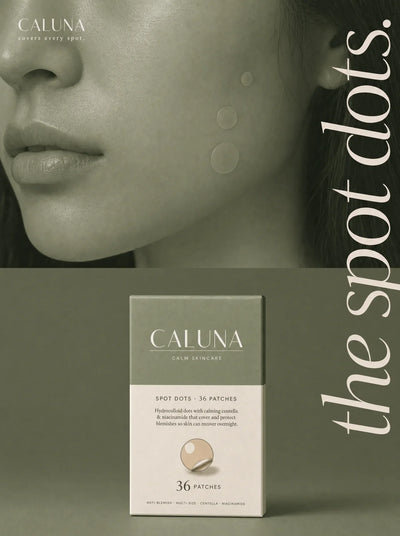
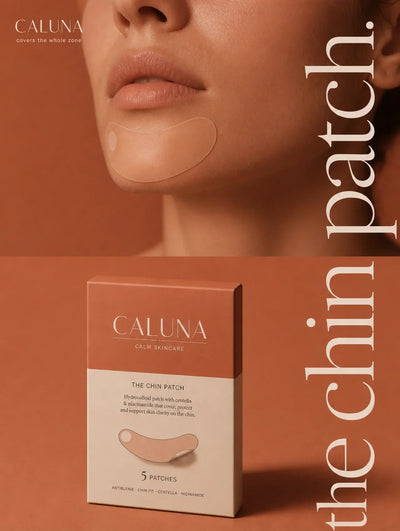
Right now I sell Spot Dots — 36 invisible dots you place one at a time, available today. For people whose breakouts spread across the whole chin and jaw, dotting five patches gets old fast, which is exactly why I'm building the Chin Patch: one curved patch that covers the chin and jawline in a single piece — a simplified hydrocolloid formula, with the final ingredient list published at launch. It's coming in November — join the chin list.
Race update: nose 3 · chin 1 · forehead 1 · kids 1.
The zone with the most names launches first on November 1st — pick yours.
— Jake, founder of Caluna.