

Short answer: yes, hyaluronic acid is a good fit for most oily and breakout-prone skin. It is a lightweight, water-binding ingredient that adds moisture without adding oil, so it hydrates skin without the heavy, greasy feel that makes a lot of oily-skinned people skip moisturizer altogether.
If your face runs shiny and you break out often, you have probably scrolled past hyaluronic acid a hundred times and assumed it was not for you. Here is what it actually does, whether it can clog pores, and how to use it so it earns its place in a simple routine.

What is hyaluronic acid, and what does it do?
Hyaluronic acid is a humectant — an ingredient that pulls water toward it and holds it in place. Your body already makes it on its own; the version used in skincare is known for holding up to 1,000 times its weight in water, which is why even a few drops can leave skin feeling plumper and less tight.
What it does not do matters just as much. It does not exfoliate, it does not cut oil, and it is not an active aimed at blemishes. Its one job is water. On the skin, that reads as a smoother, more comfortable surface and softer-looking fine lines by the end of a long day.
Does hyaluronic acid cause breakouts?
For most people, no. Hyaluronic acid is non-comedogenic, which means it is not known for clogging pores the way heavy oils and waxes can. It lives in the “water” column of a routine rather than the “oil” column, so it is one of the lower-risk hydrators for blemish-prone skin.
If you do notice congestion after adding it, the usual culprit is the rest of the formula — a thick cream or a pore-clogging oil carrying the hyaluronic acid — not the hyaluronic acid itself. Patch-test any new product on your jaw for a few days first. If breakouts are severe or persistent, it is worth checking in with a dermatologist rather than guessing.
If my skin is oily, do I still need hydration?
Yes. Oily skin and dehydrated skin are two different things, and you can easily be both at once. Oil, or sebum, is what your glands produce; hydration is the water content inside the skin. When skin is low on water, it often ramps up oil to compensate, which can leave you shiny and tight at the same time.
That is exactly where a humectant like hyaluronic acid helps: it tops up the water your skin is short on without piling on more oil, so your face can feel balanced instead of stripped. Think of it as the opposite of the harsh, squeaky-clean routine that leaves oily skin feeling worse by mid-afternoon.
How do you apply hyaluronic acid so it actually works?
Apply it to damp skin, then seal it in. Hyaluronic acid grabs whatever water is nearby, so smoothing it onto skin that is still slightly wet from cleansing — within about 60 seconds — gives it water to hold. Follow with a light moisturizer to lock that water down; on bone-dry skin with nothing to pull from, a humectant can actually draw moisture out.
- Cleanse, and leave your skin slightly damp.
- Smooth on a few drops of a hyaluronic acid serum.
- Follow within a minute with a lightweight gel or lotion.
- Use it morning and night, or just at night if your skin runs very oily.
Where do pimple patches fit in?
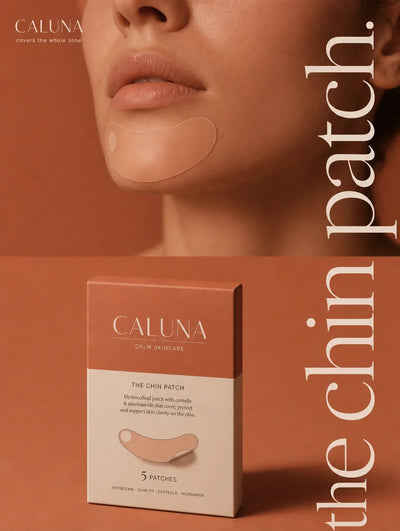
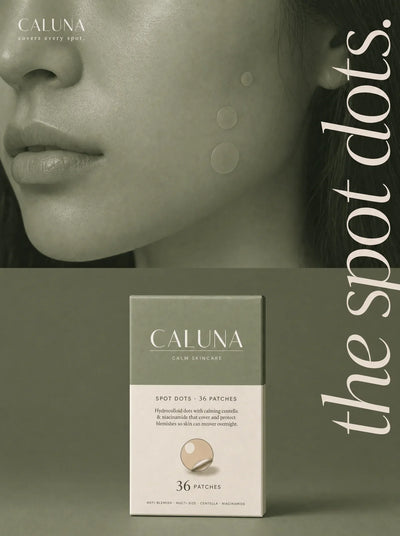
Hyaluronic acid keeps the whole face comfortable, but for a single raised, fluid-filled spot, a hydrocolloid pimple patch gives you targeted coverage. The patch creates a sealed, slightly moist pocket over the blemish, absorbs fluid, and — maybe most usefully — physically stops you from picking at it.
The catch is that most patches are just hydrocolloid and nothing else. Caluna’s patches pair hydrocolloid with six more skin-loving actives — including hyaluronic acid, plus tea tree oil, salicylic acid, centella asiatica, calendula, and niacinamide — so the spot stays covered over something other than plain adhesive. You get 36 invisible dots in three sizes for $11.99 (about 33¢ a dot), free US shipping, and each one can stay on for 6 to 8 hours or overnight.
Seven actives. Most patches have zero.
— Jake, founder of Caluna.