
Yes — the gel, pomade, wax, or hairspray you reach for every morning can absolutely break out your forehead and hairline. Dermatologists even have a name for it: pomade acne, and it turns up right where your styling product meets your skin.
It's late September as I write this — about five weeks out from Caluna's November 1st launch, and the forehead list is still sitting at one lonely name on the zone race. I'm a gym guy and a Sunday runner, so my hairline and I know each other well.
Can hair products really cause forehead breakouts?
Yes. A lot of styling products are oil- or wax-based, and when they migrate from your hair down onto your forehead and hairline, they can clog the pores right at the edge.
It doesn't take much. Heat, sweat, and a hat all press product down onto skin that's already one of the oiliest strips on your face. If you wear bangs or use a heavy-handed routine, that edge gets a double dose.
What is pomade acne?
Pomade acne is the long-standing dermatology term for breakouts along the hairline and upper forehead caused by heavy, oily hair products. It was named decades ago for greasy pomades, but the same thing happens with modern gels, waxes, and creams.
It usually shows up as a row of small bumps or whiteheads tracing exactly where your hair meets your forehead — a giveaway that the cause is sitting on the surface, not deep in your diet.
How do you know it's your hair product and not regular acne?
The tell is location. Pomade acne hugs the hairline and the outer edges of the forehead in a band, while ordinary breakouts scatter more randomly across the center.
The other clue is timing: it tends to flare after you start a new product or start using more of it, and it gets worse on sweaty days or under a cap that seals everything in.

Which hair products are most likely to break out your forehead?
The heaviest, oiliest ones. Pomades, waxes, thick gels, and oil-based leave-ins are the usual suspects because they're the ones that transfer to skin and stay there.
- Pomades and styling waxes — the original culprits, and still the greasiest.
- Heavy gels and mousses that build up through the day.
- Hair oils and leave-in conditioners that migrate onto your pillow and back onto your face overnight.
- Hairsprays that drift down and settle on the forehead.
None of this means you're doing anything wrong or that your hair is dirty — it's just oil ending up on a spot that doesn't handle oil well.
How do you keep hair products off your forehead?
Keep the product back from your hairline, wash it off your skin, and don't let it marinate under a hat. Small changes, and they add up.
- Apply product about an inch back from your hairline instead of right at the edge.
- Cleanse your forehead and hairline at night so nothing sits on the skin for eight hours.
- Swap to a clean pillowcase a couple of times a week if you use leave-ins or oils.
- After a sweaty workout, get your forehead clean before the product drips down with the sweat.
None of that treats a breakout — it just takes away the fuel that keeps feeding one.
Do pimple patches help pomade acne?
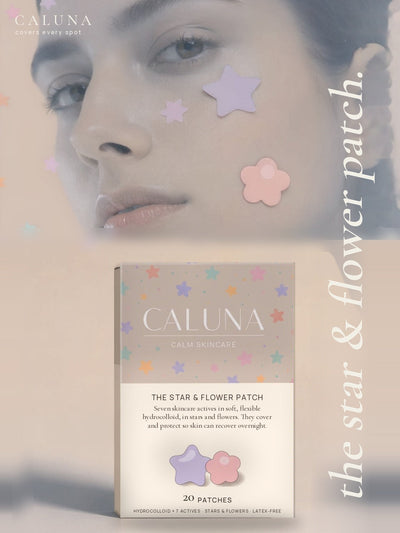
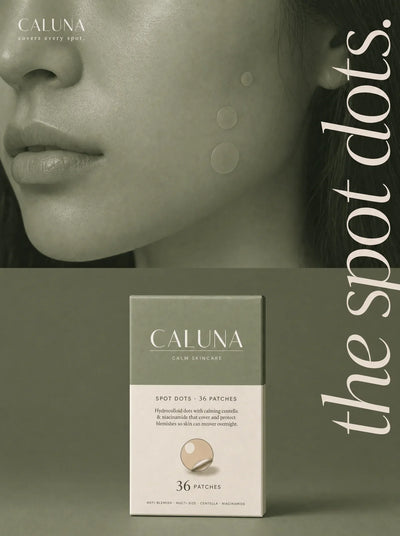
Only for the part that's surfaced. A hydrocolloid patch is built for a single raised whitehead, not a whole band of tiny clogged bumps — it's known for covering a surfaced spot, absorbing the fluid, and keeping your fingers off so the skin underneath can feel calmer.
So for the occasional forehead whitehead that comes to a head, our Spot Dots (available now) are the nearly invisible dots we make for exactly that. For a field of small, closed hairline bumps, a patch has little to grab onto, and I'd rather say so than oversell it.
When should you see a dermatologist?
If your hairline stays broken out after you've cleaned up your hair routine, or the bumps turn painful or itchy, that's a professional's call.
Small, uniform, itchy bumps along the hairline can also be a look-alike some people call "fungal acne" — really a yeast irritating the follicles — which doesn't behave like ordinary acne at all. This is education, not a diagnosis: I make cosmetic patches, not medicine, and some things need a doctor's eyes.
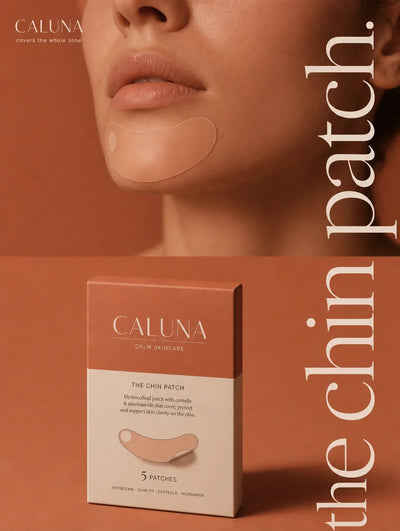
The forehead is a broad, flat zone, and for the surface spots that do belong to a patch, dotting six little circles across it never made sense to me — so the Forehead Patch is one wide patch that covers the whole area in a single piece, a simplified hydrocolloid formula with the final ingredient list published at launch. It's coming in November — join the forehead list if you want it first.
Race update: nose 3 · chin 1 · forehead 1 · kids 1.
The zone with the most names launches first on November 1st — pick yours.
— Jake, founder of Caluna.