

It's October 1st, about a month out from Launch 2.0, and the nose is still out front in the zone race — so today feels like the right day to settle a question I get constantly. Those tiny gray-ish dots scattered across your nose usually aren't blackheads at all. More often they're sebaceous filaments: a normal, built-in part of how your pores move oil to the surface, not a clog you did something wrong to earn.
What's the difference between a blackhead and a sebaceous filament?
A blackhead is a pore packed with trapped oil and dead skin, with the top darkened by exposure to air. A sebaceous filament is the pore's natural oil channel — it's supposed to be there.
The easy tell: blackheads tend to sit slightly raised, look genuinely dark or black, and show up one at a time. Filaments lie flat, look uniform gray or tan, and line up in neat little rows — classic on the tip and the sides of the nose. Just about everyone has them, including people with skin you'd call flawless.

Why do they show up most on your nose?
Because the nose has the highest density of oil glands on your whole face. More oil flowing through a pore makes the filament inside it easier to see.
Fuller pores read as darker dots, which is why the nose and the creases beside it can look "dotty" even right after you wash. It's not dirt, and it's not a hygiene problem.
Can you get rid of sebaceous filaments for good?
No — and that's genuinely fine. They refill within a few days because your pores keep producing oil, which is exactly their job.
You can make them a little less obvious for a while with gentle, consistent cleansing, but anything promising to erase them permanently is overpromising. Over-scrubbing tends to backfire: strip the oil too hard and skin often responds by making more.
Do pore strips or squeezing remove them?
They can lift some of the surface plug for a day or two, but the filament simply refills, and hard squeezing can stretch or damage the pore.
Picking at the nose is also how you end up with marks and irritation that outlast the dot you were chasing. If a bump on your nose is persistent, painful, or keeps coming back in the same place, that's a conversation for a dermatologist, not a pore strip.
So where does a patch actually fit in?
A hydrocolloid patch isn't a filament or blackhead tool. It's for an actual raised spot that's come to a head — it covers the area, is known for absorbing fluid, and mostly it keeps your fingers off so you stop making things worse.
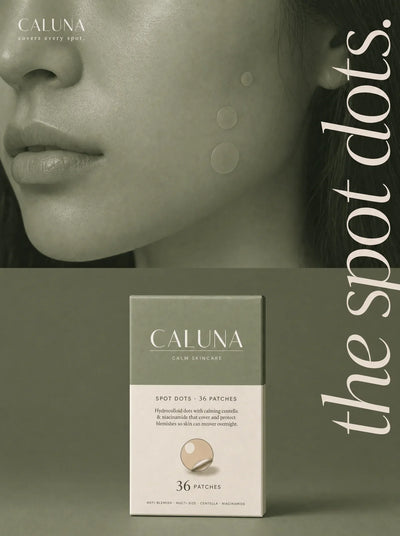
If you've got one of those on a flatter part of your face right now, that's what our Spot Dots are built for — they're available today. For the nose itself, dots don't love a curved, oily surface, which is the whole reason I'm building a T-shaped Nose Patch — coming in November, join the nose list. It runs a simplified hydrocolloid formula, with the final ingredient list published at launch.
Race update: nose 3 · chin 1 · forehead 1 · kids 1.
The zone with the most names launches first on November 1st — pick yours.
— Jake, founder of Caluna.