

It's Sunday, September 6th — about eight weeks out from our November 1st launch, and on Friday we posted Caluna's first public zone-race scoreboard. Today's question is one I hear about the nose more than almost any other: are those tiny dark specks blackheads, or sebaceous filaments? Short version: most of what people try to squeeze out of their nose isn't a blackhead at all — it's a sebaceous filament, a normal part of how a healthy pore works.
What's the difference between a blackhead and a sebaceous filament?
A blackhead is a clogged pore — oil and dead skin packed into the opening, with the top exposed to air so it darkens. A sebaceous filament is the pore's normal lining that channels oil to the surface, and it's supposed to be there.
The easy way to picture it: a blackhead is a traffic jam, a sebaceous filament is the road. Blackheads tend to show up as scattered, distinct dark dots. Filaments show up as tiny, evenly spaced gray or tan dots — most noticeable right on the tip and sides of the nose, in that orderly pattern across the skin.

How can you tell which one is on your nose?
Look at the pattern and the color. Sebaceous filaments are usually uniform, light gray to tan, and lined up in a regular grid across the nose; blackheads are darker, fewer, and land in random spots.
One more tell: if you press near it and a thin, hair-like thread comes up — and it's back within a day or two — that was a filament doing its job, not a stubborn blackhead. Filaments refill because your nose keeps making oil. That's normal, not a hygiene problem.
Why does the nose have so many of them?
Because the nose has one of the highest concentrations of oil glands on your whole body. More glands means more filaments, more visible pores, and more oil sitting at the surface — which is also why the nose reads as the shiniest part of the face.
Can you get rid of sebaceous filaments for good?
No — and you don't want to. They're a normal, permanent feature of oily-zone skin; empty one and it simply refills over the next few days.
Where people get into trouble is trying to scrub or squeeze them gone. Over-scrubbing the nose strips the surface, your skin answers by making more oil, and the filaments look just as obvious a week later — sometimes with irritation on top. Gentle is the long game here. A soft cleanse and leaving the skin alone usually makes the nose look calmer than any aggressive routine.
Do pimple patches remove blackheads or filaments?
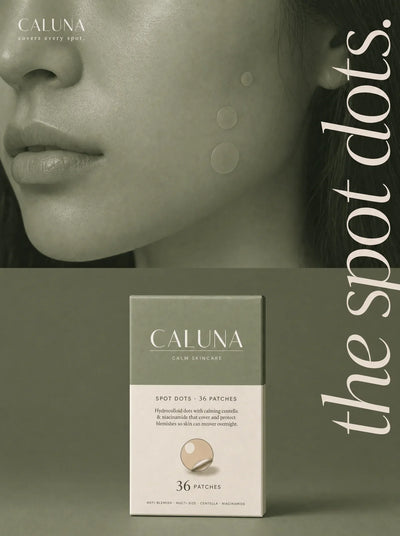
No — that's not what a patch is for, and I'd be lying if I told you a sticker pulls a filament out of your pore. Hydrocolloid patches are known for covering a raised, fluid-filled spot, absorbing what it drains, and keeping your fingers off it while it settles.
So a patch isn't a blackhead tool or a filament tool. It's for the angry whitehead that pops up next to all those tiny dots — the one you'd otherwise pick at. Match the tool to the problem and your nose has a much better week.
When should you see a dermatologist?
If the bumps on your nose are painful, deep, spreading, or just not improving, that's a conversation for a professional. A dermatologist can tell filaments and blackheads apart in seconds and point you to something that fits your skin — which beats guessing over the sink.
For the everyday raised spot, our Spot Dots are on the site now — 36 invisible dots for $11.99. And a patch shaped for this exact zone, The Nose Patch, is coming in November — join the nose list to help decide when it drops.
Race update: nose 3 · chin 1 · forehead 1 · kids 1. The zone with the most names launches first on November 1st — pick yours.
— Jake, founder of Caluna.