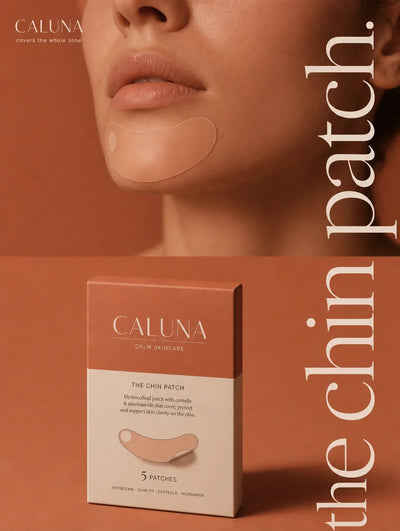
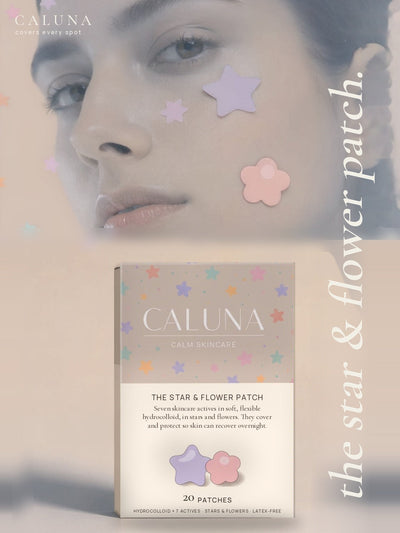
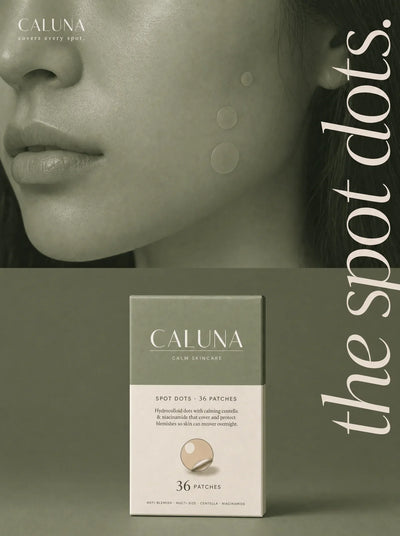

We're about six weeks out from our November 1st launch, and nose is still out front in the zone race — but today's a forehead day. If your forehead breaks out in a scattered band across the hairline or between your brows, one wide patch usually beats dotting six little circles, because it covers the whole zone in a single clean piece instead of leaving gaps between them. Dots still win for one or two isolated spots — the wide patch is built for the day the whole forehead flares at once.
Why does the forehead break out in a band instead of one spot?
Because the forehead is a wide, flat, oily stretch of the T-zone, so when it flares you tend to get several small spots spread across it rather than one big one.
Sweat, hats and headbands, and hair products all sit on that whole area at once, so the irritation shows up as a row of bumps along the hairline or a cluster between the brows — not a single neat pimple you can cover with one small circle. That spread is exactly why the forehead is awkward to patch the usual way.
Is it better to use one wide patch or several dots on your forehead?
For a cluster spread across the forehead, one wide patch is usually easier and looks cleaner; for one or two isolated spots, a couple of dots are plenty.
Six little dots across your forehead means six edges that can catch on a hat brim, six gaps where a spot you missed pokes through, and six things to peel off later. A single wide patch lays over the whole zone as one piece, so there's one edge, no gaps, and one clean removal. It's less about which one "works better" and more about matching the shape of the patch to the shape of the breakout.

What does a hydrocolloid patch actually do on your forehead?
A hydrocolloid patch is a soft gel dressing known for drawing fluid out of a spot that's come to a head and covering it so your fingers, sweat and hair stay off.
On a forehead that lives under a cap or a helmet all day, that cover matters — it keeps the spot flat and protected instead of getting rubbed and picked, and most people say the skin underneath feels calmer by morning. It's a cosmetic patch, not a medicine, so it won't do much for a deep, blind bump that never surfaces. It shines on the whiteheads and popped spots sitting right at the surface.
How many dots would it take to cover a forehead breakout?
A scattered forehead flare often takes four to six little dots to chase down, versus one wide band that covers the same area in a single piece.
Our Spot Dots (available now) run 33¢ a dot, so a busy forehead day can quietly turn into five dots off one sheet — still cheap, but fiddly to place evenly across a curved forehead. If your breakouts almost always land up top, a patch shaped for the zone saves you the dot math and the mirror gymnastics.
When should you skip the patch and see a dermatologist?
If your forehead bumps are small, uniform, itchy, and just won't quit no matter what you do, that can be folliculitis — sometimes called "fungal acne" — which a patch won't help.
That's a case to see a dermatologist rather than keep covering it, and the same goes for anything on your forehead that's persistent, deep, or genuinely painful. Patches are a great tool for the everyday surface spot; they're not a substitute for a professional when something isn't behaving.
So which should you reach for?
Match the patch to the breakout: a dot or two for the odd spot, and a wide patch for the day your whole forehead joins in.
The wide one is coming in November — join the forehead list. It'll carry a simplified hydrocolloid formula, with the final ingredient list published at launch. That's the whole idea behind the zone race: build the patch that fits where you actually break out.
Race update: nose 3 · chin 1 · forehead 1 · kids 1.
The zone with the most names launches first on November 1st — pick yours.
— Jake, founder of Caluna.