 Liquid error (snippets/caluna-cart-extras line 104): invalid url input
Should you pop a pimple? No — popping is almost always a bad trade. You get a few seconds of "I did something," and in return you risk days of extra redness, a slower heal, and a dark mark or scar that can outlast the pimple by months. Below is what's actually happening under your fingertips, and the calmer thing to do when a spot shows up at the worst possible time.
It's early September, we're about eight weeks out from our November launch here at Caluna, and this is the question I get asked more than any other. So let's be honest about it.
Should you pop a pimple?
No. Squeezing pushes a little of the gunk out the top but drives the rest deeper and sideways, and it tears open skin that was already healing on its own. The quick satisfaction isn't worth the longer redness, the scab, or the mark it can leave behind.
A pimple is a clogged, inflamed pore. When you press on it, the pressure travels in every direction — not just up and out. Some of the oil and bacteria rupture into the surrounding skin, which is exactly how one spot quietly becomes two or three over the next few days. You also can't fully sterilize your fingers or nails, so you're introducing new bacteria to an area you've just opened up.
What happens if you pop a pimple anyway?
You usually trade a 2–3 day bump for a 7–10 day healing process, and you raise your odds of a lasting mark. The open spot scabs, stays red longer, and is more exposed to bacteria from your hands.
Most whiteheads would have flattened on their own within a few days. Popping interrupts that and replaces a small bump with a raw, crusty spot that's harder to cover and slower to fade. If you've ever picked at something Monday and still been covering it the following weekend, that's the math working against you.

Why does popping leave a scar or dark mark?
Because squeezing damages the deeper layer of skin, and when that layer repairs itself it can leave a flat brown or pink spot — or, less often, a small pit. These marks can linger for weeks to months, far longer than the original pimple ever would have.
The flat discoloration is called post-inflammatory hyperpigmentation, and it's especially common on medium and deeper skin tones. The more inflamed and broken the spot gets, the more likely your skin is to leave a reminder. In other words: the picking, not the pimple, is usually what you're still looking at a month later.
What should you do instead of popping?
Cover it and leave it alone. A hydrocolloid pimple patch sits over the spot, absorbs the fluid, and — maybe most importantly — puts a physical barrier between your fingers and the pimple so you stop picking at it.
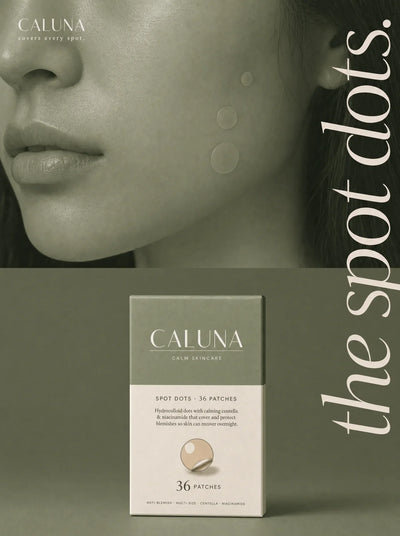
Hydrocolloid is the same gentle gel material used on blisters and minor wounds; on a spot it's known for drawing out fluid and keeping the area protected and a little calmer while your skin does its own thing. The barrier also quietly kills the "I'll just pick at it real quick" reflex, because there's literally something in the way. Our Caluna hydrocolloid patches take it a step further with seven skin-loving actives — hydrocolloid, tea tree oil, salicylic acid, centella asiatica, calendula, niacinamide, and hyaluronic acid, where most patches have zero — and the 36 invisible dots ($11.99, about 33¢ a dot) disappear under light or makeup, so you can wear one through a full workday without anyone noticing.
- Start with clean, dry skin and press the patch down for about ten seconds so it grips.
- Leave it on 6–8 hours, or overnight, then swap for a fresh one — patches are single-use.
- Keep your hands off between changes. Boredom-picking is the real enemy.
When is it okay to pop, and when should you see a dermatologist?
Honestly, almost never at home. The lowest-risk case is a whitehead that has already come fully to a surface head — even then, covering it is the safer call. Anything deep, large, or painful should be left alone.
If a spot is big, sore, and won't come to a head, or you're dealing with breakouts that are severe, painful, or just won't quit, that's a conversation for a dermatologist rather than your bathroom mirror. They can drain a stubborn spot safely and talk through options that a patch simply isn't meant for. There's no prize for toughing out acne alone, and getting help early is often what keeps marks from piling up.
The short version: keep your hands off, cover the spot, give it a few patient days, and save the pro for the ones that genuinely need it. Your future skin will thank you for the restraint.
— Jake, founder of Caluna.