
Should you pop a pimple? Almost always, no. Dermatologists broadly advise against squeezing spots at home because pressing on a blemish can push bacteria and debris deeper into the skin, which tends to make the area redder, more swollen, and slower to settle — and it raises your odds of a scar or a dark mark that outlasts the pimple itself. The urge is completely normal, but there are calmer ways to get through a breakout, and most of them start with leaving your hands off your face.
Should you pop a pimple?
No — as a rule, it is better not to pop a pimple yourself. Popping breaks the skin's surface and can force the contents sideways and downward instead of out, which often turns one small spot into a bigger, angrier one.
There is also a timing problem. A whitehead that looks "ready" is still sitting over inflamed tissue, and the pressure needed to empty it usually damages the surrounding skin. Even when a pimple does drain, the open wound you create is now exposed to bacteria from your fingers and prone to scabbing. That is the opposite of the quick fix most of us are hoping for.
Why is popping a pimple bad for your skin?
Popping is risky mainly because of what happens after: more inflammation, a higher chance of scarring, and post-inflammatory marks that can linger for weeks or months. You are trading a few days of a visible spot for a potentially longer recovery.

Fingernails carry bacteria and apply uneven force, so home extractions frequently rupture the follicle wall beneath the surface. When that happens, the mess spreads under intact skin and the body ramps up its inflammatory response. Repeated picking at the same spot is also one of the most common ways people end up with textural scarring and stubborn discoloration, especially on deeper skin tones. If a blemish genuinely needs to be drained, that is a job for a professional with sterile tools, not a bathroom mirror at midnight.
What should you do instead of popping a pimple?
Instead of popping, cover the spot, keep the area clean, and give it time. The single most effective move is to physically stop yourself from touching it, and a barrier over the pimple does exactly that while it settles on its own schedule.
A simple approach that works for most surfaced spots: cleanse gently, avoid layering harsh actives all at once, and resist the temptation to "check" the pimple by squeezing. A hydrocolloid patch placed over a whitehead is known for absorbing fluid and creating a moist, protected environment, and it hides the spot in the meantime. Salicylic acid is known for helping keep pores feeling clear, and calming botanicals like centella asiatica and calendula are known for helping skin feel less angry — but the biggest win is often just breaking the pick-squeeze-repeat cycle.
How do pimple patches help you stop picking?
Pimple patches help mainly by putting a physical barrier between your fingers and the spot, so you literally cannot pick at what you cannot reach. They also absorb fluid from a surfaced whitehead and shield it from outside bacteria while it recovers.
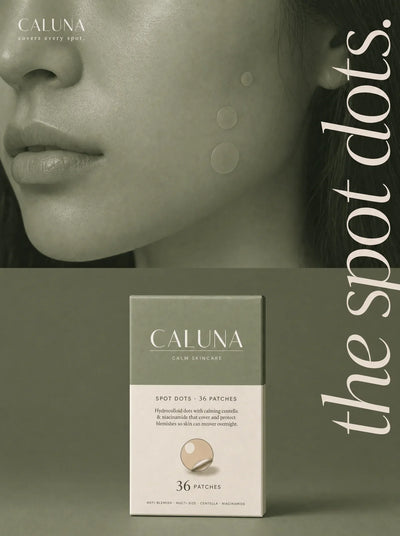
This is where a good patch earns its place. Caluna Hydrocolloid Pimple Patches come 36 to a box and are built on seven skin-loving actives — hydrocolloid, tea tree oil, salicylic acid, centella asiatica, calendula, niacinamide, and hyaluronic acid — where most patches have zero beyond the hydrocolloid itself. Stick one on a clean, dry spot, wear it for six to eight hours or overnight, and swap it when the center turns white and cloudy. The patch is nearly invisible, so it works during the day too, and because your spot is covered, the reflex to squeeze it mostly disappears.
When should you see a dermatologist?
See a dermatologist if your breakouts are painful, deep, widespread, or persistent, or if you are already noticing scarring. Cystic and nodular acne in particular does not respond to popping or patches and is best assessed by a professional.
A quick rule of thumb: occasional surface spots are something you can usually ride out with gentle care and a patch, while recurring cysts, breakouts that leave marks, or anything that is affecting how you feel day to day deserve real medical guidance. There is no prize for toughing it out, and early help is one of the best ways to protect your skin long term.
The honest takeaway
Popping a pimple feels productive and almost always sets you back. Covering it, leaving it alone, and letting it settle is slower in the moment but kinder to your skin over the weeks that follow. Keep your hands busy, keep a patch on the spot, and let time do the boring, effective work.
— Jake, founder of Caluna.