 Liquid error (snippets/caluna-cart-extras line 104): invalid url input
Centella asiatica — you'll usually see it on labels as "cica" — is a leafy herb that skincare reaches for when skin needs calming, and it's best known for helping irritated, reactive, or freshly broken-out skin feel more comfortable. It won't treat or cure acne, but that soothing reputation is exactly why it turns up in so many products made for breakout-prone skin. Here's what it actually is, what it's known for, and how to use it without expecting magic.
What is centella asiatica (cica)?
Centella asiatica is a small green herb that's been used in traditional skincare for centuries, and on modern labels it usually goes by "cica," sometimes "gotu kola" or "tiger grass." It's prized for a handful of naturally occurring compounds — madecassoside and asiaticoside among them — that give it its calming reputation.
The "tiger grass" nickname comes from an old story about tigers rolling in the plant to soothe themselves, which is folklore rather than science, but the herb does have a long history across Asian skincare traditions. Today it's concentrated into serums, moisturizers, and spot treatments, usually shortened to "cica" so it fits on a bottle.
What does centella asiatica do for your skin?
Centella asiatica is known for helping skin feel calmer, soothed, and more comfortable — especially skin that's red, tight, or reacting to weather, friction, or a fresh breakout. It's also known as an antioxidant ingredient, the same broad category as vitamin C and green tea.
In practical terms, people reach for cica when their skin feels stressed, not when they want a strong active doing heavy lifting. It's often described as a "comfort" ingredient — the thing you layer on to take the edge off rather than the thing that resurfaces your face. Because it's gentle, it tends to sit nicely alongside stronger actives without piling on irritation.

Is centella asiatica good for acne-prone skin?
It can be a useful supporting player, because breakout-prone skin is often irritated skin, and cica is known for helping that irritation feel calmer. What it does not do is clear acne, kill acne bacteria, or stand in for a real acne treatment.
Think of centella as the soothing part of a routine rather than the fighting part. Salicylic acid is known for keeping pores feeling clear; cica is known for keeping the skin around a breakout feeling comfortable while everything settles. They do different jobs, which is exactly why you'll often see the two formulated together.
Does centella asiatica fade acne scars?
Cica gets marketed for scars a lot, but the honest answer is that it's known for supporting the look and comfort of healing skin, not for erasing marks. The single biggest thing you can do to avoid dark marks is not pick at a spot in the first place — picking is one of the most common causes of the marks people then spend months trying to fade.
Is centella asiatica safe for sensitive skin?
For most people, centella is one of the gentler ingredients on the shelf, which is a big reason it's a favorite for sensitive and reactive skin. As with anything new, patch-test it first — a small amount on your inner arm or jaw for a day or two — because anyone can react to anything.
If you have known plant allergies or your skin is currently very compromised, introduce it slowly instead of all at once. Gentle doesn't mean guaranteed for everyone; it just means lower-risk for most.
How do you actually use centella asiatica?
The easiest way is a cica serum or moisturizer on clean skin, once or twice a day, on its own or under sunscreen. You can also get it in a more targeted form — built directly into a pimple patch, so it's sitting right on the spot you're covering.
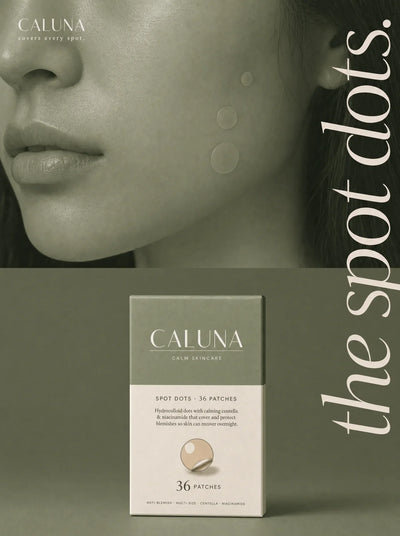
That's part of why we put it in our Caluna hydrocolloid patches — each invisible dot carries seven skin-loving actives, centella asiatica among them, alongside hydrocolloid, tea tree oil, salicylic acid, calendula, niacinamide, and hyaluronic acid. Most patches have zero. The hydrocolloid covers an open, raised spot and absorbs the fluid it weeps, while ingredients like cica are there to help the skin under the patch feel calmer while you keep your hands off it. You get 36 dots in a box for $11.99 — about 33 cents a dot — with free US shipping.
When should you see a dermatologist?
If your breakouts are painful, deep, cystic, or simply won't let up no matter what soothing ingredients you try, that's a conversation for a dermatologist rather than another serum. Centella is a comfort ingredient, not a treatment — good for taking the edge off everyday irritation, not a fix for stubborn or persistent acne, which usually responds best to a proper plan from a professional.
— Jake, founder of Caluna.