
Hydrocolloid is a gel-forming material that absorbs fluid from a spot that has come to a head and seals it under a soft, moist cover. It isn't a medicine and it doesn't fight acne chemically — its whole job is to manage one surfaced pimple by soaking up what it leaks, protecting the skin, and keeping your fingers off it.
If you've ever stuck a little clear dot on a whitehead and peeled it off hours later looking cloudy and swollen, you've already seen hydrocolloid do the one thing it's genuinely good at. Here's what's actually happening under there.
What is hydrocolloid, exactly?
Hydrocolloid is a gel-forming dressing material borrowed from wound care, where it has been used on blisters and minor scrapes for decades.
It's made of substances that turn to gel the moment they meet moisture. On skin, the patch starts as a thin, flexible, nearly clear sticker. The side against your skin is built to draw in fluid and hold onto it, while the outer layer keeps the spot sealed off from air, grime, and — just as importantly — your hands.
What does hydrocolloid do once it's on a pimple?
Once it's pressed over a surfaced spot, hydrocolloid absorbs the fluid the pimple gives off, traps it in the gel, and keeps the area covered the whole time it's on.
It does its best work on spots that have already come to the surface — a whitehead, or a spot that's weeping. The patch pulls that fluid up and away from the skin, creates a protected, slightly damp pocket over the spot, and acts as a physical barrier so you can't pick, squeeze, or scratch. That last part matters more than people expect: picking is what turns a two-day spot into a two-week mark.

Why does the patch turn white?
The white, cloudy dome you peel off is the fluid the hydrocolloid pulled in from the spot — it's the visible sign the patch has done its job.
A fresh patch is clear and almost invisible. As it absorbs, the gel swells and clouds into a little white blister-looking dome right over the spot, and that's your cue to swap it for a fresh one. It isn't pus being "sucked out" through unbroken skin, which is a common myth — hydrocolloid can only collect fluid from a spot that's already open at the surface.
Does hydrocolloid work on every kind of pimple?
No. Hydrocolloid is known for helping with surfaced spots like whiteheads, and it does very little for deep, closed, or cystic bumps sitting under the skin.
If there's nothing at the surface for the gel to absorb, a plain patch mostly just covers and protects the area from picking — still useful, but it won't change the bump itself much. For painful, deep, or stubborn breakouts that keep coming back in the same place, a dermatologist is the right call. Patches are a cosmetic tool for the spots you can see, not a treatment for acne as a condition.
How long should you leave a hydrocolloid patch on?
Most people get the most out of a patch by wearing it at least 6 to 8 hours — overnight is ideal — or until it turns white.
Press it onto clean, dry skin; skip serums and oils underneath or it won't stick well. Leave it while you sleep, and replace it in the morning if the spot is still weeping. Because hydrocolloid keeps the skin underneath moist instead of drying it out, you skip the tight, flaky, over-stripped feeling that harsh spot treatments can leave behind — the area tends to just feel calmer.
Where do the ingredients come in?
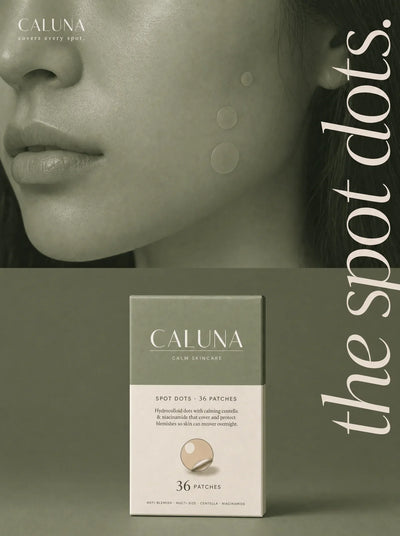
Plain hydrocolloid only absorbs and protects, which is why some patches build skin-loving ingredients into the gel. Our Caluna Hydrocolloid Pimple Patches carry seven actives — hydrocolloid, tea tree oil, salicylic acid, centella asiatica, calendula, niacinamide, and hyaluronic acid — where most patches have zero. Salicylic acid is known for keeping pores feeling clear, niacinamide and centella asiatica for helping skin feel calmer, and hyaluronic acid for keeping the covered skin comfortable while the dot does the absorbing. You get 36 invisible dots in a box, which works out to about 33¢ a dot.
The short version
Hydrocolloid doesn't treat or cure a pimple — it manages one that has already surfaced. It absorbs the fluid the spot leaks, keeps the area covered and moist, and physically stops you from picking, which is often the difference between a spot that fades quietly and one that leaves a mark. Clear dot on at night, cloudy dot off in the morning.
— Jake, founder of Caluna