

Niacinamide is a form of vitamin B3, and for oily, breakout-prone skin it's best known for helping the skin look more balanced — calmer, less shiny, and more even. It's one of the most researched and best-tolerated ingredients in all of skincare, and it plays nicely with almost everything else in your routine, which is exactly why it keeps showing up on ingredient lists.
If you've seen "niacinamide" on a serum or moisturizer and wondered whether it's worth the hype for skin that breaks out, here's the plain version of what it does, how to use it, and where its limits are.
What is niacinamide?
Niacinamide is a water-soluble form of vitamin B3 used in serums, moisturizers, and toners. It's a small, stable molecule that most skin types — including sensitive and breakout-prone skin — tolerate well.
Because it's gentle and doesn't need a careful "introduction" the way some stronger actives do, it's one of the easier ingredients to add to a routine without the stinging, peeling, or redness that can come with harsher options. That tolerability is a big part of why it's so widely used.
What does niacinamide do for breakout-prone skin?
It's known for three things that matter to oily, breakout-prone skin: supporting the skin's moisture barrier, helping keep the look of oil in check, and calming the appearance of redness. Together, those tend to make skin look more even and less reactive over time.
A healthy barrier is the quiet hero here. When your skin's outer layer is intact and hydrated, it's less likely to overreact — and a lot of the rough, irritated, "angry" look people fight comes from a barrier that's been stripped by over-washing or harsh products. Niacinamide is known for helping that barrier hold its moisture, which is why skin often simply looks calmer with it in the mix.

Does niacinamide help with oil and large-looking pores?
It's known for helping regulate how much oil sits on the surface, and clearer, less-stretched pores tend to look smaller as a result. It won't physically shrink a pore — nothing can — but it can change how visible one is.
Here's the logic: a pore looks bigger when it's packed with oil and dead skin, because the opening stretches and catches shadow. An ingredient known for keeping surface oil in better balance means less of that buildup, so the pore reads as smaller even though its real size never changed. For the oiliest parts of the face — the nose, forehead, and chin — that's often the most noticeable difference people see.
Does niacinamide help with redness and leftover marks?
It's known for calming the look of redness and for helping skin tone look more even, including the dark or pink marks a healed breakout can leave behind. This is one of its most appreciated effects on breakout-prone skin.
Those lingering marks — not the pimple itself, but the shadow it leaves for weeks afterward — are a huge part of what makes a breakout feel like it drags on. An ingredient known for supporting a more even-looking tone can help the whole area look like it's recovered sooner, even once the spot is long gone.
How do you add niacinamide to your routine?
Apply it once or twice a day on clean skin, usually as a serum before your moisturizer, or built into the moisturizer itself. It's low-drama: no special ramp-up, and it layers under sunscreen in the morning without a fuss.
It also pairs well with other actives, which is part of its appeal. It sits comfortably alongside hyaluronic acid for hydration and salicylic acid — known for helping pores feel clear — and it rarely causes the irritation that can come from stacking stronger ingredients. If your skin runs sensitive, start with a lower-strength product once a day and build from there. Consistency over a few weeks does far more than a heavy hand for a few days.
Can niacinamide replace a pimple patch?
No — they do different jobs. Niacinamide is a leave-on ingredient that works across your whole routine over time, while a pimple patch is a spot tool for one blemish that's already surfaced, covering it, absorbing the fluid it gives off, and keeping your fingers off it.
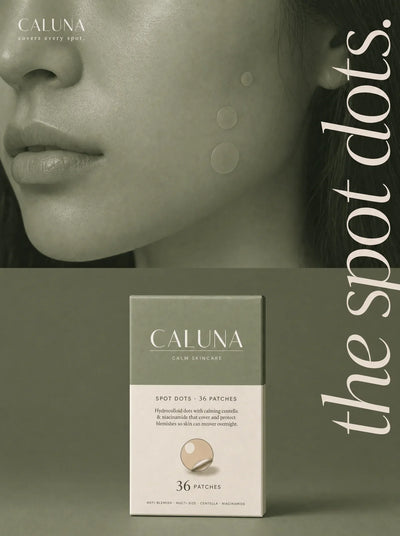
The two actually work well together, which is the thinking behind our Caluna Hydrocolloid Pimple Patches: the hydrocolloid does the covering and absorbing, and the patch also carries niacinamide plus five more skin-loving actives — tea tree oil, salicylic acid, centella asiatica, calendula, and hyaluronic acid — so a spot you're already covering gets those ingredients right where it's sitting. That's seven actives in total; most patches have zero. There are 36 invisible dots to a box at $11.99, about 33¢ a dot, so using one on an ordinary day isn't precious.
When should you see a dermatologist?
If your breakouts are deep, painful, cystic, or simply won't settle no matter what you put on your skin, that's a conversation for a dermatologist rather than any single ingredient. Niacinamide is a gentle, helpful part of a routine — it was never meant to be a treatment plan for persistent or severe acne.
For most everyday, oily, breakout-prone skin, though, niacinamide is one of the safest, most low-maintenance ingredients you can add. Give it a few weeks, keep the rest of your routine gentle, and let the barrier do its quiet work.
— Jake, founder of Caluna.