 Liquid error (snippets/caluna-cart-extras line 104): invalid url input
Tea tree oil is one of the most Googled ingredients in all of skincare, and the short answer is this: tea tree oil is a plant oil, steam-distilled from the leaves of the Australian Melaleuca alternifolia tree, that's long been known for helping skin feel clean, calm, and less irritated. It doesn't work miracles, and it isn't a cure for anything — but it has earned its spot in a lot of routines, and it's worth understanding what it actually brings to the table before you dab it on a spot.
What does tea tree oil do for your skin?
Tea tree oil is best known for its clarifying, purifying reputation — people reach for it to help oily or breakout-prone skin feel fresher and calmer. It's a botanical essential oil, not a medication, so think of it as a supporting player rather than a fix.
The reason it shows up on so many labels is its long history in traditional skincare and the way it's studied in labs for its clean, antibacterial character. On real skin, in a real routine, most people notice it as the ingredient that makes a spot feel a little less angry and the surrounding skin feel a little more settled. That's a modest, honest benefit — and modest is exactly what you want from something you're putting on an already-irritated pimple.

Is tea tree oil good for acne-prone skin?
For many people with breakout-prone skin, yes — it's a popular choice because it's lightweight and known for keeping skin feeling clear without the heavy, greasy feel of some oils. It won't prevent or treat acne, but it's a gentle way to support skin that tends to break out.
That said, "natural" doesn't mean "for everyone." Tea tree oil is potent, and some people find it too much for sensitive or already-inflamed skin. The smartest move is to go low and slow: a small amount, well diluted, and stop if your skin looks or feels more irritated rather than less. If your breakouts are severe, painful, or just won't quit, that's a conversation for a dermatologist, not an essential oil.
Can you put tea tree oil directly on a pimple?
You generally shouldn't put undiluted tea tree oil straight onto your skin. Neat essential oil is strong enough to leave skin red, stinging, or peeling — which is the opposite of what you want on a tender spot.
The standard advice is to dilute it heavily in a carrier — a few drops of tea tree oil into a spoonful of a plain oil like jojoba, or to use a product where it's already been blended at a skin-friendly level. Blending matters because it does two things at once: it lowers the risk of irritation, and it keeps the tea tree oil in gentle contact with the spot instead of evaporating off in a minute. If you've ever dabbed it on and wondered why it stung and then did nothing, over-concentration is usually the answer.
What's the easiest way to get tea tree oil onto a spot?
The lowest-effort way is a pimple patch that already includes tea tree oil at a sensible level, so you skip the mixing and the guesswork entirely. You stick it on, it stays put for hours, and the ingredient sits right where you need it.
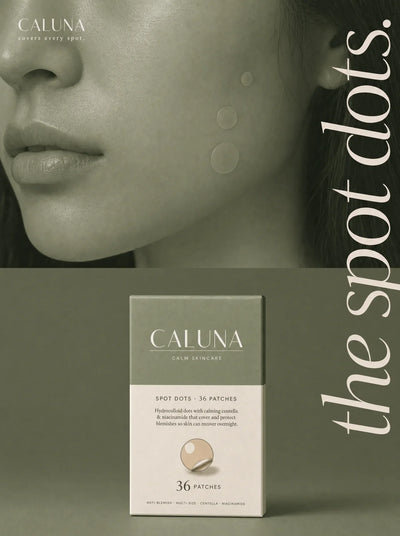
This is the thinking behind our Caluna Hydrocolloid Pimple Patches: tea tree oil is one of seven skin-loving actives we build into every patch, alongside hydrocolloid, salicylic acid, centella asiatica, calendula, niacinamide, and hyaluronic acid. Seven actives — most patches have zero. The hydrocolloid does the physical work of covering the spot, absorbing fluid, and stopping you from picking, while the tea tree oil and the rest ride along to help the skin feel calmer. Worn overnight for six to eight hours, one invisible dot costs about 33 cents (36 to a box), which makes it a low-stakes way to get a well-diluted dose of tea tree oil exactly where you want it.
How to use tea tree oil without irritating your skin
Keep it simple and gentle. A few honest guidelines:
- Always dilute — never apply undiluted essential oil to your face.
- Patch-test a new product on your inner arm before putting it near a breakout.
- Less is more; a spot doesn't need to be drenched to benefit.
- Stop if skin gets redder, drier, or more irritated instead of calmer.
- See a dermatologist for acne that's severe, spreading, or persistent — no oil replaces real treatment.
Tea tree oil isn't magic, and anyone promising it'll erase your acne is overselling it. What it is: a well-liked, lightweight botanical that, used carefully and diluted properly, can help breakout-prone skin feel a little cleaner and calmer. That's a reasonable thing to ask of it — and a patch is one of the easiest, gentlest ways to try.
— Jake, founder of Caluna.