
Tea tree oil is an essential oil pressed from the leaves of an Australian shrub, and in skincare it's best known for helping blemish-prone skin feel calmer, fresher, and less angry. It doesn't "dry out" a spot the way the internet promises — it's a plant oil with a long reputation for keeping skin feeling clean, which is why it keeps turning up in spot treatments.
Here's the honest version, from someone who reads a lot of ingredient labels: tea tree oil is genuinely useful, it's overhyped in a few corners of the internet, and it can absolutely backfire if you use it wrong. Let's walk through what it actually does, how to use it without wrecking your skin barrier, and where it fits in a real routine.
What is tea tree oil, exactly?
Tea tree oil is a concentrated essential oil steam-distilled from the leaves of Melaleuca alternifolia, a shrub native to Australia. Its best-known component, terpinen-4-ol, gives it that sharp, slightly medicinal smell you notice the second you open a bottle.
Because it's so concentrated, a little goes a very long way. The versions blended into cleansers, serums, and patches are heavily diluted on purpose — usually down to a small single-digit share of the formula. That dilution isn't a brand being stingy; it's the entire point, and we'll get to why.
What is tea tree oil known for in skincare?
Tea tree oil is known for helping breakout-prone skin feel clearer, calmer, and less inflamed-looking. People reach for it when a spot feels hot and irritated and they want the area to feel soothed rather than stripped.
It's worth being precise here, because the internet usually isn't: tea tree oil is a cosmetic ingredient, not a medicine. It can help your skin feel and look better, but it isn't a cure for acne, and no honest brand should tell you it is. If your breakouts are deep, painful, or simply won't quit, that's a conversation for a dermatologist, not a bottle of essential oil.

Can you put tea tree oil directly on a pimple?
You really shouldn't put undiluted tea tree oil straight onto a spot. Applied neat, it's harsh enough to leave skin red, stinging, itchy, or peeling — and irritated skin around a blemish tends to look worse, not better.
This is the single most common tea tree mistake. Someone dabs 100% oil on with a cotton bud, the area turns dry and flaky, and they decide tea tree "doesn't work." In reality they used a concentrated oil at a strength it was never meant for. Always dilute it, or let a finished product do the diluting for you.
How do you use tea tree oil without irritating your skin?
Keep the concentration low and the contact gentle: lean on products that already have tea tree oil blended in at a small percentage rather than mixing your own high-strength version. If you do dilute it yourself, pair a drop or two with a carrier oil and patch-test on your jaw first.
A few ground rules save a lot of regret. Keep it away from your eyes, don't pile it on top of every other strong active at once, and stop the moment skin feels tight or raw. Tea tree works best as a quiet supporting player, not the whole show.
Does tea tree oil work better alongside other ingredients?
Yes — tea tree oil tends to shine when it's one part of a balanced blend rather than a solo act. On its own it can be drying; paired with calming and hydrating ingredients, it's gentler and far easier for skin to tolerate.
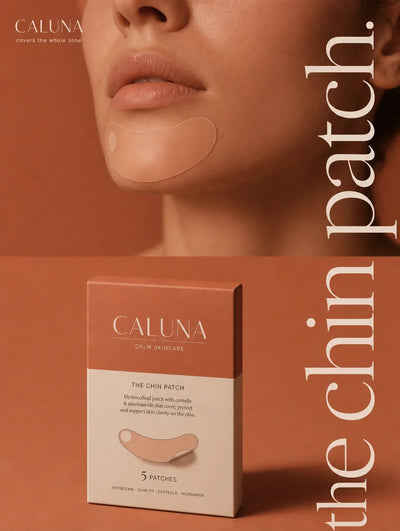
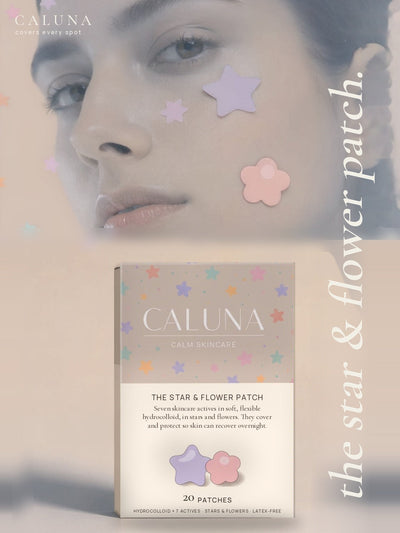
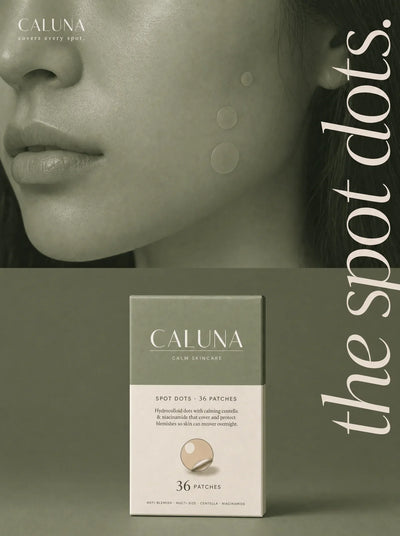
That's the thinking behind how we built Caluna. Our hydrocolloid pimple patches carry seven skin-loving actives — hydrocolloid, tea tree oil, salicylic acid, centella asiatica, calendula, niacinamide, and hyaluronic acid — so the tea tree sits beside soothing centella and hydrating hyaluronic acid instead of hitting bare skin alone. Seven actives. Most patches have zero. The patch also covers the spot so you're not tempted to pick, and quietly absorbs fluid while it's on. A box is 36 invisible patches for $11.99 — about 33 cents a dot — with free US shipping, and your first box is $6.99 with code FIRSTBOX if you want to try it.
When should you skip tea tree and see a pro?
If a breakout is cystic, spreading, scarring, or hanging around for weeks no matter what you try, tea tree oil isn't the answer — a dermatologist is. Persistent or severe acne deserves real medical advice, and there's no shame in going to get it.
— Jake, founder of Caluna.