
Cica is the nickname for centella asiatica, a plant extract that skincare brands reach for because it's known for making stressed, blemish-prone skin feel calmer and more comfortable. It won't clear a breakout on its own, but it's one of the gentlest things you can put near an angry spot — which is exactly why it turns up in so many products made for reactive skin.
What does "cica" actually mean?
Cica is short for centella asiatica, a herb also known as gotu kola or "tiger grass" that's used in skincare for its soothing, skin-comforting reputation.
The plant has a long history in traditional skincare, and modern formulas use it (and compounds derived from it, like madecassoside) because it's known for helping skin feel less reactive. When you see "cica creams" or "cica gels" on a shelf, that's the ingredient they're built around. It tends to be popular precisely because it's well tolerated, even by people whose skin flares easily.
Is cica good for breakout-prone skin?
Yes — cica is known for helping skin feel calmer and less irritated, which matters a lot when a breakout leaves the skin around it red, tight, and tender.
Breakout-prone skin usually isn't just dealing with the spot itself; it's dealing with everything around the spot — dryness from strong active ingredients, redness, and the constant urge to keep touching it. An ingredient known for comforting the skin barrier can make that whole zone feel more settled, which is why cica pairs so well with harder-working actives that can otherwise leave skin feeling stripped.

Does cica get rid of pimples?
No. Cica is a soothing, comforting ingredient rather than a spot treatment, so it's known for helping skin feel calmer, not for clearing a pimple on its own.
If you want to actually deal with a fresh, fluid-filled spot, cica works best alongside something that physically covers it. A hydrocolloid patch, for instance, seals over the spot, absorbs fluid, and keeps your fingers off it while things settle — and if that same patch also carries cica, the skin under and around it gets the calming benefit at the same time.
Cica vs. salicylic acid: what's the difference?
They do different jobs: salicylic acid is known for keeping pores feeling clear, while cica is known for calming and comforting the skin around a spot.
Think of them as teammates rather than rivals. Salicylic acid is an exfoliating acid that works inside the pore; cica is a botanical that soothes the surface. A formula with both means you're not forced to choose between "clearing" and "calming" — which is the whole logic behind multi-active products.
What ingredients pair well with cica?
Cica pairs well with hydrocolloid, salicylic acid, niacinamide, and hyaluronic acid — a mix of covering, clearing, and hydrating ingredients.
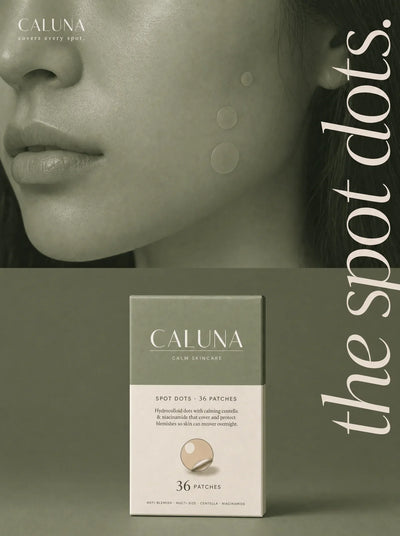
This is where our patches come in: Caluna's hydrocolloid pimple patches put seven skin-loving actives — hydrocolloid, tea tree oil, salicylic acid, centella asiatica, calendula, niacinamide, and hyaluronic acid — into one nearly invisible dot. Most patches on the market have zero actives beyond the hydrocolloid itself. You get 36 patches in a box (about 33¢ a dot), and each one covers, protects, and absorbs fluid while the skin underneath is simply left alone to do its thing.
How do you use cica when you're breaking out?
Reach for cica when your skin feels irritated, red, or tight — after cleansing, layered under moisturizer, or built into a patch you wear over a spot.
A simple approach: cleanse, apply a cica product or a cica-containing patch, and then leave the area alone. Most hydrocolloid patches are designed to be worn for six to eight hours, so overnight is easy — and the less you touch or pick, the calmer the whole area tends to feel. Consistency beats intensity here almost every time.
When should you see a dermatologist?
If your breakouts are severe, painful, cystic, or simply won't let up, a dermatologist is the right call — cica and patches are for everyday comfort, not a replacement for medical care.
Soothing ingredients like cica are genuinely lovely for the day-to-day, but they aren't meant to manage a serious or persistent skin condition. If something feels beyond a normal spot, get a professional opinion — there's no prize for toughing it out on your own.
— Jake, founder of Caluna.