 Liquid error (snippets/caluna-cart-extras line 104): invalid url input
Short answer: the best pimple patch is a hydrocolloid patch that sticks for hours, disappears on your skin, and comes in more than one size — and the nicest ones add a few skin-loving ingredients on top. Below is the checklist I run through before buying any patch, so you're judging it on what it does rather than the front of the box.
What is a pimple patch actually supposed to do?
A pimple patch is a small hydrocolloid sticker you press over a spot to cover it, absorb the fluid it draws out, and keep your fingers off it. That's the whole job — it's a cosmetic sticker, not a medicine, and the value is in how quietly and reliably it does those three things.
Everything else on this list is really just a way of asking one question: does this particular patch cover well, absorb well, and stay out of the way? Keep that in mind and the marketing gets a lot easier to read.

Does the hydrocolloid quality matter?
Yes — hydrocolloid is the part that does the work, so it's the first thing to check. A good patch uses a genuine hydrocolloid gel that turns milky-white as it absorbs fluid from the spot, and that colour change is the visible sign it's actually pulling gunk up and away rather than just sitting there.
Feel for a patch that's thin and flexible rather than stiff and plasticky. Thin hydrocolloid molds to your skin, seals around the spot, and is far less likely to catch on a pillow or peel at the edges. If a patch stays completely clear no matter how long you wear it, it may be a plain plastic sticker rather than true hydrocolloid.
How long should a good pimple patch stay on?
A good patch should hold for at least six to eight hours without lifting at the edges — long enough to wear overnight or through a full workday. Adhesion is where cheaper patches tend to fail first.
If you sweat a lot, work outdoors, or hit the gym, look for a patch specifically described as staying put through sweat and friction. A patch that peels off after an hour isn't covering or absorbing anything, so grip matters just as much as the gel itself — especially if your day involves real movement and sweat.
Should you look for extra ingredients?
Extra actives are a genuine bonus, but they aren't a requirement — plenty of solid patches are hydrocolloid and nothing else. The difference is that a plain patch only covers and absorbs, while a patch with added ingredients can also leave the skin underneath feeling calmer and more looked-after by morning.
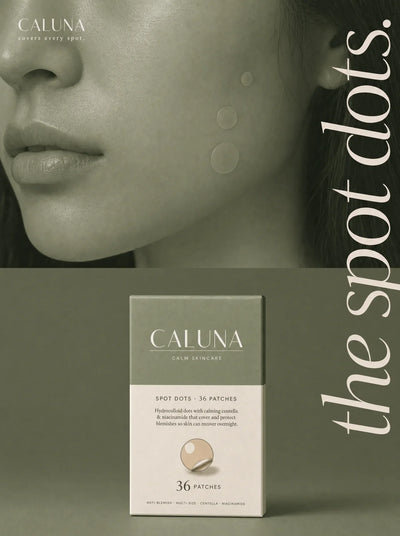
This is the one spot I'll point at our own patches, because it's the reason we made them: Caluna's hydrocolloid patches carry seven skin-loving actives — hydrocolloid, tea tree oil, salicylic acid, centella asiatica, calendula, niacinamide, and hyaluronic acid — where a lot of patches have zero. Salicylic acid is known for helping pores feel clear, centella and calendula are known for their soothing feel, and hyaluronic acid is known for helping skin feel hydrated. When you're comparing labels, it's worth counting how many of those a patch actually includes.
What else is worth checking before you buy?
A few practical details separate a patch you'll reach for again from one that sits in a drawer:
- Size options — a sheet with more than one dot size lets you cover a tiny whitehead and a bigger spot without wasting a large patch on a small one.
- Invisibility — a translucent, matte patch you can wear to work or out for the evening beats a shiny one that announces itself across the room.
- Count and value — divide the price by the number of patches so you're comparing cost per dot, not just sticker price. For reference, a 36-patch box at $11.99 works out to about 33 cents a dot, and free shipping changes the real cost too.
- An honest guarantee — a money-back promise is a small signal that the brand actually expects you to like what you bought.
When should you skip the patch and see a dermatologist?
If breakouts are severe, painful, or simply won't let up, a pimple patch isn't the answer — that's a conversation for a dermatologist. Patches are best for the occasional surface spot you want to cover, protect, and stop picking at while it settles down on its own.
For everything else, the checklist holds: real hydrocolloid that turns white as it works, all-day grip that survives sweat, a size that fits the spot, an invisible finish, sensible value per patch, and — if you want the extra step — a few ingredients known for keeping skin feeling calm and clear.
— Jake, founder of Caluna.