
The short version: a good pimple patch is made of hydrocolloid, sits thin and nearly invisible on your skin, comes in more than one size, and stays stuck for hours without curling at the edge. The best ones also carry a few skin-loving ingredients instead of being a plain sticker. Get those things right and the rest is mostly packaging.
I read a lot of patch labels — partly because I run a patch company, mostly because this category is full of near-identical dots sold at wildly different prices. So here is what actually separates a patch worth keeping in the bathroom drawer from one that isn't, minus the marketing.
What is a pimple patch actually made of?
Most patches worth buying are made of hydrocolloid, a gel-forming dressing borrowed from wound care. It's the same material used on blisters and minor cuts, and it works by absorbing fluid and covering the spot with a sealed, cushioned barrier.
That covering does two quiet, useful things. It soaks up the gunk from a whitehead that has already come to a head, and it puts a physical layer between your fingers and the spot so you stop picking at it. A patch that isn't hydrocolloid — a plain bandage, a bit of tape, a dab of something — skips both of those. So the first thing to check on any box is the word "hydrocolloid," not just "acne patch."

How thin and invisible should a pimple patch be?
As thin as it can be — a good patch nearly vanishes under normal light and feels like almost nothing on your face. If someone can spot it across a room, it's too thick.
Thickness is where careful patches and cheap ones split. A quality dot has tapered, feathered edges that melt into the skin instead of catching light with a hard rim. That is what lets you wear one to work, to dinner, or on a video call and forget it's there. When you're comparing two boxes, the thinner, clearer dot almost always wins.
What size pimple patches do you need?
You want a range of sizes, not just one. Look for a pack that includes small dots for tiny spots and larger ones for the bigger, angrier bumps, so the patch can cover the spot without swallowing half your cheek.
A single-size pack seems fine until you get a spot that's smaller or larger than the only dot you have. Multi-size sheets are far more forgiving. As a rough guide, a dot should reach a millimeter or two past the edge of the spot — enough to seal it in, not so much that the extra rim lifts and rolls up by lunchtime.
Should a pimple patch have added ingredients?
It's a genuine bonus if it does. A bare hydrocolloid dot only covers and absorbs; a patch built with skin-loving actives lets a few ingredients your skin likes sit against the spot while the dot does its covering job.
This is where most patches quietly do nothing extra, so it's worth reading the back of the box. Ours is built the other way around: Caluna's 7-actives hydrocolloid patches pair hydrocolloid with tea tree oil, salicylic acid (known for helping pores feel clear), centella asiatica, calendula, niacinamide and hyaluronic acid. Seven actives; most patches have zero. Whatever brand you land on, flip the box and read the ingredient list — a good one tells you plainly what's on the dot.
How can you tell a good pimple patch from a bad one?
Run any patch through a quick five-point check before you buy:
- Material: the label says hydrocolloid, not just "acne patch."
- Thinness: clear and low-profile, with feathered edges you can barely see.
- Adhesion: it stays put for six to eight hours, including a little sweat, without curling at the rim.
- Sizes: more than one dot size in the pack.
- Ingredients: bonus points for skin-loving actives, and a label that actually lists them.
If a patch clears four or five of those, it's a keeper. If it only manages the first one, you're basically paying for a sticker.
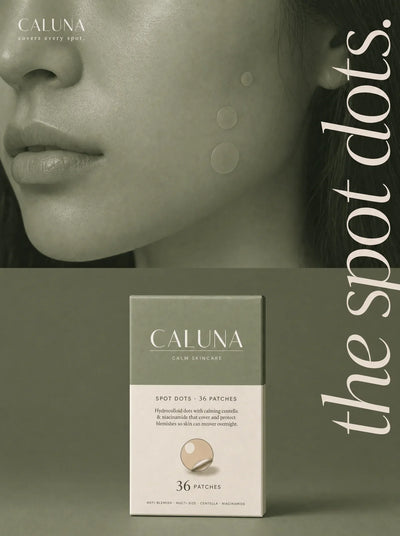
Price, notably, isn't on that list. The good patches are cheap per dot, so cost shouldn't be the deciding factor — a fair box tends to land around 30 to 50 cents a patch. For a sense of scale, a Caluna box of 36 invisible patches is $11.99, about 33 cents a dot with free US shipping (a first box is $6.99 with the code FIRSTBOX if you want to try before you commit). The real point is that an expensive patch isn't automatically a thinner, stickier or better-formulated one. Read the box, not the price tag.
One honest note to close on. Patches are for the everyday whiteheads and surface spots that turn up before a big day. If your skin is dealing with deep, painful or persistent breakouts, that's worth a conversation with a dermatologist — no patch is a substitute for real care.
— Jake, founder of Caluna.