
If you've ever stood in front of a wall of near-identical little clear dots, here's the short version: the best pimple patch is a thin hydrocolloid sticker that practically disappears on your skin, holds for 6 to 8 hours without peeling at the edges, and ideally carries a few skin-loving ingredients instead of none at all. Everything after that — size options, how many come in the box, latex-free adhesive, the price per dot — is about matching the patch to your skin and your day. Below is what actually matters, and what's just packaging.
What is a pimple patch actually supposed to do?
A pimple patch is a small hydrocolloid sticker that covers a spot, absorbs fluid, and puts a physical barrier between the pimple and your fingers. That's the whole job: cover, absorb, protect — and a good one does it without announcing itself to the room.
Hydrocolloid is a gel-forming material that's long been used in wound dressings because it's known for drawing fluid up and away from a surface. On a whitehead that has come to a head, a patch gently absorbs that fluid and often turns cloudy or white as it works. Just as important, it keeps your hands off — and not picking is half of letting a spot settle on its own. A patch isn't treating or curing anything; it's covering and protecting while your skin does what it does.

Does the material matter, and what is "hydrocolloid"?
Yes — the material is the single most important thing. The core of any patch worth buying is hydrocolloid, a flexible gel layer known for absorbing fluid and keeping a spot covered. If a "patch" is really just a piece of medicated tape, put it back.
Look for dots that are thin, flexible, and slightly translucent. A patch that's a fraction of a millimeter thick bends with your skin and stays sealed; a thick, stiff, shiny one lifts at the edges within an hour and catches the light. One more thing to check on the box: whether the adhesive is latex-free, which is worth looking for if your skin tends to react to stickers and tapes.
Should a pimple patch have active ingredients?
It can, and this is where patches differ the most. Most patches on the shelf are plain hydrocolloid with zero added ingredients; a smaller number carry actives like salicylic acid or tea tree oil that are known for helping skin feel clearer and calmer while the patch is on.
This is the gap we built Caluna's hydrocolloid patches to close — seven skin-loving actives in one invisible dot, where most patches have zero. Hydrocolloid does the covering and absorbing; salicylic acid is known for helping pores feel clear, tea tree oil and centella asiatica and calendula are known for helping skin feel calmer, and niacinamide and hyaluronic acid are familiar names for everyday skin comfort. You don't strictly need actives for a patch to do its basic job, but if the dot is sitting on your face for eight hours anyway, ingredients are a reasonable thing to want from it.
How can you tell if a patch will actually stay invisible?
Look for dots that are thin, matte, and translucent rather than thick and glossy. A whisper-thin patch with a soft matte finish blends into most skin tones and reads as "nothing"; a shiny one reads as "sticker" from across the room.
Invisibility also comes down to how you apply it. Start on clean, fully dry skin — patches don't stick to moisturizer or oil — and press the dot down for about 30 seconds so the edges seal. A well-sealed thin patch will usually stay put for a 6-to-8-hour workday under light makeup, or straight through the night, which is when a lot of people prefer to wear one anyway.
How many patches should a box have, and what's a fair price?
A fair deal lands at roughly 30 to 40 patches per box for around $10 to $12, which works out to well under 50 cents a dot. Count and cost per dot matter more than the sticker price, because a "cheap" box of 10 can be the expensive one once you do the math.
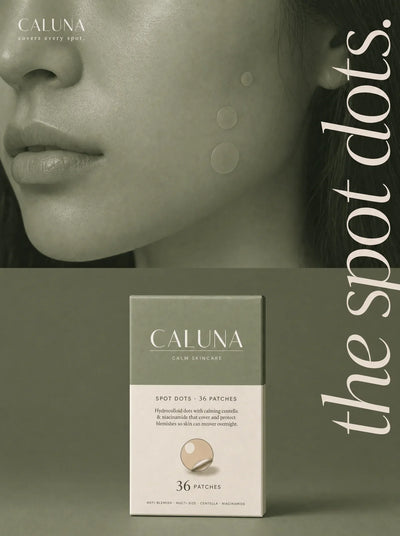
For reference, a Caluna box is 36 invisible patches for $11.99 — about 33 cents a dot — with free US shipping on every order and a 30-day money-back promise, and a first box is $6.99 with the code FIRSTBOX. Also look for a range of patch sizes in the box, since a tiny spot and a larger one aren't well served by the same dot, and a return policy, so a patch that doesn't suit your skin isn't money lost.
A quick checklist before you buy
- Thin, translucent, flexible hydrocolloid — not thick, stiff, or glossy tape.
- Latex-free adhesive, especially if stickers tend to irritate your skin.
- Ingredients listed on the box, not just plain hydrocolloid, if you want more from the dot.
- A range of sizes for different spots.
- A count and price that work out to under about 50 cents a dot.
- A money-back or return policy, so trying them isn't a gamble.
And if your breakouts are severe, painful, or simply won't settle no matter what you try, a patch is the wrong tool for the job — that's a good moment to check in with a dermatologist, who can look at what's actually going on.
— Jake, founder of Caluna