
Got a big event on the calendar and a pimple that picked the worst possible moment to show up? The most reliable move is the opposite of what panic tells you to do: don't attack it, cover it. Clean the area, put a hydrocolloid patch over any spot that has come to a head, and let it quietly absorb fluid and flatten overnight so the surface is smoother and easier to conceal by morning. Picking, over-drying, and last-minute product experiments almost always leave a spot redder and more obvious, not less — the calm approach wins when the clock is ticking.
What should you do about a pimple the night before an event?
The night before is your best window: gently cleanse, keep your hands off it, and cover any surfaced spot with a hydrocolloid patch so it can settle while you sleep. A patch worn for 6 to 8 hours or overnight is known for absorbing the fluid from a whitehead and putting a barrier between the spot and your fingers and pillowcase.
You often wake up to a flatter, calmer-looking surface that takes concealer far better than an angry, raised bump would. One rule for the night before: don't introduce a brand-new, harsh product hoping for a miracle. A strong acid or a spot treatment you have never used can leave you red or flaky on the exact morning you wanted clear skin. Stick to what your skin already knows.

Can you get rid of a pimple overnight?
Honestly, no — you can't reliably erase a pimple overnight, and anything promising that is overselling. Skin heals on its own timeline, and a spot that surfaced yesterday is not going to vanish by a 7 a.m. alarm.
What you can realistically do is change how it looks and feels: covered instead of exposed, flatter at the surface instead of raised, and less tempting to pick. That is a genuinely useful outcome before an event, and it is an honest one. Aim for "calmer and easier to hide," not "gone."
Should you pop a pimple right before an event?
No — popping is the single riskiest thing you can do with hours to go. Squeezing a spot can turn a small bump into a bigger red, bleeding, or scabbed mark that is much harder to cover and can take days longer to settle.
It also risks pushing bacteria and fluid deeper, which can leave a mark long after the event is over. If a spot is begging to be squeezed, that is exactly the moment to cover it instead. A patch over the top physically stops you from getting at it — which, the night before photos, is worth a lot.
Can you wear a pimple patch under makeup for an event?
Yes — a thin, invisible hydrocolloid patch can be worn under makeup. Apply it to clean, dry skin, press the edges down for a few seconds, then apply your makeup gently over and around it.
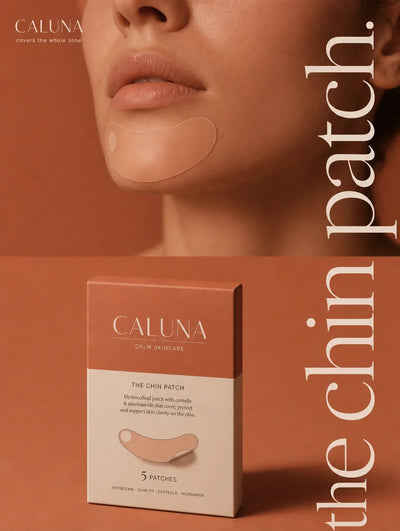
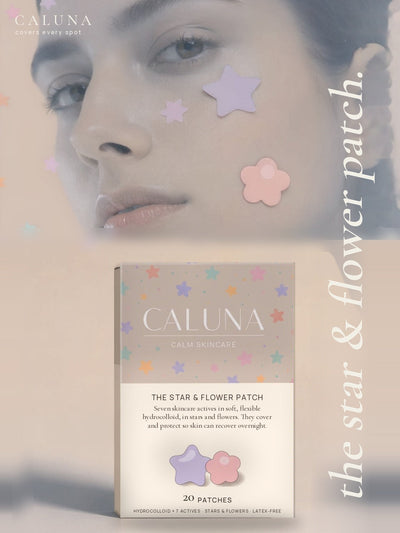
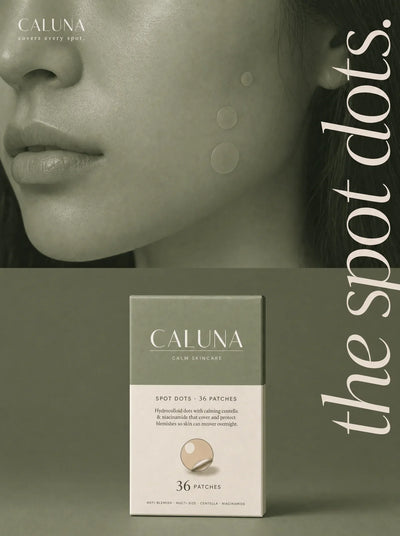
Invisible patches work best on flatter areas of the face where the edges can lie down smoothly. Many people prefer to wear a patch overnight, remove it in the morning once the spot has settled, and then conceal the calmer surface for the event itself — you get the benefit of the patch without working around it during your actual routine. Caluna's hydrocolloid pimple patches come 36 to a box in assorted sizes, are near-invisible on the skin, and build seven skin-loving actives into the gel — hydrocolloid, tea tree oil, salicylic acid, centella asiatica, calendula, niacinamide, and hyaluronic acid — where most patches have zero.
What actually helps in the last hour before you walk out?
Keep it simple and gentle: a cool compress to take down some of the puffy, warm look, then careful concealing. Anything more aggressive that close to the event tends to backfire.
- Hold something cool against the spot for a minute or two — it can make an inflamed-looking bump feel and look less angry.
- Conceal with a small brush and thin layers rather than piling product on, which only cakes and draws the eye.
- Resist the urge to scrub, exfoliate, or pile on a drying treatment at the last minute — irritated skin photographs worse than a covered spot.
- If you patched overnight, you may not need to do much at all beyond a light layer of concealer.
What if the pimple is deep and painful, not a whitehead?
A patch does its best work on a spot that has actually surfaced — a deep, painful, under-the-skin bump does not give the hydrocolloid much fluid to absorb. Forcing a deep spot to the surface before an event usually makes it angrier, not better.
For a deep or cystic bump, be gentle: a cool compress can help it feel calmer, and covering it still keeps your fingers off. If you are dealing with breakouts that are frequently painful, cystic, or simply won't settle down, that is worth a dermatologist's eyes rather than a pre-event scramble — a cosmetic patch covers and protects a spot; it does not replace real medical advice.
The short version: the night before, cover it and sleep on it; the morning of, conceal gently and leave it alone. The worst outcomes almost always come from doing too much, too late.
— Jake, founder of Caluna.