
It's October 1st — about a month out from Launch 2.0, and the zone race is still wide open. Quick answer to today's question: chin and jawline pimples usually hurt more because they tend to form deeper in the skin, closer to nerve endings, instead of sitting right at the surface like a classic whitehead. That depth is why a chin spot can throb a full day before you can even see it.
Why are chin pimples deeper than ones on your cheeks?
The chin and jawline have a dense cluster of oil glands, so when a pore there gets blocked, the clog often sits lower in the skin. Your body surrounds that clog with inflammation, and the pressure of that swelling pushing against surrounding tissue is what you feel as a dull, tender ache.
Spots on flatter areas like the cheeks or temples more often sit near the surface, where they come to a visible head quickly and bother you less. On the chin, the same process happens further down, which is also why those spots tend to stick around a little longer.

Why does it hurt before anything shows up?
Because the inflammation starts underneath before it reaches the surface. The nerve endings around a deeper, swollen pore get pressed on early, so your chin registers "there's something here" a day or two before a bump is visible in the mirror.
Does a painful chin pimple mean something is wrong?
Not usually. A deep, tender spot on the chin is very common and most of the time it settles down on its own over several days.
That said, if you keep getting painful, deep breakouts in the same patch of your chin or jaw month after month, that's a good reason to talk to a dermatologist. They can look at what's actually happening and give you a plan — that's a conversation worth having rather than something to tough out.
Does picking at a sore chin spot make the pain worse?
Almost always, yes. Squeezing a deep spot adds more pressure to an area that's already inflamed, and it can push the contents sideways instead of out, which tends to make the ache and the redness last longer.
The chin is also one of the easiest places to pick at without noticing — resting your hand there, checking it in the car mirror, poking at it while you work. The single most useful thing for a sore spot is usually just leaving it alone.
What actually helps a sore chin spot feel calmer?
Keep your hands off it, don't over-scrub the area, and cover it. Covering does two quiet jobs at once: a hydrocolloid patch absorbs fluid once a spot opens, and it puts a physical barrier between the spot and your fingers so you stop touching it.
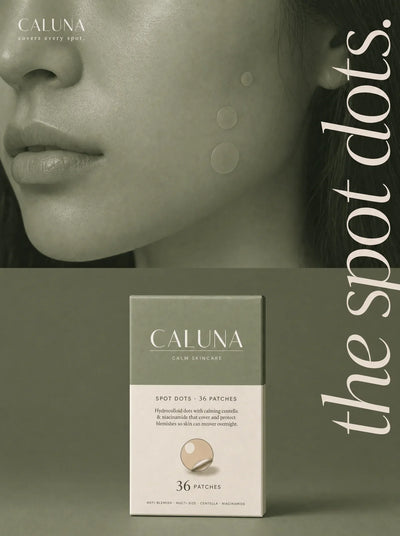
That barrier is most of the benefit. Our Spot Dots are the small, single-spot version — a tiny invisible dot you press on and forget about overnight while it keeps your fingers off and your skin feeling calmer.
One sore spot or a whole tender zone — does patch size matter on the chin?
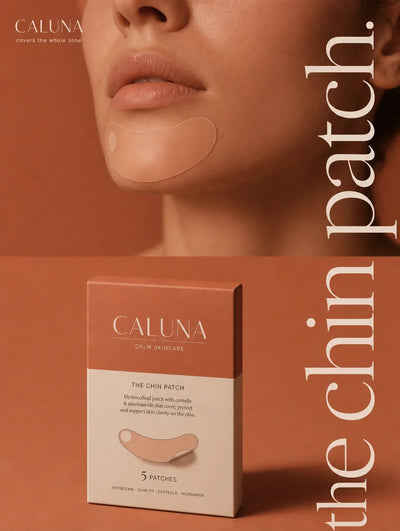
Sometimes it's one spot, but on the chin it's often a cluster along the jaw, and six tiny dots don't cover a whole sore zone very well. A single patch shaped for the area does.
That's the idea behind the Chin Patch — one crescent-shaped patch that covers the chin and jawline in a simplified hydrocolloid formula, with the final ingredient list published at launch. It's coming in November — join the chin list if a whole-zone cover sounds more useful than dotting one spot at a time.
Race update: nose 3 · chin 1 · forehead 1 · kids 1.
The zone with the most names launches first on November 1st — pick yours.
— Jake, founder of Caluna.