 Liquid error (snippets/caluna-cart-extras line 104): invalid url input
We're about seven weeks out from Caluna's November 1st launch, and the nose list is still out front in the zone race, so here's one for everyone whose breakouts don't sit on the tip or the bridge but tuck into the creases beside the nostrils. Why do you break out on the sides of your nose? Because those little folds where your nostrils meet your cheeks are oil-rich, warm, and hard to reach, so oil, sweat, and leftover product collect there and back up in the same pores.
Why do you break out on the sides of your nose?
Because the sides of your nose sit inside the T-zone, the oiliest strip of your face, and the creases there trap everything your skin and your day produce. More oil in a tight fold means more chances for a pore to get congested.
The nose already carries more oil glands per square centimeter than your cheeks, and the crease beside each nostril adds a fold that oil and dead skin settle into. It's warm, a little hidden, and easy to rinse right over, so it becomes the spot that breaks out while the rest of the nose looks fine.
What are those creases beside your nostrils?
They're called the alar creases, the natural grooves where the rounded sides of your nose meet your face. Every nose has them, and they're a normal part of your anatomy, not a flaw.
Because they fold inward, they collect oil, sweat, sunscreen, and cleanser that didn't get fully rinsed. That's also why the little gray-tan dots people notice there are often sebaceous filaments, a normal part of how the pore moves oil to the surface, rather than true blackheads. Neither is dirt, and neither scrubs away for good, and that's an educational note, not a promise about any product.

What makes the sides of your nose worse?
Friction and trapped product, mostly. Anything that presses or pools on that crease all day gives a clogged pore a head start.
A few of the usual suspects: the nose pads on glasses and sunglasses rest right in the crease, wiping a sweaty face drags oil into the fold, heavy or dewy sunscreen pools beside the nostril instead of setting, and hands that touch your face park bacteria in the one spot that's already congested. I'm a plumber in Florida, so by mid-morning my sunglasses and sweat have both sat in that crease for hours.
How do you care for the sides of your nose without irritating them?
Gently and consistently, because the crease needs cleaning, not scouring. Over-scrubbing a fold that's already reactive usually makes it redder, not clearer.
- Wash morning and night, and take an extra few seconds to rinse into the creases beside your nostrils where cleanser likes to hide.
- Blot the sides of your nose when they get shiny instead of scrubbing them raw.
- Wipe the nose pads on your glasses now and then, since they press oil into the same spot.
- Pat sunscreen on thinly and let it set so it doesn't pool in the fold.
- Keep your fingers off it, because picking a crease spot is how a one-day bump turns into a mark that lingers for weeks.
Why won't a round patch stay in the crease of your nose?
Because a flat circle doesn't bend around a curve. The sides of your nose are one of the most three-dimensional parts of your face, so a round dot lifts at the edges and slides off the fold it's meant to cover.
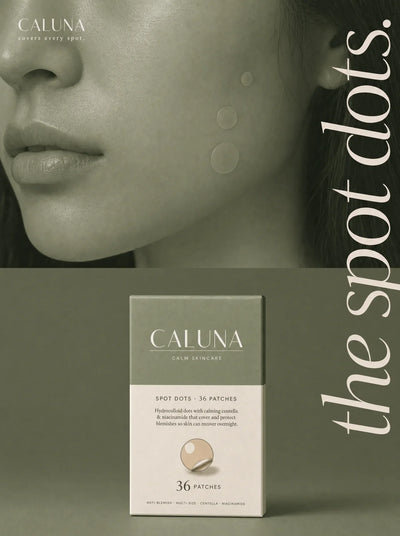
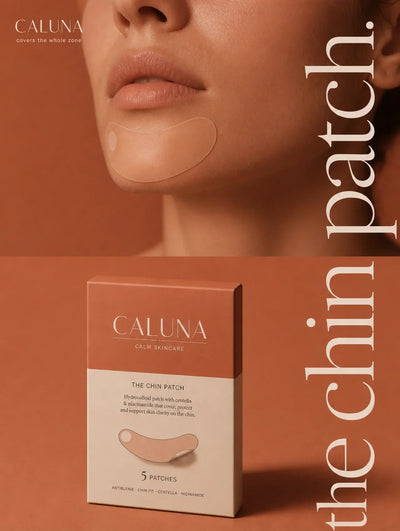
Our Spot Dots are 36 invisible hydrocolloid dots a box, about 33 cents a dot, carrying seven skin-loving actives where most patches have zero, and they're made for the flatter parts of your face, doing the thing hydrocolloid is known for: covering a spot, absorbing its fluid, and keeping your fingers off it. But that curved crease is exactly why we shaped a patch for it. The Nose Patch is a single T-shaped patch built to hug the bridge and the sides of your nose, in a simplified hydrocolloid formula with the final ingredient list published at launch. It's coming in November, so join the nose list.
When should you see a dermatologist?
If a spot on the side of your nose is painful, deep, or keeps coming back no matter what you change, that's a conversation for a dermatologist rather than another product. A patch is for covering and protecting an everyday surfaced spot, not for something that needs real care.
Getting eyes on a stubborn bump early tends to save you weeks of guessing.
Race update: nose 3 · chin 1 · forehead 1 · kids 1. The zone with the most names launches first on November 1st — pick yours.
— Jake, founder of Caluna.