
Short answer: your chin and jawline break out more than the rest of your face because that skin is unusually sensitive to the hormone shifts that happen every month, and it takes a lot of everyday friction most people never notice. It's one of the most common places adults get spots, and it's almost never about being "dirty." I'm Jake, I run Caluna, and we're about two months out from our November launch — nose is leading the zone race right now, chin's still finding its footing, so today felt like the right day to talk about the chin itself.
Why do breakouts cluster on the chin and jawline?
The lower third of your face has oil glands that respond strongly to hormones, so when your levels shift, that zone reacts first. That's why the same person can have a clear forehead and a stubborn chin for years.
On top of the hormone piece, the chin takes constant contact: your phone rests against it, your hand cups it while you're thinking, a mask or helmet strap sits right across it. None of those cause acne on their own, but they add friction and trap heat and sweat on skin that's already reactive. Stack that on the hormonal baseline and you get a zone that flares while everything above it stays calm.
Is chin acne always hormonal?
Not always, but hormones are usually part of the story for adults. If your chin breaks out on a rough monthly rhythm — same week, same spots — that pattern is the biggest clue.
That said, "hormonal acne" gets blamed for everything. Plenty of chin breakouts are plain friction and habit: a phone you never wipe down, a pillowcase you sleep on for two weeks, picking at a bump until it turns into three. The honest move is to notice your own pattern before you decide it's one single cause. If your chin spots are painful, deep, or never really clear up, that's a conversation for a dermatologist, not a patch.

Does resting your hand on your chin really matter?
A little. Your hands carry oil and bacteria, and pressing them against warm, reactive skin all day adds friction that irritated skin doesn't need.
You don't have to become obsessive about it. Wiping your phone screen a couple times a week, swapping your pillowcase more often, and catching yourself before you rest your jaw in your palm during a long meeting are small, boring habits — and boring habits are what actually move the needle on the chin.
What actually helps a chin breakout day to day?
Keep your hands off it, don't pick at the spots along your jaw, and cover anything that's already come up so it can settle instead of getting poked all day.
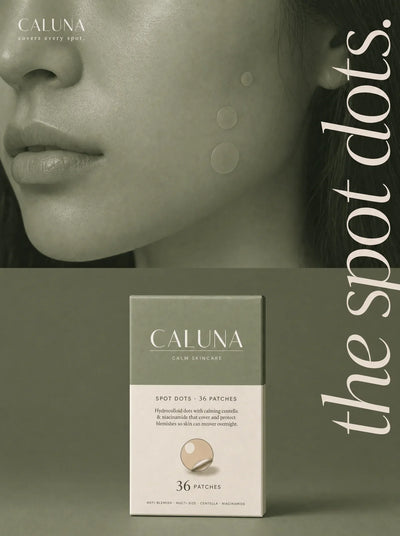
That last part is where a hydrocolloid patch earns its place. Hydrocolloid is a wound-care material that's known for absorbing fluid and creating a calm, protected little environment over a spot — the real magic is that it physically keeps your fingers off. On a chin, where you touch and lean and rest without thinking, that barrier matters more than almost anywhere else on your face. Our Spot Dots are the invisible dots for single spots, out now at 36 to a box.
What changes when you patch the whole zone instead of one dot?
When breakouts show up in a cluster along the jaw, a single dot only covers one spot and leaves the rest exposed. A patch shaped for the whole chin covers the area that actually flares together.
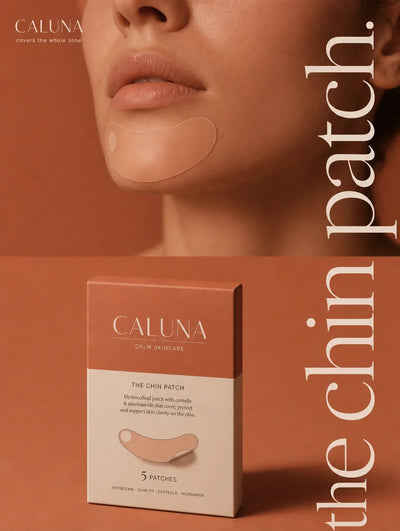
That's the exact problem we built The Chin Patch for — a single crescent-shaped patch that covers the chin and jawline in one piece. It's a simplified hydrocolloid formula, and we'll publish the final ingredient list at launch. It's coming in November — join the chin list if the chin is your zone.
Race update: nose 3 · chin 1 · forehead 1 · kids 1.
The zone with the most names launches first on November 1st — pick yours.
— Jake, founder of Caluna.