 Liquid error (snippets/caluna-cart-extras line 104): invalid url input
We're about seven weeks out from the November 1st launch, and today I want to sort out something a lot of nose breakouts run into: peeling. Short version — when your nose peels during a breakout, it's usually not the pimple flaking off, it's the skin around it drying out, most often from strong spot treatments, over-washing, or picking. That's actually good news, because peeling is a signal you can respond to, not something you're stuck with.
Why does my nose peel when it breaks out?
Because the nose is doing two opposite things at once: it's one of the oiliest zones on your face, and the surface skin gets stripped and dried out by whatever you throw at the breakout. The peel is dry, damaged skin on top — not the blemish leaving.
Your nose and the rest of the T-zone carry hundreds of oil glands per square centimeter, far more than your cheeks. So when a spot shows up there, most people reach for the strongest thing in the cabinet and hit it hard, several times a day. Strip that oily surface too aggressively and the top layer of skin dries, cracks, and flakes — right in the crease beside your nostrils where skin is thin to begin with.

Is the flaking from the pimple, or from what I'm putting on it?
Almost always from what you're putting on it. A pimple itself doesn't shed sheets of dry skin — that's your skin barrier reacting to being over-treated.
The usual culprits are drying spot treatments used too often, scrubbing, and hot water. Each one on its own is fine in moderation; stacked together on the same square inch of nose, three times a day, they pull moisture out faster than your skin can replace it. If your nose is red, tight, and peeling more than it's actually breaking out, that's the barrier waving a flag.
Should I exfoliate a peeling nose to get the flakes off?
No — that's the move that usually makes it worse. Peeling skin is already irritated, and scrubbing raw flakes off strips even more of the barrier you need to rebuild.
I get the instinct — the flakes look messy, so you want them gone. But buffing them off an already-dry, broken-out nose tends to trigger more redness and, ironically, more oil as the skin overcompensates. Let the flakes lift on their own and focus on not drying the skin out in the first place.
How do I calm a peeling nose without triggering more breakouts?
Ease off the strong stuff, add gentle moisture, and stop touching it. Most peeling settles down within a few days once you stop stripping the skin.
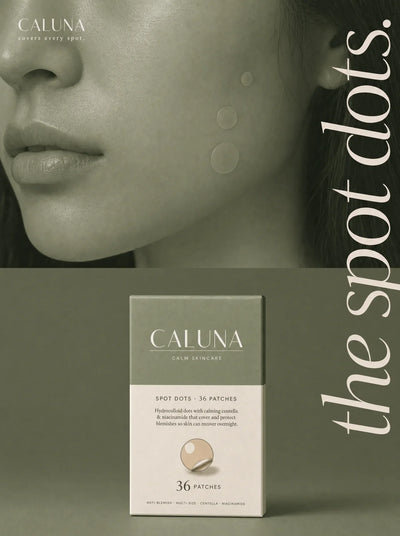
A simple reset that works for a lot of people: wash once at night with a gentle cleanser and lukewarm water, cut spot treatments back to once a day, and put a light moisturizer over the whole nose — yes, even the oily parts. Keeping fingers off is the hard part, because a flaky, bumpy nose is almost impossible not to pick at. That's exactly where a hydrocolloid patch earns its place: it covers the spot, absorbs the fluid from anything that's come to a head, and — maybe most useful — makes it physically hard to keep touching. Our Spot Dots are available now for that, though on a curved, peeling nose a round dot doesn't always want to stay put over the sides.
What about the flaky skin right around my nostrils?
That crease beside your nostrils is thin, folds constantly, and dries out fastest — so it flakes first and holds onto it longest. Be gentle with it and keep it moisturized rather than picking.
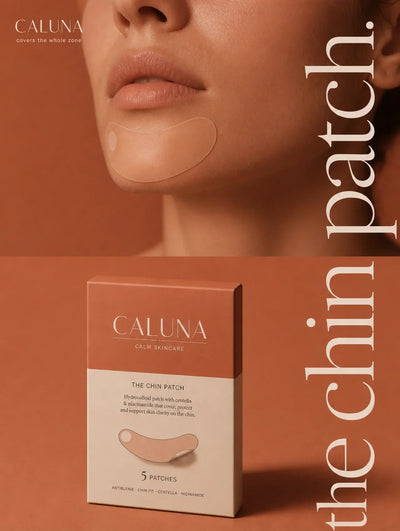
It's also the spot a round patch can't grip, being a fold rather than a flat surface. That shaping problem is the whole reason a nose-specific patch exists — a single T-shape that sits over the bridge and down the sides instead of a flat dot fighting the curve. The Nose Patch is coming in November — join the nose list if that's the zone that gives you the most trouble. It'll ship with a simplified hydrocolloid formula, and I'll publish the final ingredient list at launch.
When should I stop DIY-ing and see someone?
If your nose is painful, deeply inflamed, cracking and bleeding, or just not settling after a couple of weeks of gentler care, see a dermatologist. That's not a patch problem to solve at home.
Patches and a gentler routine are for everyday spots. Persistent, painful, or worsening breakouts deserve a professional who can look at your skin.
Race update: nose 3 · chin 1 · forehead 1 · kids 1. The zone with the most names launches first on November 1st — pick yours.
— Jake, founder of Caluna.