 Liquid error (snippets/caluna-cart-extras line 104): invalid url input
We're about six weeks out from the November 1st launch, and the forehead list is still scrapping to climb the zone race — so today I'm answering the forehead question I get more than any other.
Your forehead breaks out more than your cheeks because it sits in the T-zone, the oiliest strip of skin on your face, and it takes contact all day from sweat, hats, and whatever's in your hair. Your cheeks are drier and rarely touched, so the same face can stay clear on the sides while the top keeps flaring up.
Is the forehead really oilier than the cheeks?
Yes. The forehead and nose hold the densest oil glands on your face, which is why skin folks group them together as the "T-zone."
More glands means more oil, and oil is what mixes with dead skin cells to clog a pore. This isn't about being dirty — plenty of people who wash morning and night still break out up top first, simply because that's where the oil lives. If your cheeks feel tight by mid-afternoon while your forehead goes shiny, that's the T-zone doing exactly what it's built to do.

Does sweat make forehead breakouts worse?
It can — mostly when it sits. Sweat on its own doesn't clog pores, but leaving it to dry under a cap or headband traps oil, salt, and bacteria against the skin for hours.
I run on Sundays and lift a few mornings a week, and my forehead is always the first place a workout shows up. The move isn't to sweat less; it's to not let it marinate. I keep a clean towel handy and rinse my face within a few minutes of finishing, before a hat goes on for the drive home.
Do hats and hair really sit on your forehead all day?
They do, and that steady contact is a big reason the forehead breaks out more than the cheeks. Nothing presses on your cheeks for eight hours, but a beanie, a hard hat, or a fringe of bangs rests right on the forehead the whole time.
Then there's hair product. Waxes, pomades, and heavy conditioners drift down to the hairline and onto the forehead — dermatologists even have a name for it, "pomade acne." If your bumps cluster along the top edge of your forehead, look at what's in your hair before you blame your skin.
What actually helps a forehead that keeps breaking out?
Keep it simple: wash after you sweat, keep hats and fingers off it, and cover the spots you do get so you quit picking. Consistency beats any single miracle product.
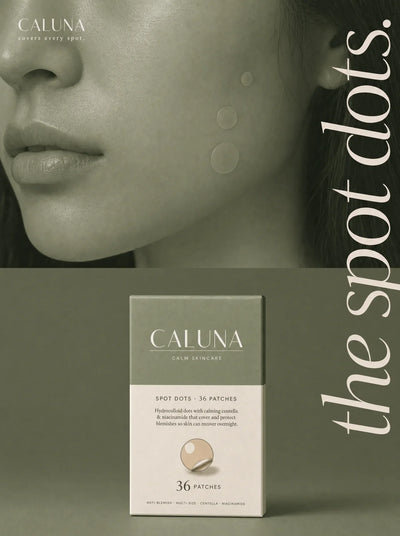
A gentle cleanser twice a day, a light non-greasy moisturizer so your skin isn't pushed to overproduce oil, and — the step everyone skips — actually leaving it alone. When a whitehead does show up, a hydrocolloid patch over it covers the spot, absorbs the fluid, and keeps your fingers out of it while your skin settles; that's exactly what our Spot Dots are for, and they're the piece of this you can grab today.
When should you see a dermatologist?
If your forehead breakouts are painful, deep, or just won't quit no matter what you change, that's worth a professional's eyes. The same goes for a patch of small, itchy, look-alike bumps that don't act like normal pimples — those can be something else entirely, and a dermatologist can tell you what you're actually dealing with.
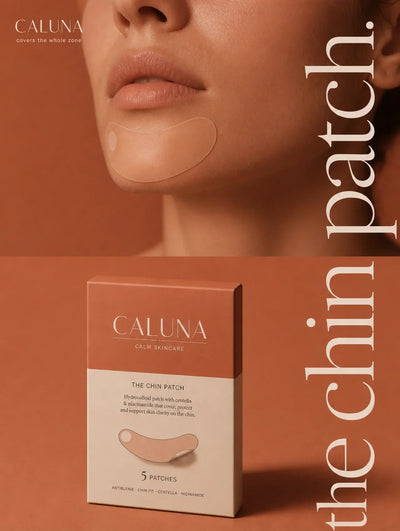
One wide patch built just for this zone is coming in November — join the forehead list. It's a simplified hydrocolloid formula, with the final ingredient list published at launch.
Race update: nose 3 · chin 1 · forehead 1 · kids 1. The zone with the most names launches first on November 1st — pick yours.
— Jake, founder of Caluna.