

Your nose is the oiliest part of your face because it carries the highest concentration of oil glands anywhere on your skin, packed into the middle strip we call the T-zone. That density is the whole story: more glands means more oil, which is why the nose shines first, clogs first, and breaks out in ways your cheeks usually don't.
It's the last day of August as I write this, which puts us about two months out from the November zone launch — and right now the nose is quietly winning the waitlist. So this one's for the shiny-nose crowd. Here's what's actually going on up there.
Why is the nose oilier than the rest of your face?
Because it has more sebaceous (oil) glands per square inch than almost anywhere else on the body. The nose and the center of the face are dense with them, while your cheeks and the edges of your face have far fewer. Those glands produce sebum, the waxy oil that keeps skin from drying out. On the nose there are simply more of them doing that job at once, so oil shows up there faster and heavier. It's anatomy, not a mistake in your routine.
What is the T-zone, exactly?
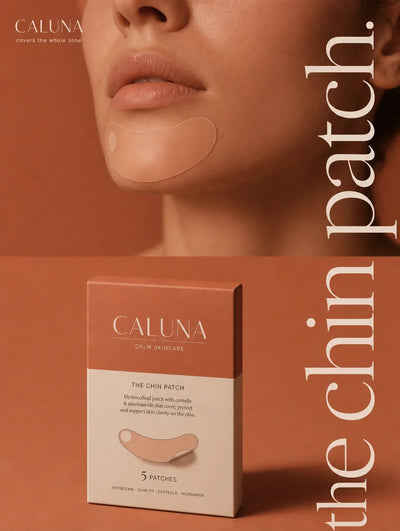
The T-zone is the forehead, nose, and chin — the shape they make together looks like a T. These three areas share that same high oil-gland density, which is why they tend to get shiny and congested while the rest of the face stays comfortable or even dry. If you've ever blotted your nose at noon while your cheeks felt fine, you've met your T-zone. The nose sits right at the busiest intersection of it.
Does an oily nose mean you're doing something wrong?
No. An oily nose is mostly genetics, hormones, and climate — not a sign you're being lazy or dirty. Oil production runs on things you don't control: the glands you were born with, the hormones cycling through your body, the heat and humidity around you. Plenty of people with spotless routines still have a shiny nose by afternoon. Some oil is a good thing, too — it's part of your skin's barrier. The goal isn't a bone-dry nose; it's a calm one.

Why do so many breakouts land on the nose?
More oil plus tight, deep pores makes the nose an easy place for pores to clog. When extra sebum mixes with dead skin cells and the day's dust, it can plug a pore — and a plugged pore on the nose is the starting line for a lot of breakouts. The nose also takes a beating we forget about: glasses press on it, we touch it without thinking, we scrub it harder than the rest of our face hoping to "get the oil off." Over-scrubbing usually backfires and leaves the skin more irritated, not cleaner.
How should you take care of an oily nose?
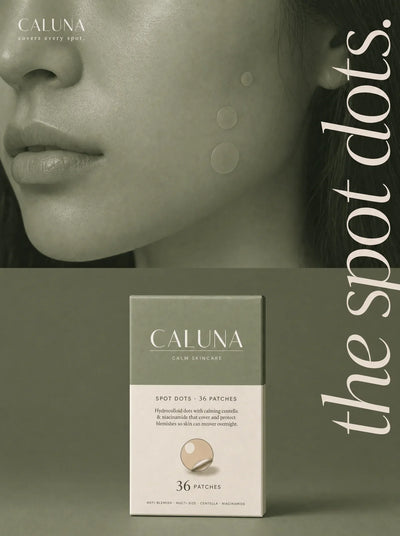
Gently. Wash twice a day, blot instead of stripping, and resist the urge to over-exfoliate the nose into submission. A mild cleanser, a light non-greasy moisturizer (yes, even oily skin needs one), and blotting paper for a midday shine will do more than any harsh scrub. If a spot does surface, a hydrocolloid patch is a clean way to cover it — it absorbs fluid, protects the area, and keeps your fingers off while your skin feels calmer. That's the whole idea behind our Spot Dots, which are available now. For breakouts that are painful, deep, or just won't quit, a dermatologist is the right call — an oily nose that's genuinely miserable is worth a real opinion.
Why make a patch shaped for the nose?
Because the nose is a curved, hard-to-cover surface, and a flat dot made for a cheek doesn't sit right on it. That's exactly why we're building a T-shaped patch that wraps the tip of the nose and the sides where round dots peel and lift. It's a simplified hydrocolloid formula — final ingredient list published at launch — designed to actually stay put on the one part of the face that's hardest to patch. The Nose Patch is coming in November; if the shiny-nose life is your life, join the nose list.
Race update: nose 3 · chin 1 · forehead 1 · kids 1.
The zone with the most names launches first on November 1st — pick yours.
— Jake, founder of Caluna.