

We're about six weeks out from our November 1st launch, and nose is still leading the zone race — so today's a nose day. Your nose is the oiliest part of your face because it sits in the middle of the T-zone, where oil glands are packed more densely than anywhere else on your skin. More glands crowded into one small spot means more oil, wider-looking pores, and a shine that comes back there first.
Why is the nose oilier than the rest of your face?
Because sebaceous glands — the tiny glands that make your skin's oil — are most concentrated on the nose and central face. Far fewer sit on your cheeks and almost none on your arms or legs, which is why your nose shines while your forearm never does.
The numbers back it up: the face and scalp can carry up to several hundred sebaceous glands per square centimeter, a big step above the rest of the body, and the nose sits right at the peak of that map. It isn't that your nose is doing something wrong — it's simply built with more oil plumbing than anywhere else you've got.
What is the T-zone, and why does the nose sit at its center?
The T-zone is the strip that runs across your forehead and straight down your nose and chin, forming a rough "T." It's the oiliest region of the face, and your nose is the busiest part of it.
That's why so many people are slick down the middle and normal-to-dry along the cheeks — it's called combination skin, and it's the most common skin type there is. If your nose is shiny by noon while your cheeks feel fine, you're not imagining it and you're not alone.

Does an oily nose mean my skin is dirty?
No. Oil on your nose is your glands doing their normal job, not a sign you skipped a wash. Scrubbing harder to "fix" it usually backfires.
Strip the oil away too aggressively and the skin can feel tight, get irritated, and — for some people — look even shinier as it tries to recover. With an oily nose, gentle and consistent almost always beats harsh and occasional.
Why does my nose get shiny again so fast?
Because those dense glands keep making oil all day, so a nose you blotted at breakfast is producing fresh oil by mid-morning. When you blot, you're clearing the surface, not switching off the source.
That's fine, and blotting is a perfectly good habit. Just know that "shine returns quickly" is normal for a nose and not a failure of your routine. A blotting paper or a quick pat with a clean tissue handles the surface without stripping the skin the way repeated washing does.
Does an oily nose actually cause breakouts?
It can make them more likely, but oil on its own isn't the whole story. Breakouts happen when oil, dead skin, and bacteria combine to clog a pore — extra oil just gives that process more to work with.
The dense glands are also why the nose collects so many sebaceous filaments — those tiny gray dots that look like blackheads but are really the pores wicking oil to the surface. They're normal on an oily nose and not something you can scrub away for good. An actual pimple, the raised whitehead kind, is a different thing.
How do you manage an oily nose without overdoing it?
Keep it simple and steady: a gentle wash, light products, and hands off. The goal is to work with an oily nose, not to punish it into behaving.
- Wash your face after you sweat, and don't sleep in sunscreen or makeup — both give oil more to trap.
- Blot instead of over-washing when your nose gets shiny during the day.
- Use a light, non-comedogenic moisturizer; skipping it can actually push oil glands to work harder.
- Ingredients like salicylic acid are known for helping oily pores look clearer, so a product built around one can earn a place in your routine.
- Keep your fingers off the nose — picking at a spot there is the fastest way to leave a mark that lingers.
Where do patches fit, and when should you see a dermatologist?
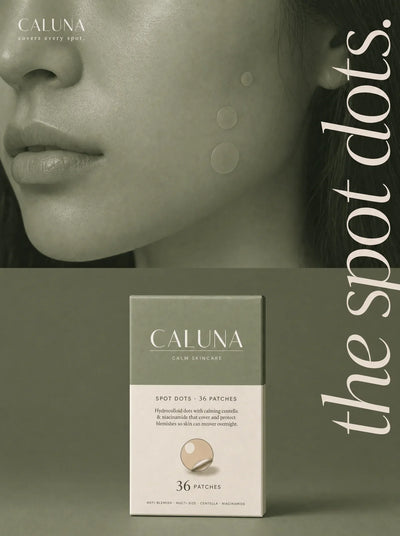
A hydrocolloid patch is for a whitehead that has already come to the surface — it's known for covering the spot, absorbing the fluid it weeps, and keeping your fingers off it while the skin settles. Our Spot Dots (available now) are the little invisible dots we make for exactly that.
A patch won't remove oil, shrink a pore, or clear a filament, and it isn't meant to — that's not the job. If your nose stays broken out no matter what you change, or a bump turns deep and painful, that's a dermatologist's call, not a sticker's. Persistent breakouts respond best to a real plan from someone who can see your skin in person.
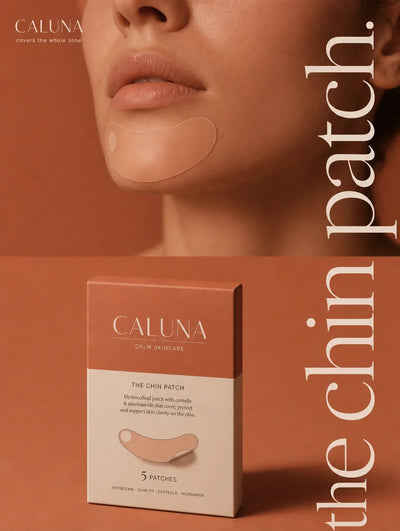
The trouble with an oily, curved nose is that flat round dots never want to stay put on it — which is the whole reason I'm building The Nose Patch, a single T-shaped patch shaped for the tip and the sides of the nose, a simplified hydrocolloid formula with the final ingredient list published at launch. It's coming in November — join the nose list if the nose is your zone.
Race update: nose 3 · chin 1 · forehead 1 · kids 1.
The zone with the most names launches first on November 1st — pick yours.
— Jake, founder of Caluna.