

It's October 2nd, about four weeks out from Launch 2.0 on November 1st, and the nose list is still out front in our zone race. Fitting, because today's question is the most nose one there is: why is your nose the oiliest part of your face? The short answer is that your nose sits in the middle of the T-zone, where oil glands are packed more densely than anywhere else on your face, so it simply makes more oil than your cheeks or temples ever will.
Why is the nose the oiliest spot on your face?
Because it has the highest concentration of sebaceous (oil) glands on your whole face. More glands in one place means more sebum reaching the surface, and the nose wins that count.
Your skin's oil glands aren't spread out evenly. The face and scalp carry the densest ones on your body — hundreds per square centimeter, compared with far fewer on your arms or legs — and within the face they cluster hardest down the center. Your nose is dead center. That's not a flaw in your routine or a sign you're doing something wrong; it's just the map of where your skin decided to put its oil factories.
What is the T-zone, exactly?
The T-zone is the strip of skin that makes a "T" across your face: your forehead along the top, and your nose and chin running down the middle. It's the oiliest region because those are the areas with the most oil glands.
This is why a lot of people are shiny down the middle but dry or normal on the cheeks — so-called combination skin. It's one face with two different oil maps. The nose is where the vertical and horizontal lines of the T cross, which is why it often feels like the greasiest square inch you own by mid-afternoon.

Why does my nose look shinier and have bigger pores?
More oil output tends to go hand in hand with more visible pores. The pore is the opening the oil travels through, and a busier gland underneath often comes with a wider opening on top.
That shine you see by lunchtime is just sebum that's reached the surface and caught the light. The larger-looking pores on your nose are mostly doing their job — moving oil up and out. You can't shrink a pore permanently, and anyone promising to is selling you something. Keeping the area clean and not stretching it further with aggressive squeezing is about as much control as you realistically have.
Does an oily nose mean it breaks out more?
Not automatically. Oil on its own isn't a breakout — a clogged, inflamed pore is. But a zone making lots of oil does have more raw material to get clogged if dead skin and oil pile up together.
Here's where honesty matters: most of the little dark dots on your nose aren't blackheads at all. They're sebaceous filaments — the natural lining of oil in a pore — and nearly everyone has them. They're not a breakout, they're not dirt, and no patch or strip removes them for good. A real breakout is raised, sometimes tender, and comes to a head. Knowing the difference saves you a lot of scrubbing you don't need to do.
What actually helps an oily nose?
Be gentle with it. Over-washing and hard scrubbing strip the surface, and skin often answers by making even more oil — so you end up shinier, not less.
A soft cleanse, blotting papers through the day, and keeping your fingers off it do more than any harsh scrub. When there's an actual spot with fluid in it, a hydrocolloid patch is known for covering it, absorbing what it draws out, and keeping your hands away while it settles — which is honestly half the battle on a nose you touch all day. If your breakouts are painful, cystic, or just won't quit, that's a dermatologist conversation, not a patch one.
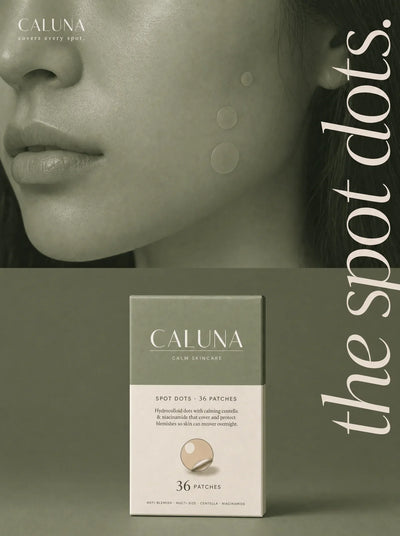
That curved, oily nose is exactly why dots made for flat skin slide around on it — and why we're building the Nose Patch, coming in November. Join the nose list. In the meantime, our Spot Dots are available now — 36 invisible dots for $11.99, about 33¢ a dot — for the spots that pop up anywhere.
Race update: nose 3 · chin 1 · forehead 1 · kids 1.
The zone with the most names launches first on November 1st — pick yours.
— Jake, founder of Caluna.