 Liquid error (snippets/caluna-cart-extras line 104): invalid url input
We're about six weeks out from our November 1st launch, and nose is still leading the zone race. Fitting, because the question I get most about the nose isn't why it breaks out — it's why nothing stays stuck to it. So: round, flat pimple patches peel off your nose because it's a curved, oily, constantly-moving surface, and a flat disc can't lie flush against a slope. The fix has less to do with the sticker and more to do with shape, oil, and thirty seconds of prep.
Why do pimple patches peel off my nose so fast?
Because a flat, round patch is trying to lie flat on a curved surface, so the edges lift almost as soon as you put it on. Add the fact that the nose is the oiliest part of your face, and the seal loosens from underneath too.
Think about the shape for a second. Your nose bridge and tip are convex — they curve away in every direction. A flat circle only makes real contact in the middle; the outer ring is already under tension, ready to catch on the first thing that brushes it. One nose wipe, one pair of glasses sliding down, one good laugh, and the corner's up.

Does oil on my nose make patches fall off?
Yes, and it's the biggest factor most people miss. Hydrocolloid needs a clean, dry surface to grip, and the nose re-oils faster than anywhere else on your face.
The nose and central T-zone carry the densest oil glands on the whole face — several times more per square inch than your cheeks. That's good for keeping skin supple and bad for adhesive. You can press a patch down perfectly, and twenty minutes later there's a thin layer of fresh oil working its way under the edges.
How do I actually get a patch to stick to my nose?
Wash the area, dry it completely, and keep everything else off the exact spot — no moisturizer, no oil, no sunscreen right where the patch goes. Then press and hold.
- Start clean and bone-dry — even a little damp and it won't take.
- Skip product directly under the patch; put your moisturizer and SPF everywhere else.
- Press for a full 30 seconds so your skin's warmth softens the adhesive into place.
- Match the size to the spot — a small dot on the tip, a bigger one for the flatter sections; the less overhang, the less lifting.
- Swap it once it's turned cloudy or white, which just means it's done absorbing fluid.
Why won't a dot cover the crease beside my nose?
Because the sides of the nose are a tight fold, and a flat circle can't bend into a crease — it tents in the middle and peels at the ends. That crease is also where oil and sweat quietly pool, so it's a popular spot for breakouts and a hard one to keep covered.
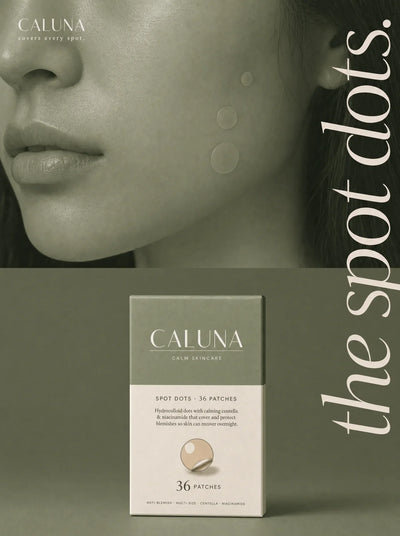
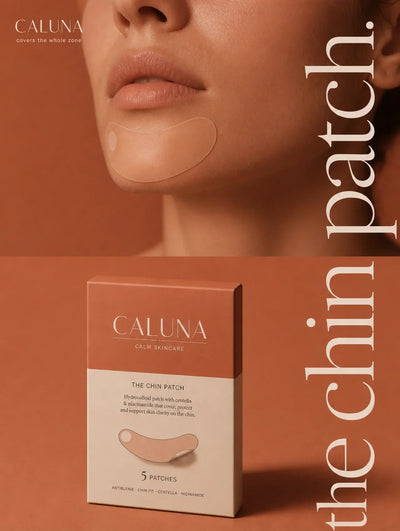
This is the exact problem I kept running into, and it's why a patch shaped for the nose is a different animal from a round dot. A piece cut to follow the bridge and wrap down the sides has almost no loose edge to lift. That's the whole reason The Nose Patch is coming in November — join the nose list if the nose is your zone. For spots anywhere off the nose, our Spot Dots are on sale now.
When should you skip the patch and see a dermatologist?
If a nose bump is deep, painful, or has stuck around for weeks, a patch isn't the answer — that's a conversation for a dermatologist. Patches are known for covering a spot, absorbing fluid, and keeping your fingers off it so your skin can feel calmer; they aren't a treatment for stubborn or cystic breakouts.
Race update: nose 3 · chin 1 · forehead 1 · kids 1.
The zone with the most names launches first on November 1st — pick yours.
— Jake, founder of Caluna.